Showing posts with label Flash Gordon. Show all posts

Thursday, October 3, 2019

Tosh's Journal: October 3 (the Mickey Mouse Fan Club)


TOSH’S JOURNAL

October 3

Throughout my life, I have been fond of the Charlie Chan film series and the Flash Gordon serials as well. One of the things that I picked up from my father’s generation is the love of the adventurer who faces the deadly Orient. That far-off culture that is wise and smart (Charlie Chan) and ruthlessly evil as well (Ming the Merciless and Fu Manchu). As a child, one is approached by the things he sees on the massive (cinema) and small (TV) screen. It is not just one angle, but the fact that my entire culture is based on a fantasy of some sort. When I was a child, evilness came from the Orient. I used to play on the streets of San Francisco Chinatown, thinking of myself as Flash Gordon battling the aliens that were invading Earth - which was basically, from my perspective, a very white planet at the time.

What is fascinating is that the actor Charles Middleton (Ming) and Warner Oland (Charlie Chan) were white. Both played a character from the Orient. At the time, even in my childhood, I knew that these actors were non-Asian, but it never bothered or broke the fantasy for me. I was living in a world that was totally one-dimensional. Even though my parents knew and were friends of people who were otherwise not white, I still felt like I was in a white world, and that was the only world that existed. I never even question it.

The only TV show I watched as a child was the Mickey Mouse Fan Club. I was fascinated with the show because I felt that the kids on the show were like me. White. I wouldn’t have been upset if an Asian or black child would be on the show, but the fact that the issue never came up is an interesting way to examine that world. Children from all over the world probably belong to the Mickey Mouse Club, but what does that mean? But even that, the kids on the show were exotic to me. It was white, but it was a weird “white” to me. I didn’t belong to that culture. My “culture” was to adopt characters that I was fond of and pretend to be that person, as I marched up and down Grand Avenue, Chinatown lost in my fantasy of chasing dragons and monsters - mostly who were produced in the mysterious Orient. There was something sinister about the Mickey Mouse Club, but I could never put my finger on it. For one, the theme song written by Jimmie Dodd, who can be seen as the auteur of the Mickey Club clan. Probably the first song that I have ever sung to myself: and I would also sing along with Jimmie at the end of the show as well. The lyrics are:


Who’s the leader of the club that’s made for you and me?

M-I-C-K-E-Y M-O-U-S-E

Hey there, Hi there, Ho there! You’re as welcome as can be!

M-I-C-K-E-Y M-O-U-S-E

Mickey Mouse! (Donald Duck!)

Mickey Mouse! (Donald Duck!)

Forever let us hold our banners high,

High, high, high!

Come along and sing a song and join the jamboree!

M-I-C-K-E-Y M-O-U-S-E

Mickey Mouse Club!

Mickey Mouse Club!

We’ll have fun

We’ll meet new faces

We’ll do things, and we’ll go places

All around the world we’re marching...


Who’s the leader of the club that’s made for you and me?

M-I-C-K-E-Y M-O-U-S-E

Hey there, Hi there, Ho there! You’re as welcome as can be!

M-I-C-K-E-Y M-O-U-S-E

Mickey Mouse! (Donald Duck!)

Mickey Mouse! (Donald Duck!)

Forever let us hold our banners high

High, high, high!

Come along and sing the song and join the jamboree!

M-I-C-K-E-Y M-O-U-S-E

Yeah, Mickey!

Yeah, Mickey!

Yeah, Mickey Mouse Club!


Spoken:

Now Mouseketeers

There’s one thing we want you

Always to remember


Come along and sing our song

and join our family


M-I-C

K-E-Y

M-O-U-S-E


Through the years we’ll all

Be friends

Wherever we may be

M-I-C

K-E-Y

M-O-U-S-E


Mickey Mouse

Mickey Mouse

Forever let us hold our

Banner high


Now it’s time to say goodbye

To all our company


M-I-C

Spoken:

See you real soon

K-E-Y

Spoken:

Why? Because we like you!

M-O-U-S-E


Jimmie was in charge of the club.  He was a role model for the kids on and off the screen. Not only was he like that on the show, but also the cast was invited to his house for backyard barbecues and sing-alongs. I didn’t realize it at the time, but my love for the Orient made me aware of another world than the one that was projected into our house. There are many levels of illusion, and this is only one. As a child, I founded something quite creepy about Jimmie Dodd and his Mouse theme song. I didn’t know why, but over a short period, I realized that Ming the Merciless meant more to me than the Mickey Mouse Club. It didn’t damage me, but I know that there was a whole world out there, and I became interested in knowing where Charlie Chan and Ming came from. Totally fictional characters, I do know that, but I was curious about how they came to be in my culture. Over time, I realized that I wasn’t the focus of the world’s attention. That I was pretending to be Flash Gordon, which in fact, I much preferred Ming. It is incredible to think that the “American” culture can bring such great geniuses like Eddie Cochran, yet one would define themselves as a world that was made up of “white culture.” Not saying that it’s terrible, but actually, kind of evil when you think of it. And with that in mind, I realized that I am part of an immoral culture that doesn’t even know why it is doing what it does. To this day, we tend to see the other world as indeed “other.” When in fact we’re projecting that image to suit our purposes either by our stupidity or naiveness. As Eddie would say “, that’s really something.”

Friday, May 13, 2016

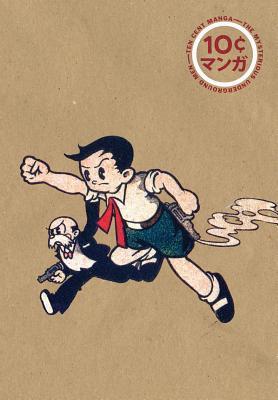
"The Mysterious Underground Men" by Osamu Tezuka, edited by Ryan Holmberg (PictureBox)

ISBN: 978-1-939799-09-8 PictureBox

"The Mysterious Underground Men" by Osamu Tezuka, edited by Ryan Holmberg (PictureBox)

Osamu Tezuka is not only a manga comic god, but more important, a genius with ties to the Western tradition of comics as well.    "The Mysterious Underground Men" is a youth's tale of adventure, science and criminals.  The beauty of this story is that it is almost like a feverish mixture of criminals and sci-fi villains - all in one story.   Tezuka wrote and drew this manga in the late 1940s and what is fascinating to me is his positive attitude towards the wonder of science and what it can bring to mankind.  On the other hand, and only a few years when he wrote this manga, the atomic bomb killed thousands.  Yet, somewhere in his psyche, he looks up to science and the good that is human.  Yet, death lurks within the narrative, and he was perhaps one of the first manga writers for kids (later he wrote for adults) who introduce characters that will tragically die in the narrative. 


This beautifully designed book (like all titles published by PictureBox) is faithful to the tradition of the Japanese manga, but also brings in the retro look of that era into the packaging and design.  On top of that, the editor Ryan Holberg, in his introduction, brings in the influence of the 1930s serial Flash Gordon as well as comics like Blondie and various Walt Disney cartoons/comics as well.  Tezuka took all of this in, and in an essence, made a giant pot of soup, which is basically this manga.  "The Mysterious Underground Men" is a silly plot, yet what adventure is not basically silly. It's the imagination at work, and Tezuka like the professor or engineer in this story, can cook up the ultimate adventure yarn.  Excellent book. 


Friday, October 3, 2014

October 3, 2014


October 3, 2014

Throughout my life, I have been fond of the Charlie Chan film series and the Flash Gordon serials as well.  One of the things that I picked up from my father’s generation is the love of the adventurer who faces the deadly Orient.  That far-off culture that is wise and smart (Charlie Chan) and ruthlessly evil as well (Ming the Merciless and Fu Manchu).   As a child one is approached by the things he sees on the massive (cinema) and small (TV) screen.  It is not just one angle, but the fact that my entire culture is based on a fantasy of some sort.  When I was a child, evilness came from the Orient.  I used to play on the streets of San Francisco Chinatown, thinking of myself as Flash Gordon battling the aliens that were invading Earth - which was basically, from my perspective, a very white planet at the time.


What is fascinating is that the actor Charles Middleton (Ming) and Warner Oland (Charlie Chan) were white. Yet both played a character from the Orient.  At the time, even in my childhood, I knew that these actors were non-asian, but it never bothered or broke the fantasy for me.  I was living in a world that was totally one-dimensional.  Even though my parents knew and were friends of people who were otherwise not white, I still felt like I was in a white world, and that was the only world that existed.  I never even question it.


The only TV show I watched as a child was the Mickey Mouse Fan Club.  I was fascinated with the show because I felt that the kids on the show were like me.  White. I wouldn’t have been upset if an Asian or black child would be on the show, but the fact that the issue never came up is an interesting way to examine that world.  Children from all over the world probably belong to the Mickey Mouse Club, but what does that mean?  But even that, the kids on the show were exotic to me.  It was white, but it was a weird “white” to me.  I clearly didn’t belong to that culture.  My “culture” was to adopt characters that I was fond of and pretend to be that person, as I marched up and down Grand Avenue Chinatown lost in my fantasy of chasing dragons and monsters - mostly who were produced in the mysterious Orient.  Yet, there was something sinister about the Mickey Mouse Club, but I could never put my finger on it.   For one, the theme song written by Jimmie Dodd, who can be seen as the auteur of the Mickey Club clan.   Probably the first song that I have ever sung to myself: and I would also sing along with Jimmie at the end of the show as well.  The lyrics are:

Who's the leader of the club that's made for you and me?
M-I-C-K-E-Y M-O-U-S-E
Hey there, Hi there, Ho there! You're as welcome as can be!
M-I-C-K-E-Y M-O-U-S-E
Mickey Mouse! (Donald Duck!)
Forever let us hold our banners high,
High, high, high!
Come along and sing a song and join the jamboree!
M-I-C-K-E-Y M-O-U-S-E
Mickey Mouse Club!
Mickey Mouse Club!
We'll have fun
We'll meet new faces
We'll do things and we'll go places
All around the world we're marching...

Who's the leader of the club that's made for you and me?
M-I-C-K-E-Y M-O-U-S-E
Hey there, Hi there, Ho there! You're as welcome as can be!
M-I-C-K-E-Y M-O-U-S-E
Mickey Mouse! (Donald Duck!)
Forever let us hold our banners high
High, high, high!
Come along and sing the song and join the jamboree!
M-I-C-K-E-Y M-O-U-S-E
Yeah Mickey!
Yeah Mickey!
Yeah Mickey Mouse Club!

Spoken:
Now Mouseketeers
There's one thing we want you
Always to remember

Come along and sing our song
and join our family

M-I-C
K-E-Y
M-O-U-S-E

Through the years we'll all
Be friends
Wherever we may be
M-I-C
K-E-Y
M-O-U-S-E

Mickey Mouse
Mickey Mouse
Forever let us hold our
Banner high

Now it's time to say goodbye
To all our company

M-I-C
Spoken:
See you real soon
K-E-Y
Spoken:
Why? Because we like you!
M-O-U-S-E


Jimmie was in charge of the club, and he was a role model for the kids on and off the screen.  Not only was he like that on the show, but also the cast was invited to his house for backyard barbecues and sing-alongs.  I didn’t realize it at the time, but my love for the Orient actually made me aware of another world than the one that was projected into our house.  There are many levels of illusion, and this is only one.  As a child I founded something quite creepy about Jimmie Dodd and his Mouse theme song.  I didn’t know why, but over a short period of time, I realized that Ming the Merciless actually meant more to me than the Mickey Mouse Club.  It didn’t damage me, but I realize that there was a whole world out there, and I became interested in knowing where Charlie Chan and Ming came from.  Totally fictional characters, I do know that, but I was curious in how they came to be in my culture.   Over time, I realized that I wasn’t the focus of the world’s attention.  That I was just pretending to be Flash Gordon, which in fact, I much preferred Ming.  It is amazing to think that the “American” culture can bring such great geniuses like Eddie Cochran, yet one would define themselves into a world that was made up of “white culture.” Not saying that it’s bad, but actually kind of evil when you think of it.  And with that in mind I realized that I am part of an immoral culture that doesn’t even know why it is doing what it does.  To this day, we tend to see the other world as truly “other, ” when in fact we’re projecting that image to suit our purposes either by our stupidity or naiveness.   As Eddie would say “,that’s really something.”


Friday, February 7, 2014

February 7, 2014


February 7, 2014

I used to play a weekly game of Monopoly with Juilette, which almost like clockwork, I would lose to her on a regular basis.  We would meet up at the Café de Flore, where I arranged with the manager to have a table for us in the middle of the afternoon.  I think one of the reasons why I am such a lousy player is that I don’t like the game at all.  But Juilette has a passion for it, that to be honest I don’t fully understand. 

Everyone presumes that we are a couple, due to our common love for clothing that is all black, and our shared passion for jazz.  The fact is Juilette has been having an affair with an American Jazz trumpet player for the past three months.  The funny thing is her english is terrible, and he can’t speak a word of French.  I can only imagine what they share, and I’m just lucky that Juliette meets me on a weekly basis to play a shitty game of Monopoly.  


After a few hours of losing miserably to her, I asked her if we can cut the game out, and go see a film.   She agreed to this, and we went to Le Cinema de Grand Action on Rue des Ecoles.  They were showing the complete “Flash Gordon” movie serial from 1936, starring Buster Crabbe as Flash.   Over the years, they mostly showed an edited version of the serial, and made it into a feature.   But here, they are showing the complete series which is 13 episodes.   The episode tonight is Chapter 8 “Tournament of Death.” I have read that Andre Breton would go to movie theaters without knowing what was playing or their time schedule.  It could be in the beginning, middle or end. It didn’t matter to him.  Once he felt a tinge of boredom he would leave and go to another screening.  Rarely would he see a whole film by itself, and me watching a movie serial is very much like that, because I don’t see every episode.  For instance, I missed out on Episode 7.  

Nevertheless I like sitting with Juliette in a dark theater.  When I look at her, by my side, she virtually disappears into the blackness, perhaps due to the clothing as well as dyed black hair.  The only thing that is highlighted is her red lips and white skin.  Watching Flash battle a masked opponent, I begin to regret that I may lose Juliette to her new American lover.  What was taking place in front of me, on the screen, was all of a sudden not important to me. 


The film, or episode was only 20 minutes long.  But within that time frame I came to the conclusion that I love Juliette, and yet as the theater lights got turned on, I realized something has changed.  As we walked out of the theater, I asked her if she wanted to go have a drink, either cafe or wine.  She told me that she can’t because she has to meet her boyfriend at another cafe, but thanked me for the film, and the game, mostly thanked me for the game.  I don’t know why she enjoys playing with me, since I lose every game.