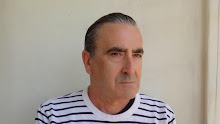
 Tosh and Kimley discuss The History of Bones: A Memoir by John Lurie. Lurie is a multi-hyphenate talent: musician-composer-actor-painter and now book-writer. Initially making his mark as the bandleader for downtown New York group, The Lounge Lizards, he quickly went on to establish himself as an actor in several films. He created and starred in the enigmatic, must-see TV show Fishing with John and the more recent Painting with John. He’s toured the world, composed several film scores, and has even done some modeling. And all along, he’s also managed to keep up a serious painting practice. Is there anything this man can’t do? Tosh and Kimley have some varying thoughts on this…
Theme music: “Behind Our Efforts, Let There Be Found Our Efforts” by LG17

"Wallace Berman: Off The Grid" exhibition at TOTAH 183 Stanton Street, NYC. The show is up until October 31.


"Wallace Berman : Off The Grid" Exhibition at TOTAH in New York City. 183 Stanton Street.

Wallace Berman is a notorious guru of the 1960s art pantheon. He emerged out of Los Angeles’ historic Ferus Gallery, driven by Walter Hopps, Robert Alexander and Ed Kienholz. Often cited as a West Coast Beat Generation artist who appeared on the cover of the Beatles’ Sgt. Pepper’s Lonely Hearts Club Band and rubbed elbows with the likes of Allen Ginsburg, Dennis Hopper and the Rolling Stones, his contributions transcended the multiple comparisons of his aesthetic and the associations that he kept.
Berman was a self-taught artist who incorporated the essence of the syncopated rhythms of jazz music and its culture, the mystique of re- appropriated objects, and his sharp wit expressed through mystical symbols and the popular imagery of his time. Surrealism, Dadaism and the Kabbalah all influenced his aesthetic. After discovering the possibilities of the Kodak Verifax photo copying system, Berman landed on his now famous motif in 1964. The image of a hand holding a transistor radio found in an advertisement for Sony, which appeared in Life Magazine became his delivery system. By removing the speaker grill and inserting random appropriated images the hand shuffles up messages that appear to spring out of the ether. His early use of the gridding technique creates a visual cacophony that barrages the senses. In Off the Grid, we see many early examples of Berman searching for this now infamous motif. For example, in Untitled (Business Man at a Desk), we see Berman beginning to play with the idea of substituting content to shift the contextual interpretation of a common advertisement image.
Berman worked from 1958 until his death on an 8mm silent film (later entitled by his son Tosh as, Aleph) that incorporated unconventional film techniques carried over from collage and painting. The film includes hand-coloring, Letraset symbols, and collage portraits of pop-culture icons spun into a rapid- moving version of his gridded works.
Off the Grid welcomes Wallace Berman back to New York after a long absence. Berman’s presence in New York dates as far back as 1968 when legendary curator Kynaston McShine featured him in a one-man show at the Jewish Museum on the Upper East Side. This is a rare opportunity to see selections from the artist’s oeuvre including the film, Aleph, which will be screened at the gallery during the exhibition.
This exhibition is realized in collaboration with Kohn Gallery, Los Angeles, Sam Mellon, and the Wallace Berman Estate. The exhibition will be accompanied by a catalogue.
Wallace Berman (born 1926, Staten Island, NY) refined his artistic vision in California from the 1950s-70s, living in San Francisco then Los Angeles, cultivating a like-minded community and eschewing academic constraints. His critical involvement with the Beat generation and contribution to the art and culture of that region was both influential and also largely forgotten by the mainstream art-consuming public. His mail art folio Semina was self-published from 1955-64, and has become an iconic chronicle of emerging thinkers and writers from this era. A complete catalogue of Semina editions are now included in the Archives of American Art, Smithsonian Institution. In 2016, Kohn Gallery, in Los Angeles, staged “Wallace Berman: American Aleph,” the first comprehensive retrospective of the artist in nearly 40 years. Solo exhibitions have also taken place at the Whitney Museum of American Art, New York (1978), and the Santa Monica Museum of Art in Los Angeles (2007). Today, his works are held in collections of the Centre Georges Pompidou in Paris, the Tate Gallery in London, The Museum of Modern Art in New York, the Whitney Museum of American Art, the Los Angeles County Museum of Art, and the Museum of Contemporary Art in Los Angeles, among many others. Berman died in a car accident on his 50th birthday on February 18, 1976 in Topanga Canyon, CA.
For further information please contact info@davidtotah.com
TOTAH 183 Stanton Street, New York, NY 10002

We'll take Manhattan again. Wallace Berman exhibition in NYC this coming September. More details later. Self-portrait of Wallace up above.
 |
| Dry point table, 1981 Mixed media on wood 12 x 24 inches (45 x 60 cm) |
When I hear the two words together, Saul and Steinberg, I immediately think of him as the illustrator for New Yorker Magazine. This is true, but one can't measure a person's worth from just one source. Looking at the catalog of a show that took place in 2019 at the TOTAH Gallery in New York City, I become aware that there is a larger landscape that Saul Steinberg worked on. Going through this catalog, which is available at the gallery, and in an edition of 300, it's a great jaunt through an artist's career that is small in size but focused on his greatness.
The humor in his drawing is very tongue in cheek but sophisticated in that Manhattan manner that I love so much. Trotzky in New York, 1982 is an image of Trotsky with an apple pie and coffee at a New York Automat, dated January 28, 1917. That year, he spent 10 weeks in the city, and to see such a Russian iconic Marxist figure in an Automat is funny alone. Still, Steinberg's drawing is very sweet, and there is an absurdity mixed in. I don't know the origin or why this work was done. It could have been for a publication or article on Trotsky in New York, or it can be just a witty commentary on the clash of cultures. Perhaps the automated world of Capitalism within the framework of a Marxist enjoying his pie and cafe.
I'm intrigued with his works on wood, mainly through the medium of ink, collage, paint, and pencil. One, Dry Point Table (Illustration above), he gives equal space to each image. It reminds me of Marcel Duchamp's Box in a Valise, which is his entire works put in a suitcase. In a series of works on wood, which resembles looking at a tabletop, Steinberg is not complete, but there are personal items that are placed neatly. The viewer can connect the pen, the portraits, and an image of a book opened to Steinberg's art.


Today is the second anniversary of my book TOSH being released to the world. In actuality, it feels like a year ago, then two years ago, due to the Covid-19 world sort of erased 2020 for me. Still, I was fortunate to promote my book in New York, Portland, San Francisco, and Los Angeles in 2019. Also, countless interviews with all sorts of media took place as well. Thank you, City Lights, for the pleasure of being with you (and still am). -Tosh Berman
 |
| ISBN: 9781909526730 |
 |
| ISBN: 9788862087223 |


 Posts
All Comments
Posts
All Comments