Thursday, November 5, 2020

Wallace Berman Installation at the Ferus Gallery, 1957

Contact sheet showing images of Wallace Berman's exhibition at the Ferus Gallery in Los Angeles, 1957. The Getty Research Institute, Charles Brittin papers, 2005.M.11.13. © J. Paul Getty Trust. Photos by Charles Brittin


My dad, Wallace Berman, first and the very last gallery show he did while alive. This exhibition was shut down by the LAPD in 1057. -Tosh Berman


Wednesday, November 4, 2020

Wallace Berman: Invitation RSVP Card sent to Dennis Hopper (1963)


My dad, Wallace Berman, was sent an invitation by Dennis and Brooke Hopper to attend a cocktail party for Andy Warhol. He sent the card back to Dennis, but made it into an art piece. He wrote "Accepted: W.B." Throughout Wallace's life, he corresponded by sending cards, that were art pieces to various people. My dad never thought of it as "Mail Art," but more as a personal correspondence to an individual. Dennis held on to this card until he passed away. His estate sold the work, but where it is a bit of a mystery to me. -Tosh Berman


Tuesday, November 3, 2020

Wallace Berman (Untitled) 1965?


 A work by Wallace Berman, and made in what I think was in 1965.  Make note of the bolts on each corner of the piece.  When you see those bolts that means he made the frame as well.  It was later that he took his work to be professionally framed.  At this time, he liked making the frames, and often as a nine-year-old assistant I would help him in the studio by holding the work as he screwed in the bolt. -Tosh Berman.

Sunday, November 1, 2020

"Word Book" by Ludwig Wittgenstein. Translated by Bettina Funcke. Critical Introduction by Désirée Weber. Art by Paul Chan. (Badlands)


ISBN: 9781943263240

"Word Book" by Ludwig Wittgenstein.  Translated by Bettina Funcke. Critical Introduction by Désirée Weber.  Art by Paul Chan. (Badlands)

I can't imagine myself as a child and having Ludwig Wittgenstein as my teacher.   Without a doubt, he would hate me.  Wittgenstein was a school teacher in rural communities in Austria between the years 1920 and 1926.  Concerning his biography, he was strict and stern with his young students.  It's reported that Wittgenstein hit one of the students, and they collapsed from the force of his slap or fist. That ended his career as a teacher, but he wrote a book before his unfortunate act of violence.  "Word Book" is a children's dictionary, and Wittgenstein, as a teacher, feels that students needed a book that they can easily go to for spelling corrections and to look up words.  The standard dictionary during those days was expensive or not focused on young student's needs.  

I can't think of more of a perfect philosopher to write such a book.  Wittgenstein's obsession with words and how language is used in the world is a long time concern.  What is the meaning of a word, and how is it used, with the additional thought of a thinking pattern behind the vocabulary.  Wittgenstein was sensitive to word usage in different dialects and communities. 

This beautiful book looks like a student's book from the 1920s.  This book is suitable for people who are studying German. In actuality, it's a replica of a book in a specific time and, more important, by the great Ludwig Wittgenstein.  Beyond his child-hitting approach to teaching, he must have been a great instructor to acknowledge a need that the students had for language that speaks for them.  Like my elementary school years, the teacher taught different subjects, and Wittgenstein taught them science, math, grammar, and writing.  "Word Book" is recommended to all Wittgenstein fans and anyone who loves language and understands the importance of the art and craft that is a dictionary. 


Wallace Berman "Untitled" (Lenny Bruce)


Copywright by Wallace Berman Estate

BOOK MUSIK - "Recombo DNA: The Story of DEVO" by Kevin C. Smith


Book Musik 033 – Recombo DNA-The Story of Devo or How the 60s Became the 80s by Kevin C. Smith

Recombo DNA-The Story of Devo or How the 60s Became the 80s by Kevin C. SmithTosh and Kimley discuss Recombo DNA-The Story of Devo or How the 60s Became the 80s by Kevin C. Smith. Smith takes a deep dive examining just what made Devo tick and twitch. From 1970 to 1979, he takes us through the background and influences of this Ohio band who experienced the Kent State shootings, discovered Dada, enjoyed manipulating the ideas of de-evolution, experimented with film and multimedia shows and ultimately became a band with top 40 appeal. They managed to find themselves in the company of the people best suited to further their cause from Toni Basil to Brian Eno to Neil Young. Talent and timing is everything.

Theme music: “Behind Our Efforts, Let There Be Found Our Efforts” by LG17


Saturday, October 31, 2020

Wallace Berman


A work of art by my dad, Wallace Berman.  I think he did the piece sometime around 1965 or 1966.

Tribute to Sean Connery by Tosh Berman


It's strange to think about it, but I and my dad's bonding (no pun intended) was driving around Los Angeles and going to the cinema. I remember seeing "Dr. No" at the Chinese Theater either in the late morning or afternoon matinee. I must have been either 8 or 9 years old, and like millions of others, Sean Connery made an impression on me. To be honest, I'm not a huge fan of the Bond films, but I love the title sequence, the action scene before the titles, and of course, the lens-eye of Connery walking up in front of the camera and shooting his gun toward the audience. After that, it's a blur of images of travel locations and girls. Still, no one can say "Bond.... James Bond" like Sean. His body language, clothes, the fetish of cars and weapons, and the fact that Bond/Connery can walk away from the 'adult' toys, and the most distinguished part of his body is his eyes and eyebrows. Roger Moore had the eyebrows thing as well. I was a fan of the Bond/Connery world's by-products, such as board games and toy guns. Sean and I share a birth date, and ever since I was aware of his birth date, I thought of him on my birthday as well. I will continue to think of him on my birthday until I pass on. -

Tosh Berman

Friday, October 30, 2020

"Peter and the Wolves" by Adele Bertei (Smog Viel)


ISBN: 9780578639437

This small gem of a book is superb.  Adele Bertei's memoir of her brief life with (now) legendary Cleveland musician Peter Laughner is a very heartfelt look at their friendship. Bertei, after this time, became a member of the original No Wave band The Contortions and worked with Tears for Fears as well as Whitney Houston.  Laughner was in the classic band Pere Ubu and a key figure in the music scene out of Cleveland, Ohio.  One of those present that is felt through the music and the intensity of those times.  Bertei, in this brief but powerful writing, captures the essence of discovering music, narcotics, and social drinking.  At the time, she was a fellow musician and a member of Peter's band, 'Peter and the Wolves.' There are no cliches, only the strong characterizations of Laughter and the introduction to the world of CBGB's - all captured by Bertei's stark but descriptive prose.  Ninety-three pages long and not a wasted word. Along with Patti Smith's "Just Kids," Richard Hell's "I Dreamed I Was A Very Clean Tramp," Chris Stamey's "A Spy in the House of Loud," Richard Lloyd's "Everything is Combustible." Duncan Hannah's "Twentieth-Century Boy, you can add "Peter and the Wolves" as another classic literature regarding the punk years.  

Thursday, October 29, 2020

"Godlis Streets" Photographs by David Godlis with Foreword by Luc Sante & Afterword by Chris Stein (Reel Art Press)

ISBN: 9781909526730


There have been hand-painted landscapes for centuries, but what the 19th and 20th centuries brought us is street photography. Like a drawing or painting, photography can capture the psychology or emotion of people in the picture. The difference between the two mediums of paintings/drawings and photography is that one is considered real, and the other is a representation by an artist. It can take days or even years to complete an oil painting, but snapping a photo can take seconds. Perhaps in the darkroom, another process occurs, where the photographer can manipulate the images or the darkness/lightness of that photo. Still, the immediate recording of an activity or history documented is a significant aspect of still photography. It's a medium that is like making punk rock music. One can know three-cords to write a song, and it takes an instant to capture an image with one's camera. It takes talent for sounds or an eye to making that image or song into art. Photographer David Godlis spent a great deal of time in 1970s New York to take pictures of musicians and fans in such punk locations such as CBGB's. 

 The urgency to capture a music scene as it happens also is a close relative to street photography. One sets the viewer's mind to photograph a poetic or surreal activity as it happens. Do photos lie? Perhaps, but the photographer's essence is to capture time at its most beautiful, profound, or at the very least, for amusement purposes. Godlis is not a Weegee type of street photographer. He is not out there to capture crime and murder scenes for the tabloid press. Godlis sets out to find images that one is pleasing to the eye. It gives some weight or presence to everyday people reflecting their inspirations and practices in an urban landscape that happens to be Manhattan and Boston. 

 In many of the images in this book, people look directly into Godlis's camera as he quickly snaps a shot. They have no time to react to the picture taken, and in fact, some look like they make contact with their eyes, but maybe they're thinking about their day as well. Or they have to keep a necessary appointment. The viewer of this book can make their narratives of who these people are. Still, all of them have that hardcore essence of living in a large and cosmopolitan landscape. 

 The juxtaposition of what looks like a businessman going to work but carrying a Playboy magazine or the two young women are approaching or going by an entrance that says "Service Gate." In that photo, a can and bottle of an empty beer bring up all sorts of narrations in these pictures. The black and white images are sharp, crisp, and I can feel the weather that day due to the clothing and the photographs themselves' mood. These photos essence sticks to one's mind. An awe-inspiring book of images that captures urban life as it happened.

Sunday, October 18, 2020

TAR BEACH: Life on the Rooftops of Little Italy by Susan Meiselas with Virginia Bynum & Angel Marinaccio (Damiani)


ISBN: 9788862087223


Tar Beach is a poetic term for rooftops of apartments, especially in this book of found or family photographs in the Manhattan area known as Little Italy.   Susan Meiselas, with the assistance of Virginia Bynum and Angel Marinaccio, articulate the joys of their neighborhood and the ability to have access to the roofs of their living area.  Here, they can pose for family portraits, sun themselves during the summer, even having a hose placed so one can cool off with a stream of water.  

Little Italy is now called Nolita.  The neighborhood between Canal Street and E. Houston Street, as well as Lafayette Street and The Bowery. Martin Scorsese was raised in this neighborhood and wrote a very brief but moving portrait of the importance of The Tar Beach in this part of the world.  Scorsese comments on the song by Carole King and Gerry Goffin "Up On the Roof" (1962) about the importance of a space that is much needed from the cramped and small apartments below the roof. 

The book is about the quiet moments of experience where family and neighbors gather and a location of solitude to be away from family. The beauty of such existence is often imagined or portrayed in films and literature.  This book gives proof of such an enlightened presence. "Tar Beach" is a bittersweet (like all memories) of life in Little Italy, with commentary on photographs and the world at the time.  It is a book of somewhat great importance for those who live or lived in Little Italy and a reminder that a city's history must never be forgotten.  -Tosh Berman


Thursday, October 15, 2020

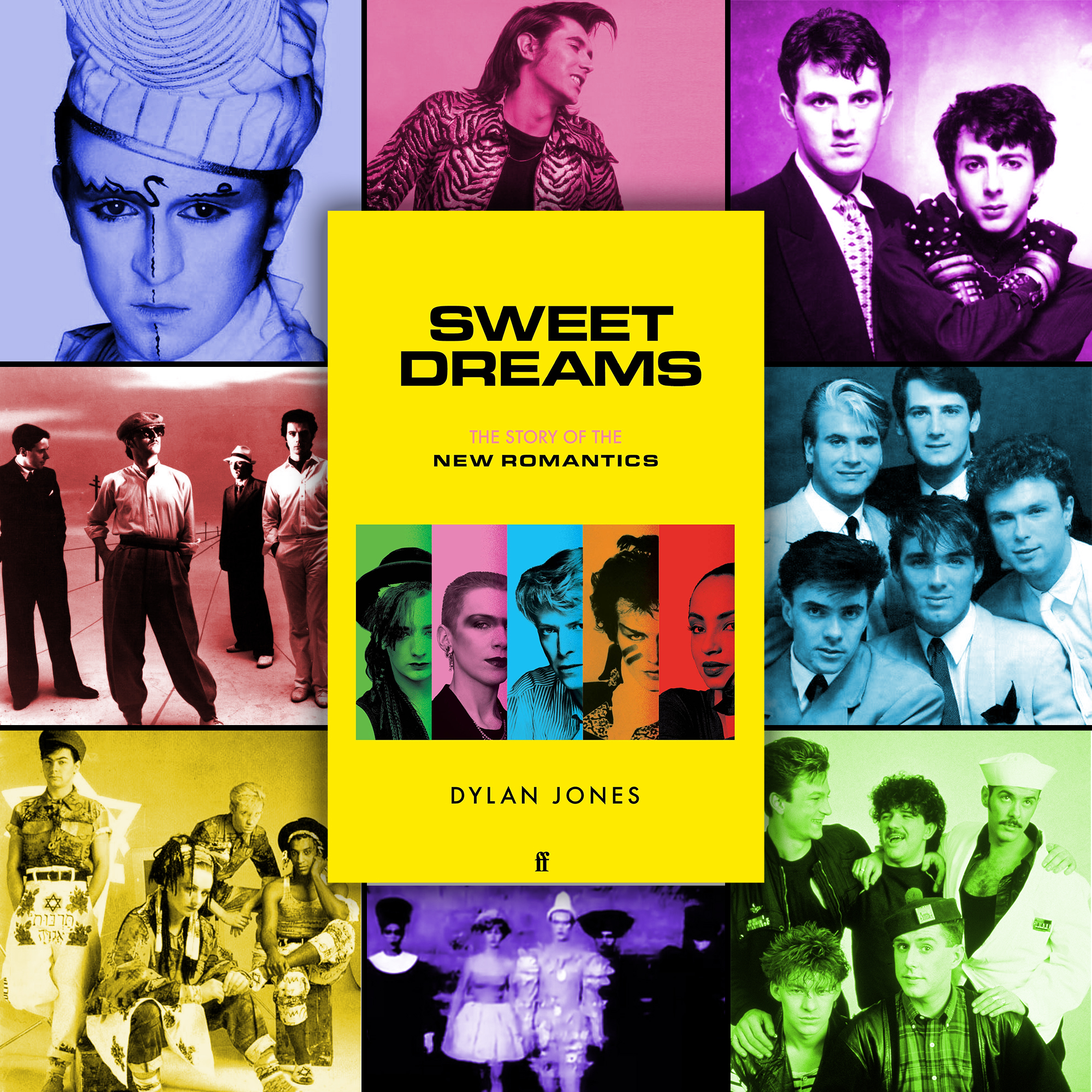
Book Musik - "Sweet Dreams: From Club Culture to Style Culture, the Story of the New Romantics" by Dylan Jones (Faber & Faber)


Book Musik 032 – Sweet Dreams: From Club Culture to Style Culture, the Story of the New Romantics by Dylan Jones

 "Sweet Dreams: From Club Culture to Style Culture, the Story of the New Romantics" by Dylan JonesTosh and Kimley discuss Sweet Dreams: From Club Culture to Style Culture, the Story of the New Romantics by Dylan Jones. The 80s are back! Whether or not this makes you cringe, it was nevertheless an interesting era of Thatcherism, gender fluidity, rampant consumerism, and a hugely creative group of young people looking to conquer the world. This book goes well beyond the superficial veneer of the big hair, the big shoulder pads, and the hyper-stylized MTV videos. Jones gives us a seriously in-depth look at the nucleus of the scene in England as well as contextualizing it in the broader social and political sphere, not just in England but throughout the world. No haircut is left unexamined!

Theme music: “Behind Our Efforts, Let There Be Found Our Efforts” by LG17


Saturday, October 10, 2020

Tosh Talks Frank O'Hara May.27, 2011


Tosh Berman talks about,
" FRANK O'HARA" POEMS FROM THE TIBOR DE NAGY EDITIONS, 1952-1966.

Friday, October 2, 2020

BOOK MUSIK 031 - Suicide's "Suicide (33 1/3) by Andi Coulter


Book Musik 031 – Suicide’s Suicide (33 1/3) by Andi Coulter

Suicide's Suicide 33 1/3 book coverTosh and Kimley discuss Suicide’s Suicide by Andi Coulter from the 33 1/3 series. Suicide was a band comprised of Alan Vega on vocals and Martin Rev as the sole multi-instrumentalist. Spawned from the wreckage of 1970s New York, the band never seemed to find a wide audience but those in the know who were lucky enough to have seen them live were the participants in a show that surely would not be forgotten. Typically described as an assault to the senses with a strong vibe of imminent violence, most people didn’t quite know what to make of them. But as so often happens with cult artists, their influence casts a wide net and continues to do so to this day.

Theme music: “Behind Our Efforts, Let There Be Found Our Efforts” by LG17


Wednesday, September 23, 2020

Juliette Gréco R.I.P.


Juliette Gréco, an icon from the beginning to the end. St Germain des Prés beauty and a great song artist. A dramatic life with intense romances (Miles Davis) and a close friend and perhaps even muse to Boris Vian. I love her. -Tosh Berman.

Tuesday, September 15, 2020

BOOK MUSIK: "Wagnerism" by Alex Ross


Book Musik 030 – Wagnerism: Art and Politics in the Shadow of Music by Alex Ross

Wagnerism: Art and Politics in the Shadow of Music by Alex Ross Cover graphic

Tosh and Kimley discuss Wagnerism: Art and Politics in the Shadow of Music by Alex Ross. A famous quip goes “Wagner’s music is better than it sounds.” Whether you find Wagner’s music to be sublime or bombastic, this is an essential read. It is not a biography or an examination of his music but, more interestingly, it’s a very deep dive into the enormous cultural and political influence Richard Wagner has had on his contemporaries and everyone since, from writers to painters, dancers, philosophers, politicians, and filmmakers. The diversity of those who’ve come under the spell of Wagnerism is beyond compare. And this is despite Wagner’s well-known antisemitism and association with Hitler and the Nazi regime. Cancel culture hasn’t quite figured out what to do with Wagner but Ross leaves no stone unturned in this enormous and hugely satisfying read.

Theme music: “Behind Our Efforts, Let There Be Found Our Efforts” by LG17


Thursday, September 10, 2020

"Suppose A Sentence" by Brian Dillon (NYRB)


ISBN: 978-1-68137-524-3

It is always a pleasure to dwell in the words and world of Brian Dillon. "Suppose a Sentence" is a collection of literary essays, where the foundation is the sentence. Twenty-eight essays plus introduction focus at first a specific sentence by an author but then using that as a projection into that writer's style, structure, and sensibility. In many ways, this collection is a very straight forward literary inquiry into the author's work. It's not really about the sentence itself, or structure of writing, but how the beauty and form of writing take place in a reader's or critic's mind. 

Most of the authors/writers are well known here: Roland Barthes, Anne Carson, Thomas De Quincey (an author that comes up a lot in this book), Charlotte Brontë, George Elliot, Beckett, Virginia Woolf, and others. Pretty much the Western Literature world, but with some new figures such as the Korean-American Theresa Hak Kyung Cha and Jazz critic Whitney Balliett. I don't know the names like those two, but I want to read their works due to Dillon's take on their work. 

I love literature, and I too think of sentences that make me go-go almost the same manner as listening to exciting music. Dillon captures these moments in these brief but thoughtful series of essays. 


Friday, September 4, 2020

WILLIAM N. COPLEY: SELECTED WRITINGS edited by Anhony Atlas (Walther König)


WILLIAM N. COPLEY: SELECTED WRITINGS edited by Anthony Atlas (Walther König) ISBN: 978-96098-776-5

I know the name of William N. Copley (1919-1996) as a gallerist in Los Angeles during the late 1940s who focused on Surrealist art. Copley Galleries were the first to focus on the paintings and sculptures of Man Ray and do the first Joseph Cornell exhibition in Los Angeles. Overall, as a business, the gallery was a failure. However, like a cat with nine-lives, Copley focused his life as a painter, but still drawn into the world of Surrealism. There is a cartoon quality to his visual work that reminds me of a colorful Krazy Kat comic strip but with a strong sense of eros. Philip Guston also comes to mind. "William N. Copley Selected Writings" is a collection of his texts. They are unique works, like his paintings, that fully express his 'fun' character.

The exceptional quality of Copley is his relationship with the old Surrealist guard. He was a younger man when he met Marcel Duchamp, Man Ray, Cornell, and Max Ernst. So, one can feel the generational difference between him and the others. Still, Copley has a wicked sense of humor that must have been a delight to the European artists. His 'American' quality to accept failure and move on is an excellent trait by Copley. As an anthology of one person's writing is all over the map, but his devotion to the world of Ernst and others never tired him. Reading this book, you get some stories over again, but the context is the key here. In a manner, Copley is an outsider. Adopted to a wealthy and influential family, he is the black sheep in the family structure. Yet, his outside view of the world is a tool for him being involved in the arts—both as an admirer or collector and artist. Copley didn't use art jargon in his essays. He's very much a journalist reporting on the facts that are in front of him. His reading audience is people who are not necessarily into the visual or literary arts. He wrote for publications such as The San Diego's Evening Tribune, Herald News from Illinois, etc. All small-time and neighborhood newspapers. His first-person accounts with Man Ray, Duchamp, and Cornell make this book a worthy read. A generous slice of cultural history as it happened. -Tosh Berman.


Tuesday, September 1, 2020

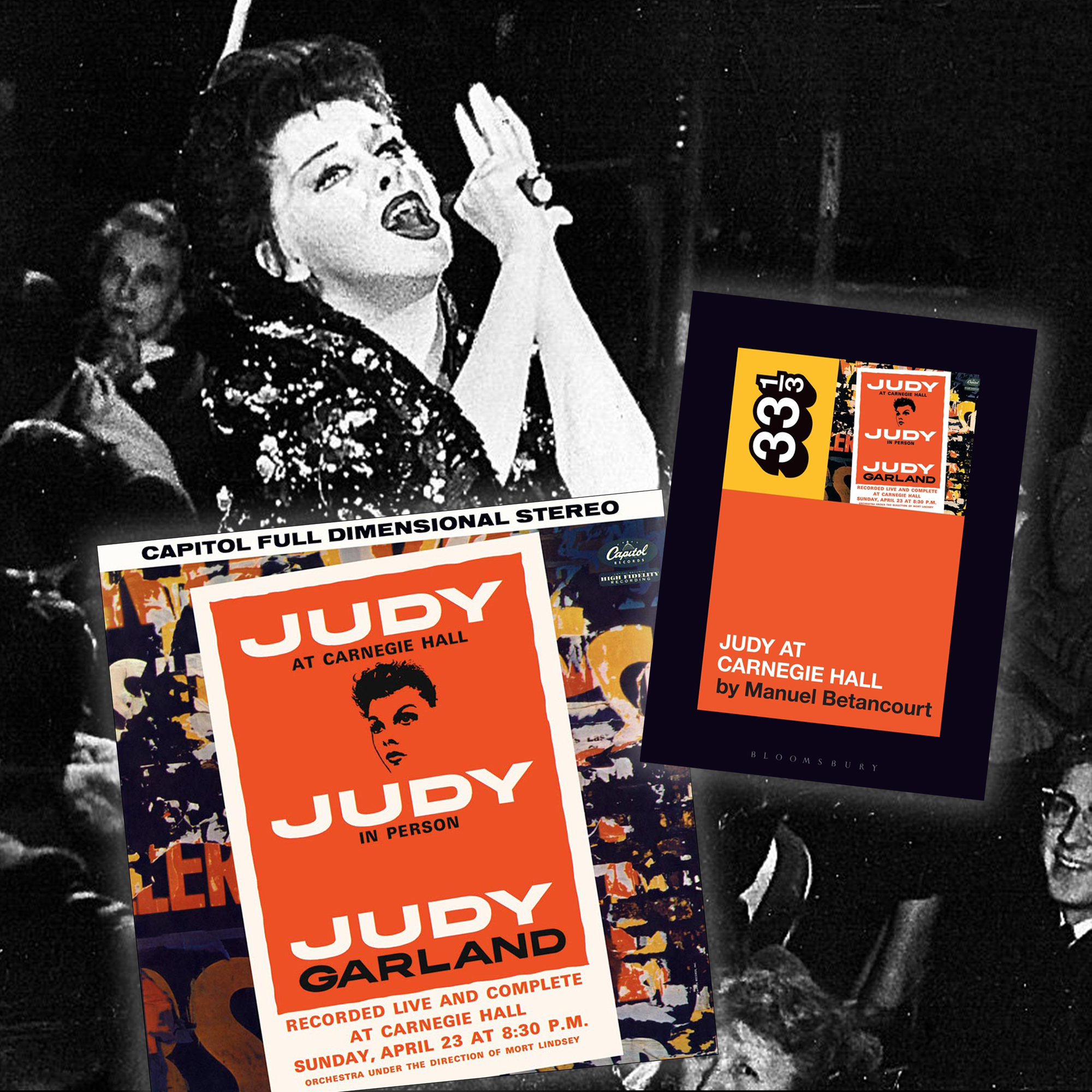
BOOK MUSIK 029 -Judy Garland's Judy at Carnegie Hall (33 1/3) by Manuel Betancourt


Book Musik 029 – Judy Garland’s Judy at Carnegie Hall (33 1/3) by Manuel Betancourt

Judy Garland's Judy at Carnegie Hall 33 1/3 bookTosh and Kimley discuss Judy Garland’s Judy at Carnegie Hall by Manuel Betancourt from the 33 1/3 series. This live double album was a milestone in pop-culture history. Recorded in 1961, the album is an homage to the American songbook, was on the Billboard charts for over 70 weeks, won four Grammy Awards and has never been out of print. It was a highwater mark both in terms of Garland’s career and as part of the cultural and sociological zeitgeist of the 60s. Garland looms large as an old-Hollywood film icon and as one of the most celebrated gay icons. Her life was full of tragedy and triumph and this album is undoubtedly at the pinnacle of her many triumphs.

Theme music: “Behind Our Efforts, Let There Be Found Our Efforts” by LG17