Tuesday, January 5, 2021

January 5, 2021 by Tosh Berman


As a child of the 1950s, the medium of the television hit me pretty hard. I was exposed to that world, mostly through my grandparents, who allowed me an endless amount of television time. My young life was scheduled due to the programming of children's shows and, of course, "The Adventures of Superman." My primary concern was to get in front of the TV set at a specific time, so I won't miss the episode of Superman. I believe my first reading experience is going over the TV Guide, which, all in truth, was my bible. I also learned how to use a calendar and mark the days off for hardcore viewing of my favorite shows. 

Brigitte Bardot, due to my father taking me to see "And God Created Women" was my first movie star experience. Without a doubt, George Reeves, who played Superman, was the first male star in my odd orbit. The only contemporary actor I can think of now, compared to Reeves, would be Kyle MacLachian. Still, the image of Reeves as Superman is etched in my DNA as a figure of great importance. I never fully understood his death by suicide. There is controversy to this day if he was shot by another or shot himself in the head. That, I don't find troubling in itself, but more of the fact that how can Reeves die from a bullet when he's Superman?

I did read the Superman comic book, but I always imagined the imagery of Superman being Reeves on the comic page. Therefore Superman will always be George Reeves. The truth is it seems Reeves was frustrated being identified with the role of Superman. It was a struggle for him from some sources, being in his 40s, wearing the outfit of the superhero, and being branded as that character. Still, there were also reports of him taking the role very seriously. He kept his private life very private while making the series and even quit smoking in fear that he would be photographed smoking. 

The other interesting aspect of Reeves's Superman is the character of Clark Kent. I was intrigued that Superman's best friends, Jimmy Olsen and Los Lane, could never recognize Kent being Superman. In the comic book, Kent was often seen as a coward or dumb to hide his secret identity as the Man of Steel. In the TV show, Kent was very masculine, smart, and brave. Also, the issue that Kent always wore the Superman outfit under his beautifully tailored suit.  My interest in dandyism partially came from the idea of Superman wearing a beautiful suit and then removing it to expose the Superman outfit. Which I gather means he never took off the uniform that came from his planet Krypton. Legend has it that the fabric was part of his bedding when he was sent to Earth to be saved from the destruction of his home planet. 

Reeves's Clark Kent is very much the American hero, and clearly, Superman is American. The false (or is it real?) identity of Kent is a farm boy in the Mid-West. That upbringing made Superman, at least emotionally, an American. The irony is Superman/Kent are total outsiders. Perhaps they are the ultimate immigrants coming to America, or to some, a dangerous presence in the American conscience.  We often look at the stars at night as a sign of hope against the misery that is on the landscape that is Earth. Heaven, in theory, is above, and the Man of Steel came out of the sky. Perhaps there is a touch of Ziggy Stardust as well, another primary cultural importance to me as a teenager. 

As I got older, I became more attracted to the idea of Clark Kent. His whole life is both real but also based on a lie. In the true sense, immigrants who come to America can make a new life out of their discarded past. Hollywood is such a landscape where one can change its image to suit their passion or need for occupation/work.  What I took from my Superman experience is my skill in making schedules for watching the shows. That transferred to future activities such as work and the idea that one needs another identity, perhaps a secret one, to do work. 


-Tosh Berman. 

Monday, January 4, 2021

The Important Albums from 1980 for Tosh


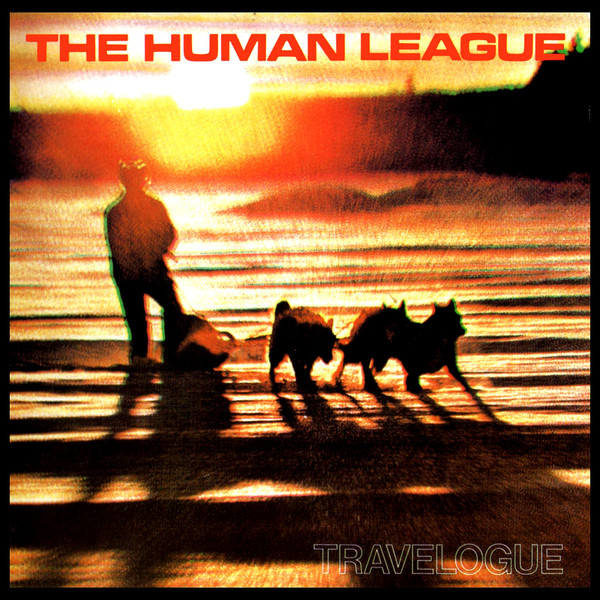
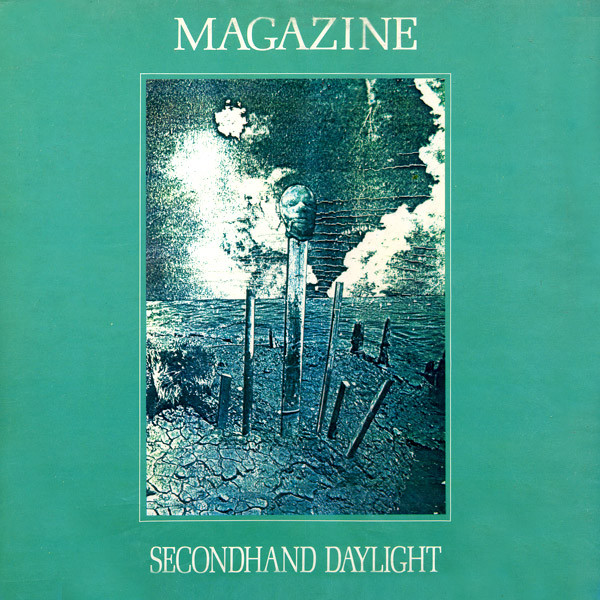
 I turned 26-years old, working in a record store (Licorice Pizza), and only a handful of albums were essential to me in 1980. In no special order: Magazine's "Correct Use of Soap," Wall of Voodoo's first EP, The Cramps "Songs the Lord Taught Us," Human League's "Travelogue," Colin Newman's "A-Z," and The Feelies "Crazy Rhythms." Three of the albums were totally new sounds for me at the time: the Cramps, Wall of Voodoo, and Feelies. "Crazy Rhythms" I was really crazy about. At the time, their guitar orientated music sounded serious, and in a sense, sound like Television's younger brother. I also was impressed by how they allowed 'silence' between the tracks on the album. A moment to pause before the next aural adventure. -Tosh Berman

January 4, 2021 by Tosh Berman


One day I jumped into a body of water and hit my head against a rock. It took a while to recover, and I had plenty of time to think of what went wrong with my life. I was middle-aged, no wife, and not very successful with my writing or drawings.  I debated within myself if I should give up one medium for the other. The odd thing is when I did attempt not to draw again, the writing urge left me as well. So, I decided to keep pushing both 'arts' at the same time and just hope for the best. Of course, 'the best' takes its sweet-time and left me with great feelings of doubt and depression.  

My father was a solicitor, and my mother came from a long line of master plumbers. I was raised to be practical and taught skills and science as someone who would join my family's customary world. As a teenager, I enjoyed filling my school books with drawings of nude women wanting themselves with another male. Therefore they were my first self-portraits among the ladies of my imagination. Once my vision and desires opened up, there is no way I'm going back to the landscape of my parents. 

I married an artist, Ida Nettleship, a woman of great talent and beauty. We shared a sense of adventure and lived in the town of Martigues in Provence, between Aries and Marseilles.  The home was on the tip of the canal; we could wake-up in the morning and fish from our bedroom. Since we had very little to no currency, the fishing came to be life-saving for the children and us. At this time, I became obsessed with the fish we caught, and I started to do drawings of the species. In one of my opportune moments in my DNA, I wanted to study pisciculture, the controlled breeding, and the rearing of fish. My wife and the older child stamped their feet loudly on the ground. They told me in impolite terminology that they didn't want to be surrounded by 'smelly' fish. Giving up dreams or ambitions is almost allergic to my body, but still, I understood their argument.

I got bored at Martiques and felt locked-in with the family unit. I didn't want to leave them, but I thought we needed a new life. Therefore I became accustomed with the Romanni people in the area of France and Italy. I learned to speak various versions of their language and learned their manners and culture. At this time, I met Dorothy, who I hired to be my model. We fell in love, and with some difficultly, we arranged that she be part of the family unit. I had two sons and two daughters with Dorothy, so in a sense, I felt like I was the leader of the gang, with my wife, mistress, and the children. We became a Gypsy caravan and traveled throughout Europe. In our stay in London, Dorothy was attracted to an artist friend of mine, Henry Lamb, and I encouraged her to have an affair with him. 

I became a noted portrait painter of the rich and famous, which suited my taste perfectly. My best job at the time is my portrait of the actress Tallulah Bankhead. If I could afford another clan member, I would gladly have her part of my world. There are those who judge our actions, but in actuality, they have no understanding of how life flows through the currents that are so close to the call of nature. 

-Tosh Berman.

Sunday, January 3, 2021

The Important Albums of 1979 for Tosh


These four albums were essential to me in the year 1979.  I was 24/25 years-old at the time, and this music meant a lot to me.  Of the four, I can't listen to Joy Division anymore, because it's music that reflects youth more than middle-age.   The other albums done below are important to me as well:


January 3, 2021


I can't think of a more critical person alive than Greta Thunberg. Ordinary she ain't, and special comes in spade when it concerns Greta. She turns 18-years old today, and when people say that there is magic in youth, I, of course, think of Thunberg. Her articulation is focused and to the point. She never uses language to beautify an image. Still, almost poetically, she can convey the world's horror in a minimal and direct manner. 

Quotes from Greta Thunberg:

"The climate crisis has already been solved. We already have all the facts and solutions. All we have to do is to wake up and change."

"Adults keep saying we owe it to the young people, to give them hope, but I don't want your hope. I don't want you to be hopeful. I want you to panic. I want you to feel the fear I feel every day. I want you to act as if the house is on fire, because it is."

"Why should I be studying for a future that soon may be no more, when no one is doing anything to save the future? And what is the point of learning facts within the school system when the most important facts given by the finest science of that same school system clearly mean nothing to our politicians and our society?"

"I offend talk to people who say, 'No, we have to be hopeful and to inspire each other, and we can't tell (people) too many negative things'…But, no - we have to tell it like it is. Because if there are no positive things to tell, then what should we do, should we spread false hope? We can't do that, we have to tell the truth." 

"Today, we use 100 million barrels of oil every day. There are no politics to change that. There are no rules to keep that oil in the ground. So we can't save the world by playing by the rules. Because the rules have to be changed. Everything needs to change."

There is something so Bertolt Brecht or Fassbinder in how she approaches the power structure with an understanding of how it operates and why it's poison to culture and civilization. Thunberg made it through modern media because she knows how to use language to convey the bigger truth. 

This amazing young woman turns 18-years old Today. I can't think of another person who deserves a national holiday on her birthday. This is idiotic because that is not what Greta Thunberg is about. It's about action. Happy birthday Ms. Thunberg. 

Saturday, January 2, 2021

The Important Albums from 1978 for Tosh


23 or 24-years old in 1978, and totally in love with the music culture of that time. Also was in my first real relationship, and she left me for a member of The Tubes. So, forgive me if I don't have the live Tubes album here. Nevertheless, the four albums that made an impact on me are Public Image's first album, Wire's "Chairs Missing," Buzzcocks's "Another Music in a Different Kitchen," and Magazine's "Real Life." Those four pretty much expressed my inner-demons and anxiety. Runner-ups are Lou Reed's "Street Hassle," which I think is a great Lou album. I love the low-fi yet hi-fi sound of this disc. DEVO's first great album, but I was deeply disappointed with Eno's production at the time. I saw DEVO numerous times, and they were like watching James Brown and His Flames in 1963. Intensity observed and practiced. Elvis Costello's "This Year's Model" was a fave as well. But his music didn't last for me. Talking Heads "More Songs..." their second album and produced by Eno, is pretty good. But like Elvis, I have no need to go back to this album. I also love Bryan Ferry's "The Bride Stripped Bare." That is his Los Angeles album, and it's very Chateau Marmont to me. But for the first four albums, I will never give up my love for those albums. -Tosh Berman

January 2, 2021, by Tosh Berman


 “From a bumbling citizen through the poetry of the machine to the perfect electric man.” As the leader of The Kinoks, I’m obsessed with how the world is seen or perceived by my fellow citizens. My buddy, Sergei, came from the theater, but I’m a believer in filming life as it happens. I see the camera lens as my second eye. “I’m an eye. A Mechanical eye. I, the machine, show you a world the way only I can see it.” The world we perceive is always put in a neat narrative. I have been told countless times that there is a beginning, a middle, and an end.” I understand that, but I can’t see why not start off with an end, and then a beginning, and end with the middle. The film drama is the opium of the people… down with bourgeois fairy-tale scenarios…long live life as it is!”


I spent a lifetime photographing girls because, to me, I fit right into that world. I have problems with such activities as remembering instructions or difficulty organizing one’s time and dealing with deadlines. Which, oddly enough, affects my work as a cameraman/photographer. I was aware of my dyspraxia as a child. I pretty much spent my life covering that aspect of my life by being loud and never shying away from a situation. Women love me because they pick up on my struggle. There is nothing sexier than one who has difficulty doing even the simplest things in life. A former girlfriend of mine described me as “the king lion on the Savannah: incredibly attractive, with a dangerous vibe. He was the electricity, the brightest, most powerful, most talented, most energetic force behind the camera.”


Once an outsider, always an outsider. I realize I would never be invited to join the club, so why even pretend that I’m even interested in joining that gang. My little unit, The Kinoks, sees the world as we make it, not how others define the landscape. I’m very suspicious of those who use aesthetics to make their work more pleasurable. “A work of art when placed in a gallery loses its charge, and becomes a portable object or surface disengaged from the outside world.” The purpose of the image-maker is to engage oneself with the outside forces. 

I can never follow a simple cooking recipe, but I know how to use the ingredients and bring out a new vision or presence for the world. - Tosh Berman.

Friday, January 1, 2021

The Important Albums from 1977 for Tosh


1977 was my most miserable year, yet, the music was fantastic.  There was a division between older rock music and the current music of that year.   I was totally into ground-level Zero, in that 1977 became Year-One for my music.  -Tosh Berman

January 1, 2021 by Tosh Berman


 It’s not a good way to start a new year when Hank Williams died on January 1st. On the other hand, there is always something special about New Year’s Day weather. Sunny, but cool, and a touch of regret about the past year spent mostly indoors in a one-room flat. My only amusement is to re-design the library books that I had out for numerous months. I have this nasty habit of making collages and drawings in borrowed books and then returning them to the library system. That, and trying to write a play that was due some time ago. 


To put a positive spin this morning, I put on Xavier Cugat’s “That Latin Beat,” and I did the rumba toward the coffee pot to have my first cup of civilization. As usual, my next-door neighbor slams the wall between us to tell me to turn down the Hi-Fi.  I don’t think I ever heard a word from him, just the slams that happen whenever I put on a disc on the record player. Kim, my neighbor, the only good aspect of him is that he travels a lot. I have only seen him once or twice, and I have heard rumors from other neighbors that he is a spy. Noisy neighbors do tell when we meet up in the laundry room in the basement. 

As for me, I can work under an anarchy system of noise. My partner-in-crime, Kenneth, never shuts up. The only saving grace of our relationship is that he likes to sleep in late, and he can sleep through me having sex with two men on the bed, and it wouldn’t cause an eyelid to be open. It’s the early morning when I write and get totally lost in my world. I don’t sleep much, and I rarely get stoned unless I’m on holiday in Morocco or someplace like that. I usually end a writing session with a record by Milt Jackson. I’m a big fan of his vibe-playing, and primarily when he covers music by Monk. 

I admire Kenneth for his wit, but he is also a very sad man, and that is a turn-off. Yet, I can’t imagine my life being separated by his presence. I think I’m most happy with him when he’s sound asleep. He has these weird temper tantrum’s and I just roll my eyes and pretend to either be sleeping or totally engrossed in my notebook with pen in hand. As I close my eyes, and I’m in front of my notebook, I think what it must have been like for Hank to be in the back seat of that Cadillac.  The driver of his car, Charles Carr, realized that Hank was dead not until he stopped for gas in Oak Hill, West Virginia. In my heart (and sometimes brain), I always felt that Kenneth’s death would be just as lonely as Hank’s. 

January 1st brings a new life or an approach to the next 12 months. Between you and me, I didn’t like the previous year at all. This year, I’m going to keep my hammer by the bed and keep my neighbor Kim up at odd hours of the night. 

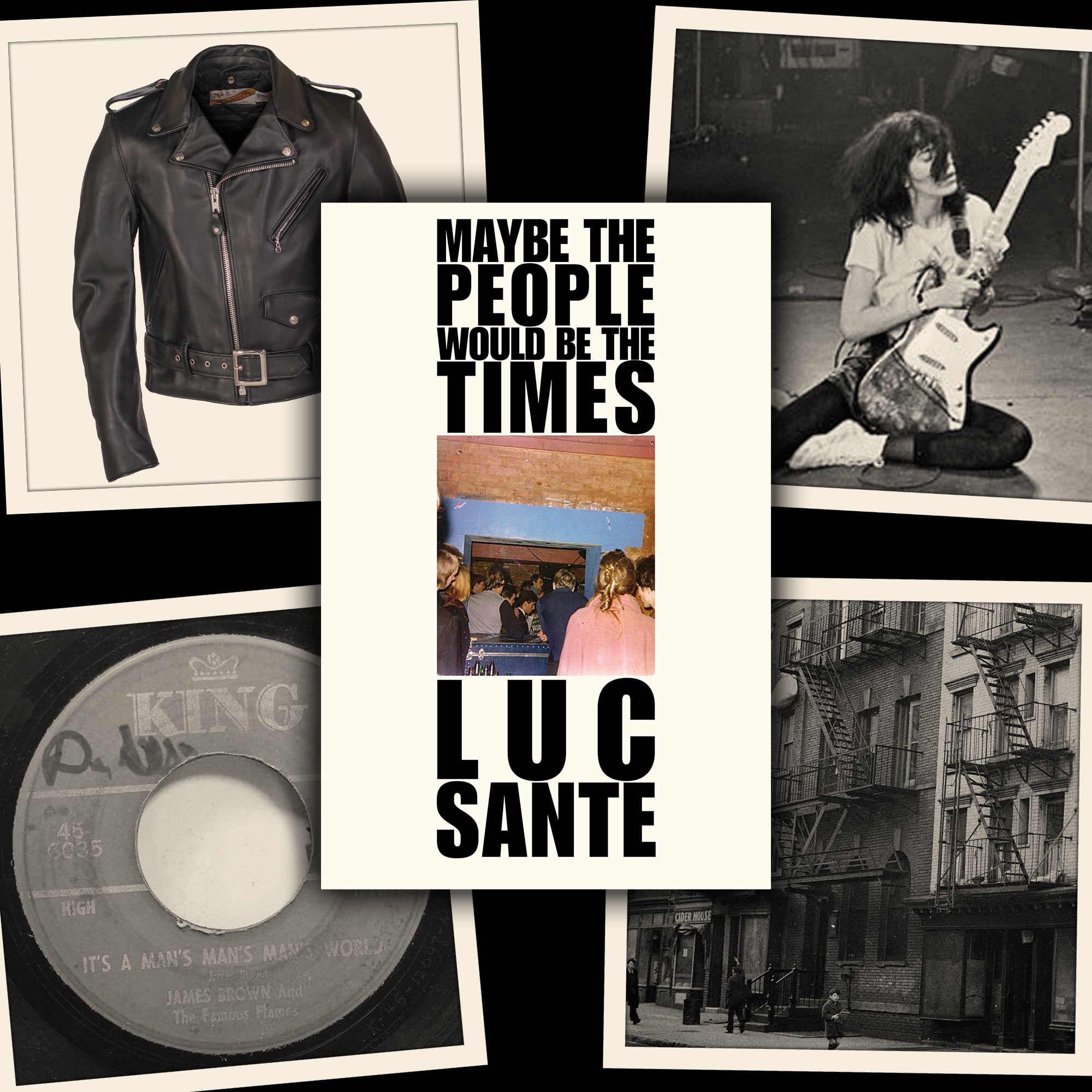
BOOK MUSIK - "Maybe The People Would Be The Times" by Luc Sante


Book Musik 037 – Maybe the People Would Be the Times by Luc Sante

Maybe the People Would Be the Times by Luc SanteTosh and Kimley discuss Maybe the People Would Be the Times by Luc Sante. This collection of Sante’s essays, mostly from the last 15-20 years, covers a wide spectrum of his obsessive interests which include a heavy dose of music, photography, writers, filmmakers, New York City life and an assortment of oddities. While it’s a seemingly divergent field of topics, there is an aesthetic thread that connects them all. His writing pulses with life and pulls the reader into his world — dreamy, romantic, personal and always compelling.

Theme music: “Behind Our Efforts, Let There Be Found Our Efforts” by LG17


Thursday, December 31, 2020

"Maybe The People Would Be The Times" by Luc Sante (VCP)


I identify with Luc Sante's writings because we seem to share an interest in urban street history and its culture and music, films, French crime books & literature. He's a superb essayist with very sharp intelligence, and I love how he approaches his subject matters by making it personal.  Born in 1954,  he was born in Belgium and moved to the United States. His sensitivity is that he's very much aware that he lives in a duo-cultural existence. He's both an American and a European. Through his writing, I get the impression that he feels like an alien in a different world. Sante approaches to culture as buying a nice winter coat in the cold. The very essence of music, art, and literature is deadly important to him. 

"Maybe The People Would Be The Times" is a compilation of Luc's writings from the 21st-century. It includes essays on music, cultural history, writers (great article on Richard Stark), Punk Rock & Reggae, and life in Manhattan during the 1970s. The book's title came from an Arthur Lee song, "Maybe the People Would Be the Times or Between Clark and Hilldale," a classic tune from Love's "Forever Changes" album. I can tell that Sante wrote poetry due to his dense but straight forward prose, but not a wasted word in these essays. Reading some of the chapters in this book is like a physical presence in one's conscious. I can feel Georges Simenon, Patti Smith, Ricard Stark, and others in this volume as if they are sitting across from me. 

Friday, December 25, 2020

Tosh's Favorite Books: 2020


 I've been doing a lot of reading in 2020, and mostly books on music for our podcast BOOK MUSIK. Still, here is the list of my favorite books I read this year, and I recommend that you too, give these books a read. Not in any special order:

1) "Self-Portrait with Russian Piano" Wolf Wondratschek (Fiction)
2) "Maybe the People Would Be the Times" Luc Sante (essays)
3) "A Sound Mind" Paul Morley (Music History/Essays)
4) "Peter and the Wolves" Adele Bertei (Memoir)
5) "Recombo DNA: The Story of DEVO, or how the 60s become the 80s" Kevin C. Smith (Music & Culture)
6)"Sweet Dreams" Dylan Jones (Music History)
7) "Suppose a Sentence" Brian Dillon (essays)
8) "William N. Copley: Selected Writings" (art history)
9)"Wagnerism" Alex Ross (music history)
10) "Written in Invisible Ink" Hervé Guibert (Fiction)
11) "Niche" Momus (memoir)
12) "Felix Fénéon: The Anarchist and the Avant-Garde" (art/literature history)
13) "Wrong: A Critical Biography of Dennis Cooper" Diarmuid Hester
14) "Figure It Out" Wayne Koestenbaum (essays)
15) "Cecil Beaton's Bright Young Things" Robin Muir (Social History)
16) "Tapping the Source" Kem Nunn (Surf-Noir)
17) "The Kinks: Songs of the Semi-Detached" Mark Doyle (music history/London)
18) "Stockhausen Serves Imperialism" Cornelius Cardew (Music & Politics)
19) "Gidget" Frederick Kohner (Surf biography)
20) "Dora Lives: The Autobiography of Miki Dora" (Surf art/Memior)
21) "French New Wave: A Revolution in Design" Tony Nourmand (Film and graphic design history)
22) "It Gets Me Home, This Curving Track" Ian Penman (music essays)
23) "Parallel Play" Tim Page (memoir)
24) "The Subversion of Images" Paul Nougé (art/surrealism)
25) "Tony Conrad Writings" Andrew Lampert (essays)

Thursday, December 24, 2020

"Self-Portrait with Russian Piano" by Wolf Wondratschek; translated by Marshall Yarbrough (FSG)


ISBN: 978-0-374-26049-1


"Self-Portrait with Russian Piano" is an interesting title to this dream-like narrative of an unknown narrator having a series of cafe meetings with a Russian pianist named Suvorin.  The novel goes from first-person to third and beyond, as we get a series of stories about a great musician's life. Does the title hint that the Suvorin is giving the story about his life, or is it more of an imagined or made-up landscape by our mysterious narrator? 

I never heard of Wolf Wondratschek, whose name sounds like a James Bond villain, but that is probably because I'm a Californian fellow with love for the exotic - real or not real.  The location is set in Vienna and a series of cafes or an Italian restaurant.  Suvorin mostly orders water and is keen to talk about his life to this stranger.  He is old, a widow, and it seems that he may have met a new and one presumes a young lover.  We are never sure what is fact or fiction, but we do get the full personality of Suvorin, in that reminds one of an eccentric Glenn Gould.  Like that pianist, Suvorin grew to dislike the sound of applause from a live audience.  He prefers silence or a meditative series of moments after performing a piece. 

The duality is that it is a book about music and the dream-like encounters one has in life, and perhaps a bit of a self-conversation among the pros and cons of culture in a city like Vienna.  Wonratschek is an amazing writer, and this tightly told work in short chapters, which reads like a short story to me at times, is quite remarkable. 


Tuesday, December 22, 2020

Tom Recchion - "Chaotica" CD, Album, 1996 (Birdman Records)


I treasure Tom Recchion's sensibility.  I tend not to separate his graphic arts work from his work as an artist and composer.  He takes second-hand information, in this case, music from another era, that held promise to the American imagination, which was exotica.   Recchion makes the old recordings and transforms them into new music, but not erasing the music's original purpose.  To transform the listener into another world.  As Exotica music is a tour of the outside world, "Chaotica" is a journey into the inner world.  Exotica brings relaxation, "Chaotica" brings relaxation but with an emotional edge. 

There were no overdubs or edits made during the recording.  Recchion used pre-recorded tape-loops and then improvised over the music using keyboards and various digital and analog effects.  "Chaotica" is a relative of Musique Concréte, but with a refined delicacy.   A great album from a brilliant artist. 


Sunday, December 20, 2020

The Bachelor Pad: "All Hash and Cock: The Very Best of The Bachelor Pad (Emotional Response)


"All Hash and Cock: The Very Best of The Bachelor Pad - The Bachelor Pad (Emotional Response)


There are moments in life when one is confronted by something familiar but so beautiful. The Batchelor Pad is a band from Scotland, who released a handful of singles and one album "Tales of Hofmann." They recently released "All Hash and Cock: The Very Best of The Bachelor Pad," a compilation of their old recordings from 1987 -1991, but sounds like a solid album, not a collection of old recordings. It starts off with the song "The Album of Jack" that references "She Loves You" by the Fab Four and ends with "I Want To Hold Your Head," which lightly comments on "I Want to Hold Your Hand." In-between those two songs, you are taken on a ride through the 1960s/1970s UK pop music but never losing the touch of The Bachelor Pad's originality and humor. To define their sound, I could say they're noisy with irresistible pop melodies. Psych-rock in the most real sense, but their canvas is much larger than that.  


Listening to this compilation, I can hear various artists' presence, but not necessarily a full-end tribute. It's more like a Richard Hamilton college or a Joseph Cornell box sculpture where there are individual pieces that tie to a specific visual or sensibility, but as a whole, it becomes an original artwork. The Bachelor Pad is the same in that they are part of their influences, but the way they put their songs together, it becomes un unique aural sound piece.  


All the songs are layered with guitars, keyboards, bass, and drums, but merge into a sound that is partly Joe Meek meets classic Move (Roy Wood) when they did their early singles. The songs are written by Tommy Cherry and Martin Cotter, and both are credited for guitars and vocals. Due to the sonic qualities, I can't tell who or what guitar is playing; it all blends in such a style as an early Associates recording. They throw in the bathtub and sink, but the sound is chaos with plenty of hummable melodies. "Do It For Fun" sounds like a demented Dave Dee, Dozy, Beaky, Mick & Tich song, but even crazier.   


There are no weak cuts on this compilation, but the stand out is what I believe was their last recording, and it was solely written by Cherry "Meet the Lovely Jenny Brown." The definition of this song is 'Perfect Pop." A beautiful build-up to the catchy chorus, it's a hit song that somehow fell through the cracks of time. A remarkable song on a perfect compilation that sounds like an amazing album. -Tosh Berman. 

Saturday, December 19, 2020

December 19, 2920 (Poem)

 December 19, 2020

Tree limb breaks
scotch tape it together with the sapling
if it doesn’t take
pull the tree down
Chances are, it’s a reflection
of love
surviving a crisis
Oh my, I fall
The stars above are covered by tree leaves
the light reflecting between kindling and frond
is nature’s spotlight
we can be movie stars if we try
I’ll stay here, facing the heights of the sky
than say meeting the depths of despair
torn issues of Face Magazine still placed in numeral order
from issue one to issue whatever
pretty much describes my life

David Bowie - "Metrobolist (Nine Songs by David Bowie) Parlophone


In our reality, David Bowie is Elvis Presley. Not only do they share the same birthday and both recorded songs called "Black Star," but also in death, their music is released and looked as new. Tony Visconti, a significant figure in Bowie's career and music, has done a series of classic Bowie work remixes. One may think this is nothing but exploitation or a grasp to make more money in the memory of David Bowie. The truth is, Visconti has done magnificent work as a remixer as well as the original producer of these recordings. It's an artist (as producer) going back to his canvas to clean or refresh the imagery on one level. "Metrobolist" (Nine Songs by David Bowie)" is such a work. Most of us fans and consumers know this album as "The Man Who Sold The World," but it seems that wasn't the original title that Bowie given this record. At the last moment, the label changed titles without Bowie's knowledge at the time. 

"TMWSTW" has always had a muddy sound that made the songs heavy and mono-orientated sounds. It's like someone taking a shovel of mud and throwing it in your face. My first reaction to the album in 1972 was that this is a hard rock record compared to "Hunky Dory," his next album at that time. It's obvious to a listener in the early 70s can see Bowie worked from a broad landscape of different worlds sound-wise. "TMWSTW" is a great album and will always be an essential recording from a legendary artist. Including the contributions from Mick Ronson and Visconti knew how to take Bowie to the next level. "Metrobolist" is a mirror reflection of that album but cleaned up and allowing more textures to be added for the supreme listening experience. 

Nuances show up, more than 'ah-ha' moments while listening to "Metrobolist." The vocals have a touch of more echo. Still, the drums' presence mixed to another volume is especially lovely, and hearing the layered guitars from Ronson and the acoustic guitar work from who I think is Bowie. The Moog is also clearly heard in these new mixes. When you hear "Metrobolist," I hear or more aware of the arrangements. It sounds like a work from a band (Visconti, Bowie, Ronson, drummer Mick Woodmansey, and Ralf Mace, who is credited for the Moog playing and Mick Ronson) than a solo artist. 

"The Supermen" is incredible here, with the galloping drums by Woodmansey. If you're a Bowie fan, this is a must-hear or buy. Beyond that, both albums are superb, and now both in print. The world is a better place with "The Man Who Sold The World" as well "Metrobolist." 

Wallace Berman, BOOSTER, 1967 - Kohn Gallery


Wallace Berman, BOOSTER, 1967

800.00

Now available limited edition vintage poster from the estate of Wallace Berman. Offset poster published by John Martin. Dimensions are 25 x 22inches

Wallace Berman, BOOSTER, 1967

Wallace Berman, LOVE, 1965


Wallace Berman, LOVE, 1965

500.00

Now available limited edition vintage poster from the estate of Wallace Berman. Offset poster. Dimensions are 17 x 21 inches

Wallace Berman, LOVE, 1965

Friday, December 18, 2020

David Bowie - "Ouverz Le Chien (Live Dallas 95) ISO Records


It was not exactly a redesign of David Bowie, but of a re-think, or a new charge of energy and thought into his career and music in 1995.  For me, this is when Bowie got back his groove, and he became fascinated with the world around him.   After hitting a creative (and perhaps commercially) dead-end in the late 1980s, he started up with a band, Tin Machine. A guitar-driven band that reminds me at times of a rave-up era of The Yardbirds. All that is missing are songs by Graham Gouldman. Still, Bowie actually filtering the great British hitmaker in supplying or co-writing songs with fellow band members that are retro in the sense of the importance of being in a band.  In a manner, it is very much Bowie losing himself as a brand being part of a band.  The truth is, Bowie has always been a collaborator with every musician he has worked with in the past. 

"Outside" (1995) was the album that gave him an entrance back to the avant-garde, and re-invent a new approach in recording that album.  For example, almost every song is written by all the musicians during the recording of that music.  If not, co-written by Eno.  It's a late Bowie masterpiece, and when he went on tour to support "Outside," he put together a new band, except for his guitarist (and co-writer) Reeves Gabriel, Mike Garson, and Carlos Alomar.  The new star of the show is bassist and backup singer Gail Ann Dorsey, who is amazing. Lucky us there are live tapes of the shows.  "Ouverz Le Chien" is a show that took place in Texas, and it's a refreshing listening experience. 

For one, Bowie does only a handful of his older songs, and they are usually not done live at the time or deep cuts in his excellent catalog of material.  What is remarkable are the live versions of music from "Outside."  In the studio, it sounds very much like work produced in a laboratory.  Here, they come off as songs of great force and grace.  He does a re-work of "The Man Who Sold The World" without the major guitar riff until the end as a quiet reminder that is faint as a loving memory.  This must have been a remarkable show to witness, but at least we have a great recording, for those who weren't there, or a few that lives with that evening as a ghost-image of a wonderful performance.