The films I make are easily misunderstood. “I move from realism to fantasy without the spectator ever noticing.” I drive a 1967 Rambler through the streets of Shi-mo-ki-ta-za-wa, looking for landscapes to use for my films. So far, I have made three movies, and the filmgoer has pretty much accepted all of them. On the other hand, I don’t care if they like them or not. I know shit. I want to have fun, you know. “I like to take risks. My films never follow the current trend.” Perhaps that is the reason why I lost my audience.
My current film project is to do a film based on Arthur Rimbaud’s “A Season in Hell,” starring the musician Ivo Pogorelić. It was a matter of entering Hell itself to get funding for the film, but due to the success of “Le Samourai,” I found backers from a small theater group in Shimokitazawa, who want to expand their theater into the cinema world. Besides having a great looking star, Ivo is also going to supply the soundtrack, which will be mostly music by Chopin. The producers (the theater people) want to change the title to “Unhappiness Was My God.” To me, it sounds a touch pretentious, mostly due that I like crime films, with their short to the point titles. Some say poetry is the cinema, but I find it to be more suitable for the pulp crime narrative. So in my script, I have changed Rimbaud’s poetic prose into hard-boiled dialogue. It should work, especially coming from Ivo’s mouth.
The beauty of this project is the fact that it will be my last film. One reason why I’m attached to “A Season in Hell” is because it was Rimbaud’s last book. Doing art is a bit like a slow death. I can stall the mortal moment when the end comes, by doing more work, but I think to have a small number of films under my name, will serve my purpose, artistically and financially in the long (short) run. “By being too sensitive, I have wasted my life.
” On the other hand, my “artistic” life is doing fine. The more I personally suffer, the higher my work becomes. It’s a double-edged sword, but I rather have good work than happiness anyway.
“In the morning, I had a look so lost, a face so dead, that perhaps those whom I met did not see me.” It is hard to drive my Rambler on the streets of Shimokitazawa, due to the smallness of the roads here, which are more like alleys that lead to nowhere and one comes back to a full circle. “A Season in Hell” (my version) is based on driving around here and trying to look for a parking spot. I can never find one, so I continue to drive around and around. Ivo is going to play the driver as he recites critical phrases from the Rimbaud book. He will dress like a French gangster, and I’m also thinking of adding some prose from a David Goodis novel as well. The juxtaposition of Rimbaud and Goodis’ text together can cause a certain amount of tension that will be good for the film.
I will mostly be shooting at night because I feel the material doesn’t work in the daylight. I’m also putting this in my contract that the film must be shown only at nighttime. Even if the theater is dark, I want people to leave the theater and find darkness outside instead of daylight. Everything must work in unison. My last film must be perfect. There is no second act in a European’s life. Once the film is finished, viewers can see my blood on the screen. Due that it takes everything I have to make a film like “Unhappiness Was My God.” The only high I have in life is to watch the finished work, due to the fact “I never drink … wine.”
The films I make are easily misunderstood. “I move from realism to fantasy without the spectator ever noticing.” I drive a 1967 Rambler through the streets of Shimokitazawa, looking for landscapes to use for my films. So far, I have made three movies, and all of them have been pretty much accepted by the film goer. On the other hand, I don’t really care if they like them or not. I know shit. I just want to have fun, you know. “I like to take risks. My films never follow the current trend.” Perhaps that is the reason why I lost my audience.
My current film project is to do a film based on Arthur Rimbaud’s “A Season in Hell,” starring the musician Ivo Pogorelić. It was a matter of entering Hell itself to get funding for the film, but due to the success of “Le Samourai,” I found backers from a small theater group in Shimokitazawa, who want to expand their theater into the cinema world. Besides having a great looking star, Ivo is also going to supply the soundtrack, which will be mostly music by Chopin. The producers (the theater people) want to change the title to “Unhappiness Was My God.” To me, it sounds a touch pretentious, mostly due that I like crime films, with their short to the point titles. Some say poetry is cinema, but I find it to be more suitable for the pulp crime narrative. So in my script I have changed Rimbaud’s poetic prose into hard-boiled dialogue. It should work, especially coming from Ivo’s mouth.
The beauty of this project is the fact that it will be my last film. One reason why I’m attached to “A Season in Hell” is because it was Rimbaud’s last book. Doing art is a bit like a slow death. I can stall the mortal moment when the end comes, by doing more work, but I think having a small amount of films under my name, will serve my purpose, artistically and financially in the long (short) run. “By being too sensitive I have wasted my life.” On the other hand, my “artistic” life is doing fine. The more I personally suffer, the greater my work becomes. It’s a double-edged sword, but I rather have good work than happiness anyway.
“In the morning I had a look so lost, a face so dead, that perhaps those whom I met did not see me.” It is hard to drive my Rambler on the streets of Shimokitazawa, due to the smallness of the roads here, which are more like alleys that lead to nowhere and one comes back to a full circle. “A Season in Hell” (my version) is based on driving around here, and trying to look for a parking spot. I can never find one, so I just continue to drive around and around. Ivo is going to play the driver as he recites key phrases from the Rimbaud book. He will dress like a French gangster, and I’m also thinking of adding some prose from a David Goodis novel as well. The juxtaposition of Rimbaud and Goodis’ text together can cause a certain amount of tension that will be good for the film.
I will mostly be shooting in the night, because I feel the material doesn’t work in the daylight. I’m also putting this in my contract, that the film must be shown only at nighttime. Even if the theater is dark, I want people to leave the theater and find darkness outside instead of daylight. It’s important that everything works in unison. My last film must be perfect. There is no second act in a European’s life. Once the film is finished, viewers can actually see my blood on the screen. Due that it takes everything I have to make a film like “Unhappiness Was My God.” The only high I have in life is to watch the finished work, due to the fact “I never drink … wine. ”
I have known about this book, "Goodis - A Life in Black and White" for a long time now. In fact, there were slight plans to make this into a TamTam Books title, but it didn't happen because the stars were not lined up correctly at the time. Nevertheless it is now translated by its author, Philippe Garnier, and published by Black Pool Productions in a very handsome edition. Oh, and the book, by the way, is excellent. For those who don't know David Goodis' books and writings, he is perhaps the most underrated noir writer in existence. At least, in my neck of the woods. Everyone comments on Jim Thompson, but have a tendency to forget about Goodis, who I think is a superior writer. Garnier is the first person to track down David Goodis and his world. So in a sense this is a biography on Goodis, but alas, it is much more than that.
If this was a film, it would be a low-budget version of "Citizen Kane," where Garnier tracks down people who actually knew the legendary author. Like Kane, the more layers that come off the stories about Goodis, the less one knows of him. It seems he had a thing for black American women who were obese and super mean. In other words he wanted to be abused by these women, and that fact sort of comes through his novel writing. But it is hard to tell because it seems Goodis was exceptional with respect to his ability to compartmentalize his life. One gets the impression that there isn't one person he knew actually had the whole story of his life. In other words, the more one looks, the less you know.
"Goodis: A Life in Black and White" works on different levels. It is about a writer tracking down another writer, and doing the hard part of the job, which is going after leads that sometimes lead to nowhere. But one of the many things that are interesting about this book are the interviews with people who knew Goodis. They pretty much say all the same, especially the people who were close to him, but even that, he comes off more vague than a real human being. We know he's a practical joker, that he had a weird dress sense, and went out of his way to drive probably the worst automobile possible at the time. So it does seem to me that he worked towards himself to have an identity of some sort - but even that, some people have a hard time remembering him. He strikes me as a spirit who had the talent to disappear and re-appear at will. No doubt Goodis was an odd character.
Garnier being french, is quite critical of his fellow critics of the french film writing world, who like to make out Goodis a a man of great tragedy, but according to Garnier, he had money and wasn't that much of a depressive noir type of character. But on the other hand, what type of guy was he? The book is about that, but it is also about the journey to find out the facts and separating it from the myth. Also one gets a clear idea about the Hollywood studio system and its relationship with writers - as well as the pulp publishing trade. All of it is super interesting in this great book.
Also please note that I will be appearing with the author Philippe Garnier at Stories Books and Cafe in Echo Park on March 29, 2014 at 6:00 pm. We'll be having a little chat about his book and on the life of the always fascinating David Goodis.
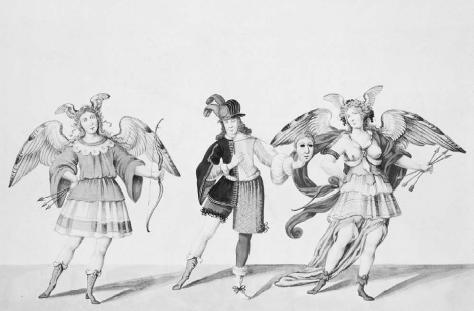
Last night I saw a performance of the ballet “The Loves of Mars and Venus” originally choreographed by John Weaver in London in 1717. Oddly enough, this is the first time that Tokyo had this ancient ballet performed in one of their newer theaters. It is thought to be the first ballet that conveyed a narrative of sorts. Although at its time, the ballet was popular, yet, the original music doesn’t exist anymore. In 1955, Rivierside Records’ Orrin Keepnews commissioned one of the artists on his label Thelonious Monk, to write an updated version of the ballet. Keepnews changed the location from London to Tokyo, and now the ballet conveys the Great Fire of Meireki, which took place in Edo (now known as Tokyo) in 1657, and it is reported that 100,000 people died from this fire. Mostly due to the structures that were made by wood and paper, and all of them were close together with very little or no space between the premises. Ironically Keepnews participated in the bombings of Japan during the latter months of World War 2. Whatever there is a connection between the bombings and the fire in Keepnews’ thoughts, are unknown to us.
Monk based some of the melodies on Kurt Weill’s music for the “The Three-Penny Opera, ” which gives it a strong European feel to the piece. As close as possible, they kept the Weaver choreography, but surely over time there must have been many changes with respect to the dancing for this ballet. Like folk music, ballet too can change from time-to-time, and in this case from century to century.
For the current production in Tokyo, they based the sets on drawings by Dr. Seuss, which gave it a whimsical touch but with some poison mixed in as well. The odd juxtaposition of the different elements in the ballet makes it a flawed, but a very interesting experience. My friend Jennifer came with me and she thought it was ‘just’ OK, but I believe it was a bit more than that. Overall I liked how Keepnews' made this giant leap into the ballet world, in fact, how can a man who started an amazing jazz label, as well as producing some of the greatest music of the 20th century got involved in such a vision. War has often led one to major disappointments, and perhaps his experience as a bomber in World War 2 somehow led him to do this ballet, and perhaps seeing or being involved in the horrors that took place in Japan at the time, sort of see this work as a positive thing to place on this planet. But then again, who knows? After the performance Jennifer and I went to Reco-Fan in Shibuya to see if I can locate some obscure recordings by The Shadows. Lately I have this need to collect recordings by Tony Meehan, who was their drummer and was a major player in the U.K. before The Beatles hit it big. I have a huge fascination with the world right before the Fab Four hit it big time. In Japan, as well. Probably the most important thing that happened for Japanese pop music is the appearance of The Ventures, who toured here in 1961. After that tour, many Japanese young men got their first electric guitar.
I’m always impressed how culture goes back and forth between the West and the East. Tomorrow I’m having lunch with Kiichiro who is translating a novel by David Goodis, who I believe will be the perfect fit for contemporary Japanese readers.
The fastidious Rene Ricard’s reckless past *
-
* (restored) “I pledge allegiance to the living, and I will defend art
from history. I will rescue art from the future, from its attrition into
taste, an...
Happy Birthday Elliott Gould
-
Happy Birthday to one of the all-time greats and one of the coolest of the
cool Elliott Gould. From my 2019 New Beverly interview with Elliott Gould
about ...




.jpeg)


.jpg)


 Posts
Posts