Showing posts with label February 12. Show all posts

Sunday, February 1, 2015

Robert Greene discusses his and Catherine Texier's translation of Jacques Mesrine's "The Death Instinct" at Skylight Books

ROBERT GREENE discusses his and Catherine Texier's translation of JACQUES MESRINE'S THE DEATH INSTINCT

The Death Instinct (Tam Tam Books)
France's Public Enemy Number One from the late 1960s to the end of the 1970s--when he was killed by police in a sensational traffic shootout--Jacques Mesrine (1936-1979) is the best-known criminal in French history. Mesrine was notorious both for his violent exploits and for the media attention he attracted, and he remains very much a public media figure in France and Europe. In 2008 there were two feature-length films based on his life, one of them starring Vincent Cassel in the lead role. Mesrine wrote The Death Instinct while serving time in the high-security prison La Sante; the manuscript was smuggled out of the prison and was later published by Guy Debord's publisher Gerard Lebovici (who briefly adopted Mesrine's daughter, Sabrina, before being assassinated, a few years after Mesrine). The Death Instinct deals with the early years of Mesrine's criminal life, including a horrifically graphic description of a murder he committed early on in his career and a highly detailed account of the workings of the French criminal underworld--making this book perhaps one of the most intriguing and detailed anthropological studies of a criminal culture ever written.
Praise for The Death Instinct:
"Jacques Mesrine was a modern Robin Hood. Modern in the sense that his story includes violence, spectacle, and that he is not just a figure of legend. He did not let the tabloids write the only version of the story. He wrote this remarkable book. About the only thing Guy Debord and Michel Foucault ever agreed on is that this book is a top read." --McKenzie Wark, author of The Beach Beneath the Street
"Unputdownable, incendiary real-life noir. With a touch of Belle-Epoque anarchist criminal Bonnot, nurtured by disposition, pathology and war. No wonder Situationists admired this escape-artist-sociopath, whose sense of honor and justice was matched only by his contempt for society. In literate and lucid contraband prison prose which, as Mesrine says, mixes all the genres: “burlesque, gore, violence, friendship, and fugitives on the lam.” Too bad this "man of a thousand faces" isn't around to help deal with present-day bank corruption, or, for that matter, the prison-industrial complex."--Woody Haut, author of Heartbreak and Vine and Pulp Culture: Hardboiled Fiction and the Cold War
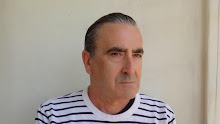
Robert Greene is the author of five books: The 48 Laws of Power (Penguin), The Art of Seduction (Penguin), The Strategies of War, (Penguin) The 50th Law (co-written with the rapper 50 cent, Harper Books), and Mastery (Penguin)He is currently at work on his next book, The Laws of Human Nature (Penguin). He has previously translated from the French, Considerations on the Assassination of Gérard Lebovici, Guy Debord (Tam Tam books). Robert Greene lives in Los Feliz.
Robert Greene photo by Susan Anderson
Event date: 
Thursday, February 12, 2015 - 7:30pm
Event address: 
1818 N Vermont Ave
Los AngelesCA 90027
By Jacques MesrineRobert Greene (Translator), Catherine Texier (Translator) 
$16.95 
ISBN: 9780966234688 
Availability: On Our Shelves Now 
Published: Tamtam Books - November 2014 

Wednesday, February 12, 2014

February 12, 2014


February 12, 2014

I went around Los Angeles taking photographs from my i-phone of landscapes that I know will be altered forever. Specifically the Sunset Strip area, which as I write, construction workers are tearing down the building toput up the new structures. Eventually if someone blindfolded me, turn me around five times, and then removed the blindfold, I don’t think I’ll recognize the area anymore.

People have a tendency to believe that Los Angeles has no sense of history, which is part of the charm of the place. It is very much rooted into ‘the now’ and not in its past. Nevertheless I feel compelled to document the changes that are taking place, and I imagine each location on the strip as if a ghost has lived there. La Cienga Boulevard and Sunset, which were always an awkward area to walk around in, due to the steep hill that meets Sunset. I imagine when crossing the street that I will topple over due to the gravity pulling me downwards. 


To be honest the two buildings that were recently torn down, are not of any interest, but throughout my life as I traveled back and forth on Sunset, I would see these buildings and often reflect my thoughts on them. Not once in fifty years have I ever entered those two buildings. One was the house of suede or leather and the other used to house the Petersen’s publishing empire, which consists of Hod Rod Magazine, Motor Trend, Guns & Ammo, and most important to me, Tiger Beat magazine. 

Now that they went missing, I have nothing but regret and a touch of heartache. It will be a matter of time when I won’t even remember these buildings, due to seeing the new structure on an everyday basis. My memory will fade, and therefore an important part of my history will disappear on the vacant lots. My favorite photographer Eugène Atget, obsessively took photographs of Paris at the turn-of-the-century and now we have visual documents of a city that doesn’t exist in a physical sense, yet it’s very much alive in one’s head and heart. 

I got off the Metro line 2 bus at the intersection of La Cienga and Sunset, and I wanted to get ahold of some sort of history before it disappears. It was around 1:00 AM and there were still people milling about the intersection, but I managed to break into the Petersen Building to hopefully locate something of importance to me, or something that will cause a memory of this location, before it changes into a version of ‘now,’ without the context of the past connected to the landscape. With a flashlight, I found the main staircase, which had no identity or design to it at all. Just a part of the building that appears to have no pride or interest in its welfare. If the building was a living thing, it was like it was telling me that I'm not worth living or existing on this world - especially on the intersection La Cienga and Sunset. 


On the highest floor, I found a room that wasn’t locked up. There was a desk, and in its drawer was a single issue of Tiger Beat dated May 1964. It had Mick Jagger on the cover, stating if one “is for them or against them.” The pages were yellowing and the magazine itself smelt damped, but I couldn’t tell if it was caused by water damage or just the aging process of its pages. I took the magazine, and carefully walked down the stairs, and out the front exit of the building. I looked back and gave a deep bow toward the building, thinking “thank you for being here for so many years.” I took a photograph of the building, and then took the Metro bus line 2 back to Silverlake.