Showing posts with label James Bond. Show all posts

Saturday, October 31, 2020

Tribute to Sean Connery by Tosh Berman


It's strange to think about it, but I and my dad's bonding (no pun intended) was driving around Los Angeles and going to the cinema. I remember seeing "Dr. No" at the Chinese Theater either in the late morning or afternoon matinee. I must have been either 8 or 9 years old, and like millions of others, Sean Connery made an impression on me. To be honest, I'm not a huge fan of the Bond films, but I love the title sequence, the action scene before the titles, and of course, the lens-eye of Connery walking up in front of the camera and shooting his gun toward the audience. After that, it's a blur of images of travel locations and girls. Still, no one can say "Bond.... James Bond" like Sean. His body language, clothes, the fetish of cars and weapons, and the fact that Bond/Connery can walk away from the 'adult' toys, and the most distinguished part of his body is his eyes and eyebrows. Roger Moore had the eyebrows thing as well. I was a fan of the Bond/Connery world's by-products, such as board games and toy guns. Sean and I share a birth date, and ever since I was aware of his birth date, I thought of him on my birthday as well. I will continue to think of him on my birthday until I pass on. -

Tosh Berman

Saturday, October 5, 2019

Tosh's Journal - October 5 (On James Bond's Dr. No)


TOSH’S JOURNAL

October 5

“Dr. No” was not only the first James Bond film, but the first film after my dad took me to see after forcing the movie theater in Larkspur to let me in to see Roger Vadim’s “And God Created Woman.” Most parents or fathers, to be specific, usually take their children to see Disney films or family-like narratives. Not my father, he wanted to take me to see “Dr. No.” It was at the Chinese Theater on Hollywood Boulevard, and the location was just magical. I was 8-years old and knew the importance of movie stars, even at that young age. I knew that they were important because their handprints were on the pavement in front of the entrance. At that time, I wasn’t conscious of the names, but I just knew that these people were really something. Also, I knew that some were dead at that point, and never experiencing death at that time, though it was a tad creepy. To leave one’s handprints after they go on to the other “world.” With that in mind, I entered the palace of dreams to see one’s nightmare.

The Oriental setting of the theater was perfect for Dr. No. Bond was pleasurable, but Dr. No was better. I identified with the villain because one, he expressed a world that I didn’t know, but by instinct, I knew that it would be a better adventure. Dr. No was the son of a German missionary, who abandoned him and his mother, a Chinese girl with a good family. He eventually ended up as a member of the Tongs, but working for himself; he stole funds from the gang. They eventually caught up with him, and to torture No, they chopped his hands off. Over time, he had hands made of metal that was able to crush metal figurines with them. The fact that he was a freak and outsider had a massive appeal for me. He was evil but understandable. “What is a monster? A being whose survival is incompatible with the existing order.”

As I grew older, and after my father passed away, I think of that film as an object that I shared with him. The trauma of the loss made me wary of having objects once owned by him, but at least in theory or idea, I have “Dr. No” to share with him. That particular piece of art had a profound effect on me on many levels. I became a fan of American noir films due to the theme of the outsider being forced by fellow citizens to take action in a manner that is perhaps not correct or right. Nonetheless, who can decide such decisions as one goes through life wearing blinders like a mistreated horse in Central Park. I tend to see the world in black and white. Not because of the duality of those two non-colors, but more about the levels of gray that come up in such an image. I spend life in the gray area, not in the world of absolute fact.

I recently started to collect film stock that was shot or photographed by John Alton, the Prince of photographic shadows. Through his eyes, I can see the origins of Dr. No’s world - not exactly as exotic, but in substance very toxic in its vision of purity gone wrong. My favorite actor of that period is John Hoyt, whose face seems to be made in celluloid perfection for Mr. Alton. I can never remember the narration because that has traditionally been the least of my interests while watching a film. Nevertheless, the face and how it is projected on the screen is what I find interesting. Even with “Dr. No” I have no recollection of the plot. Just the image of Dr. No reflecting on his metal hands. That says more to me than anything in this world.

Sunday, November 22, 2015

"The 1960s: Photographed by David Hurn" Introduction by Peter Doggett (Reel Art Press)

ISBN: 978-1-909526-13-6 Reel Art Press

"The 1960s Photographed by David Hurn"  Introduction by Peter Doggett (Real Art Press, 2015)

The 1960s were a perfect landscape for photographers.  Not saying that the era itself was perfect - far from that, but on the other hand the world felt new.   It is interestingly noted in Peter Doggett's opening introduction that the photographer David Hurn wanted to be an anthropologist, but couldn't be due to poor school grades.  On the other hand, I feel his interest in anthropology is very much the focus of his work in this book, "The 1960s."   Whatever he's photographing Sean Connery or people doing their everyday life thing on the streets of Manhattan to a dance that took place at the Hammersmith Palais, he is photographing the everyday of people of various classes and nationalities.

There's the image of the 1960s, that we pretty much have grown into, due to photographic images of that era, as well as its literature, music and films.   Hurn captures another level of that era through his commercial photo work for various magazines.   One gets the feeling that he's not only documenting a place, a moment, an individual, but also how that person, place or moment is placed in the big picture of that entire era.

When a photographer is working, he is just capturing in what is in front of him.  Unless it's a job in a studio where you have complete control of the situation, it is mostly chance of finding something interesting that took place on the street, or a passing incident (he captures a robbery taking place in London) by accident.  This book is put together fifty years later, looking at the past circa the images by Hurn.   The anthropology kicks in, because we are not only seeing The Beatles as themselves, but how they are placed in a world that is perhaps not of their making.   So the subject matter is not really the Fab Four, but the people surrounding the mop-tops.   The same goes for the images of people vacationing on an island off London, Herne Bay, which was the spot for the citizens of London's East End.  Or, the young debutantes about to be presented at the Queen Charlotte's Ball.

in the controlled environment of a photo-studio, we see Jane Fonda (Barbarella) at work, and Hurn comments on her that she was kind to the people who work on the set, as well as Sean Connery's dis-interest in publicity shooting for the early James Bond films.   These are people who are interacting with fellow professionals and I think the inter-subject matter of these images is people working and living within a world of some sort.

This handsome book conveys the 1960s not as an objective view, but clearly through the point-of-view from its photographer.   Each section of the book has commentary by Hurn, that is short and quite profound.   A superb photographer, but also this is a beautifully edited book by Tony Nourmand, who is also the publisher of Reel Art Press.

- Tosh Berman

Sunday, October 5, 2014

October 5, 2014


October 5, 2014

“Dr. No” was not only the first James Bond film, but the first film after my dad took me to see after forcing the movie theater in Larkspur to let me in to see Roger Vadim’s “And God Created Woman.” Most parents or fathers to be specific usually take their children to see Disney films or family-like narratives.  Not my father, he wanted to take me to see “Dr. No.” It was at the Chinese Theater on Hollywood Bouvelard, and the location was just magical.  I was 8-years old and knew the importance of movie stars, even at that young age.  I knew that they were important because their handprints were on the pavement in front of the entrance.  At that time, I wasn’t conscious of the names, but I just knew that these people were really something.  Also I knew that some were dead at that point, and never experiencing death at that time, thought it was a tad creepy.  To leave one’s handprints after they go on to the other “world.” With that in mind, I entered the palace of dreams to see one’s nightmare.

The Oriental setting of the theater was perfect for Dr. No.  Bond was pleasurable, but Dr. No was better.  I identified with the villain because one, he expressed a world that I didn’t know, but by instinct I knew that it will be a better adventure.  Dr. No was the son of a German missionary, who abandoned him and his mother, a Chinese girl with a good family.   He eventually ended up as a member of the Tongs, but working for himself, he stole funds from the gang.  They eventually caught up with him, and to torture No, they chopped his hands off.   Over time, he had hands made of metal that was able to crush metal figurines with them.  The fact that he was a freak and outsider had a huge appeal for me.   He was evil, but totally understandable. “What is a monster?  A being whose survival is incompatible with the existing order. ”

As I grew older, and after my father passed away, I think of that film as an object that I shared with him. The trauma of the lost made me weary of having objects once owned by him, but at least in theory or idea, I have “Dr. No” to share with him.  That particular piece of art had a profound effect on me on many levels.  I became a fan of American noir films due to the theme of the outsider being forced by fellow citizens to take action in a manner that is perhaps not correct or right. Nonetheless, who can decide such decisions as one goes through life wearing blinders like a mistreated horse in Central Park.  I have a tendency to see the world in black and white.  Not because of the duality of those two non-colors, but more about the levels of gray that comes up in such an image.  I spend life in the gray area, not in the world of absolute fact.


I recently started to collect film stock that was shot or photographed by John Alton, the Prince of photographic shadows.  Through his eyes I can see the origins of Dr. No’s world - not exactly as exotic, but in substance very toxic in its vision of purity gone wrong.  My favorite actor of that period is John Hoyt, whose face seems to be made in celluloid perfection for Mr. Alton. I can never remember the narration, because that has traditionally been the least of my interests while watching a film.  Nevertheless the face and how it is projected on the screen is what I find interesting.  Even with “Dr. No” I have no recollection of the plot.  Just the image of Dr. No reflecting on his metal hands.  That says more to me than anything in this world.


Wednesday, May 28, 2014

May 28, 2014


May 28, 2014

I have zero interest in James Bond, but nevertheless my very being is bound up in the movie and literature series, due that I’m part of the generation that was easily affected by the presence of the films.  Especially when they played in grand beautiful theaters like Grauman’s’ Chinese on Hollywood Bouvelard.  The exoticness of the theater was a perfect match for Sean Connery’s Bond, in significant ways that only a 8 or 9 year old boy can emotionally understand, but never intellectually.   As a rule, my father would take me on the opening weekend to see the new Bond film.  I have no memory of him talking about the film or if even he liked the film series. He just took me to the Bond films, like a father taking his son to the park, or a baseball game.  What impressed me the most in the Bond films, were the opening sequence which was usually action-packed, and of course the stunning animated sequence that starts off as an iris opening up to Bond walking in front of the gun and aiming towards the audience.  In that sense, film hasn’t really changed that much from the days of “The Great Train Robbery.”


For me, the whole package of James Bond was important, not Bond or even Sean Connery.  Ever since I was a little boy, I have been fascinated by the clothing or style of the characters on the big screen.  For instance I always loved the costume of Walt Disney’s “Zorro, ” especially the combination of the mask and the wide brim hat.  Also the fact that Zorro and Bond, in certain aspects, mock their villains or enemies by silently laughing at them.   A sense of justice was very weighty, but the humor had to go along that journey as well.  Sexuality of Bond never entered my head nor the Bond women in the films.  I knew they were big deal, because at the time, Playboy magazine would have a photo shoot of the girls, usually naked, which was… interesting.   Nevertheless to be quite honest, the Bond films became less interesting to me after the opening credits.   The other thing I remember is loving the music.  James Bond music, as heard through the master touch of John Barry, was a world that was beautifully in technicolor.   Also my first sense of travel or the idea of it, is without any doubt was voiced to me through the world of James Bond.


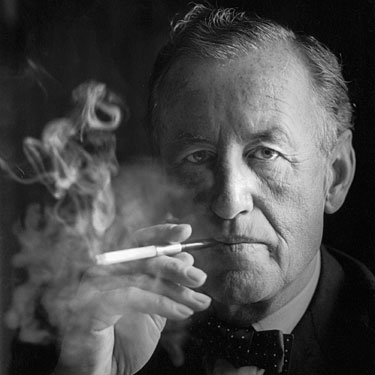
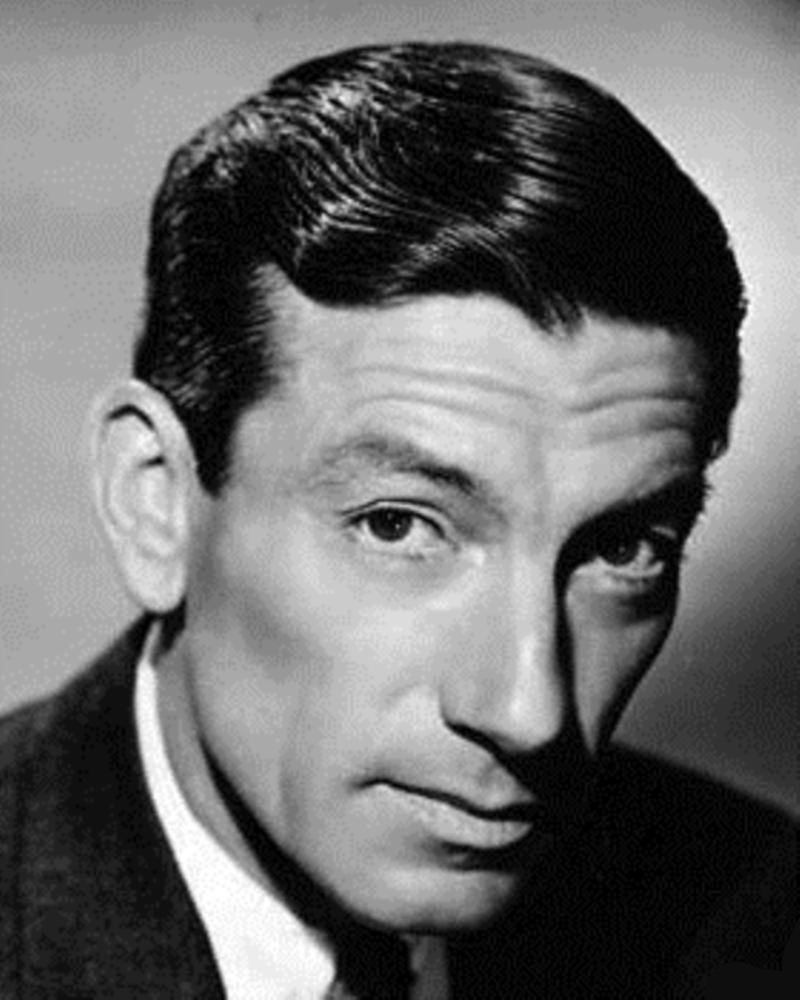
As a writer who struggles on a daily basis to put words on an empty page in front of me, I am usually influenced by other writers, and how they come upon their creation.   James Bond’s creator, Ian Fleming, took his inspiration from real life, but in a cubist sense, he took parts that he liked and built his own Frankenstein monster, which is Bond.  A lot of the Bond traits are his, but he also based it on people that he met when he worked for the British government.  My favorite in this category is Wilfred (Biffy) Dunderdale, who played a key role in the cracking of the Enigma code during World War II, and was reported that he drove an armour-plated Rolls-Royce, dressed in handmade suits with Cartier cufflinks and dined at Maxim’s.  He was the head spy for the M16 in Paris.   Second-in-line favorite would be Conrad O’Brien-ffrench, who was a British agent as well as an accomplished artist, linguist, mountaineer, skier and author. Another inspiration was Dušan Popov, who was a Serbian double agent for both MI5 and the Abwehr (German military intelligence).  Fleming witnessed Popov playing baccarat, where he placed a bet of $40,000 ($641,357 in 2014 dollars) to cause a rival to withdraw from the table.  With that, plus the thought of the masculine physical beauty of songwriter Hoagy Carmichael, he had his James Bond.  Another curious fact is that Fleming was a huge bird watcher, and he named his character after the author and ornithologist James Bond. He was a Caribbean bird expert and author of the definitive “field guide Birds of the West Indies.” Obviously, Fleming’s favorite book.


The villain gold “Goldfinger” is based on an architect Erno Goldfinger.  Fleming loathed his work, and therefore honored him as one of Bond’s most notorious villain.  So even for such a commercial novelist like Fleming, what he took from real life, bit-by-bit has a deep inspiration with respect to my work.  The universe is out there, but I can reconstruct it in my own fashion and vision.

Thursday, May 30, 2013

"Thrilling Cities" by Ian Fleming


On the surface this looks like a typical travel guide by a famous author, but its more of a series of moody essays on various cities around the world.  And the title is misleading, in that the James Bond author Ian Fleming doesn't find a lot of these cities thrilling.  Some, for instance, New York City, he doesn't like at all.

Hong Kong is his favorite, in fact he seems to be in tuned with Asia in general - except for the sleeping arrangements in Tokyo, he likes the people and food very much in that area.  The enjoyment of the reading is knowing who Fleming is, and his take on the world circa early 1960's.  He meets up with interesting people through out his travels, such as Charlie Chaplin, Noel Coward (who is also his neighbor in Jamaica) and a specific gangster by the name of Lucky Luciano in Naples.  Him, he seems to like a lot - and also they both agree that drugs should be legalized.

Each chapter is devoted to one city, but he goes on tangents that might strike some as 'god get back to your subject matter of that city!'  But I like this style of writing.  In a peculiar way it sort of reminds me of my book "Sparks-Tastic."  Nevertheless at the end of each chapter he makes recommendations for restaurants, nightclubs and hotels.  Without a doubt, probably the most boring part of the writing for him!  But on the other hand, what a weird and cool travel book.  Oh and the great illustrator Milton Glaser did the drawings for this book.

Milton Glaser's illustration for Los Angeles and Las Vegas


The UK Editions of "Thrilling Cities"