March 9, 2014
At the Spiral in Aoyama Tokyo, they’re did a re-enactment of Bobby Fischer’s famous chess game with Russia’s Boris Spassky entitled “Match of the Century.” The theater piece was done in real time and the match was originally in Reykjavik Iceland. Fischer was notorious for making demands before he even made a step to Reykjavik. For instance, he demanded more money, as well as obsessing over the lighting and the cushion in the seat. In fact, he almost forfeited the match, but showed up within hours before the agreed time for the first match.

I know nothing about chess, but I was intrigued by the spectacle surrounding the “Match of the Century.” Tickets were very expensive and there were ten separate performances. Each performance was for each game, and every performance was conducted in real time. The original game took place at the height of the Cold War between Russia and the United States. Spassky was supported by the Soviet Empire with all its resources, but Fischer worked totally independently from anyone else. He was secluded and totally focused on the games once it started.
It is interesting that the re-enactment games are held in Tokyo. Fischer was a prisoner of sorts when the U.S. provoked his passport, and therefore Fischer went to Japan without the proper documents. I’m not sure if he was in jail or just ‘stranded’ in Japan, but it has been reports that he married a Japanese woman, before he got citizenship in Iceland. So in a sense everything here is a circle. His most renowned game took place in Iceland, and many years later he becomes a citizen of that country. And here’s another circle of sorts, where the re-enactment is carried out in Tokyo.
For me, chess has to be the most least interesting thing to see, and I couldn’t believe that I actually went to all the performances, all ten games. The presentation was not that far off from a traditional Noh theater, where time is extended on the stage, or messed about.
To be honest, I found the theater piece boring, but still, I was even intrigued that they even had fake TV cameras on the stage, and they even actually got the chess board as well as the chairs from the actual games. The only thing that is ‘fake’ is the actors. But they did hire a Russian actor to play Spassky, and they even went out of their way to find an actor, who at least from a distance, looks exactly like Bobby Fischer.

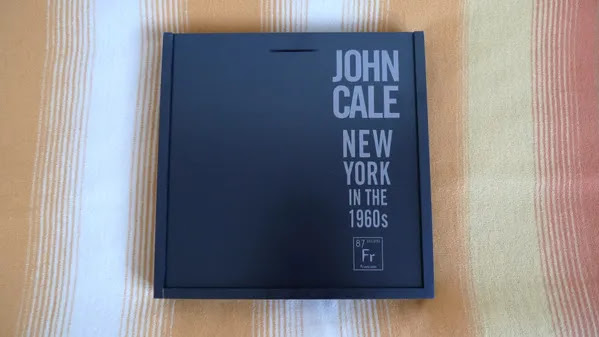
After ten days straight watching the “Match of the Century, ” I had to lose myself in some other form of activity. I went to Union Disk to purchase a John Cale CD “Helen of Troy,” which I used to own when I lived in Los Angeles, but somehow got lost over time. It’s my favorite Cale album, and he remains one of my favorite songwriters as well. I always admired how he uses external sources for his work. In a way, he’s very much of a short story writer, who uses non-rock n’ roll narratives to express a horrific world. I rushed to my favorite bar in Tokyo called Kinema, which is located in Shimokitazawa. The bar is devoted to Shuji Terayama, and once you enter this wonderful world, you are confronted with books and images by and of Terayama. Funny enough, and maybe due to the “Match of the Century” I feel like i 'm in a daily theater piece of my choice. My whole life is a type of re-enactment, but in this case, I don’t know how it ends.


 Posts
Posts


.jpeg)