Friday, June 13, 2025
Saturday, July 2, 2022
Saturday, April 17, 2021
"Hollywood Eden" by Joel Selvin (Anansi)
I always found Southern California to be a fascinating landscape. One can do pretty much what they want to do if they have the talent, or perhaps even more critical, the skill of a hustler. Joel Selvin's "Hollywood Eden" is a collection of tales I know of. Still, now they are clearly explained to the reader. Being a citizen of Los Angeles, I knew the existence of Jan and Dean and aware of them as an essential presence in the California myth, which I think is true, by the way. The weather is a huge aspect of living outdoors, and a car, especially in the 1950s and a touch of the 60s, fits perfectly well into the landscape. Jan and Dean, especially the brains of the outfit, Jan Berry, had an instinct about the inside business of making music and records.
Jan, a Californian rich kid, used his family's garage as a recording studio where he experimented with sounds and singing. His partner in crime, Dean Torrance, was symbolically a partner but fitted in the image of two guys sharing cars, the surf, and girls. The book is a narrative that starts in 1958 and ends in 1966. Besides Jan Berry, the other key figures in this tale of Californian hustle and art are Kim Fowley, Lou Adler, Nancy Sinatra, Terry Melcher (the son of Doris Day), Bruce Johnson, The Mama and Papas, and of course, Brian Wilson. Although Jan had the talent, good looks, and brains, he didn't have Brian's brilliance. Jan inspired Brian, but the student (Brian) left the master (Jan) in the dust.
Kim Fowley had the talent to be in the right place and at the right time. Beyond that, it was mostly luck that connected him to the outskirts of the music business. Everyone knew him, but except Bruce Johnson, few admired or liked him. Fowley, I think, fed on that resentment that led him to endless hours hustling people to make records or money. For the pop fan, Fowley is famous mainly for managing and co-writing songs for The Runaways, but there is no mention of life after 1966 in this book. I think the strength of "Hollywood Eden" in being focused on a specific time frame.
Everyone in this book can have a fascinating full biography. Selvin is a skilled journalist and writer. He knows how to tell the tale without losing himself or the reader with too much history or baggage. It reads like a Southern California noir novel than anything else. The details about the kidnapping of Frank Sinatra Jr are something that I never knew about. Still, I had a faint impression that there was a Jan and Dean connection to the crime. It seems Dean knew the kidnapper and was told about it, but he didn't believe it until it became apparent to him. The Nancy Sinatra narrative is also of great interest in how she slowly emerges from being the daughter of Frank and becoming her own artist with the assistance of Lee Hazelwood.
"Hollywood Eden" is very bittersweet because we know that some of these participants in the book did not have a happy future. For example, there's no mention of the Manson Family problem that Melcher had, and like Fowley's Runaways, there is no need to bring it up in this book. This is very much a page-turner for those who love the early Surf-Car-teenage pop of Southern California, but the characters themselves are solid and cinematic. Not all of them are likable, but they did contribute something unique to Southern California's mix or cocktail. A burst of bright sunshine with Noir's presence.
Wednesday, June 15, 2016
"The History of Rock: 1967" by Uncut Magazine
How can anyone who is not touched by pop music, can possibly avoid the publications edited by Uncut, that focuses on one year in rock, via the original articles from Melody Maker and New Musical Express. The issue I have just read, "1967," is simply fascinating. It was the year of "Smiley Smile," "Sgt. Pepper" and "Magical Mystery Tour," along with the dark psych sounds of the Stones' "Their Santanic Majesties Request." On one level, it is like traveling back in time, but for me, it is being in the 'now, ' and looking back to the past. The two previous issues "1965" and "1966" one sees a progression of the old style of pop writing, which is basically a PR for the music business. "1966" you start getting more journalistic approach to the music world, as it got more serious and baroque like. "1967" is the first year of Technocolor for the pop world. The previous years were very much like a black and white film.
Jimi Hendrix, who is the cover figure for "1967" is the perfect example of color (not only skin) becoming prominent in that culture. A lot of clothing from that period looks like left-over designs from the turn of the century, but now in living color. The Stones were always either in muted or dark colors or black and white, but "Santanic" album is one of bright colors. Scott Walker with the Walker Brothers featured greatly in '65 and '66, but one would think of them as black and white as well. So overall, pop in the 60's became one of color, when before, it was dark shades of gray or stark black and white. Also one notice that the major Dylan presence in '65 and '66 is non-existent in 1967. Yet, his sense of adventure is everywhere in pop music at the time.
And singles are still important, but albums are making a strong aesthetic stand in 1967. "Pepper" is like a novel, and so is the Stones "Santanic" album, and if one reads carefully, the death of Brian Epstein sort of brings in the end of the manager superstar. "1965" was sort of a new world, and '66 was a time of exploring, but 1967 was a year of spiritual awareness or curiosity (especially for the Fab Four), and one gets the impression by reading this publication that everything was about to end. In what way, no one knew. One thing that is interesting, is that questioning in the interviews with the many artists are in a serious vein. Some on war, but a lot of chatting among the press and the artist on the subject matter of drugs (mostly due to the Stones being busted that year) as well as God. In "1967" we are introduced to The Monkees, Bee Gees, Cream, Traffic, The Who, The Move, Syd's Pink Floyd and the first pop festival, Monterey. . A touch of flower power as well. Everything was peaking, but then, it dimmed quickly.
Friday, January 8, 2016
"The History of Rock: 1966" by the Editors of UNCUT Magazine
Wednesday, July 2, 2014
July 2, 2014
July 2, 2014
Some years ago I used to work for the designer Pierre Cardin and he made me the “point” man in his affairs in the United States. I was a very young “21” and this was my first really serious job. I met Cardin at the Philippines Embassy in Los Angeles, where they threw a party for him for his redesign of the Barong Tagalog, which is their national costume. President Ferdinand Marcos was a huge fan of Cardin’s work, and he commissioned him to carry out the redesign. I was fortunate enough to be there because at the time I was in a romantic relationship with a girl from the Philippines, and due to her work at the Embassy she invited me as well. Sad to say, the relationship didn’t last, but she did a huge favor for me, by introducing me to Pierre Cardin.
Cardin was amused at the time, because I wore a red shirt with a black suit, and he told me that my look was totally wrong for the reception at the Embassy. He was correct at the time, because when I looked around all the men there were wearing tuxedos. The women on the other hand were wearing his clothes. It appeared that the President and his wife hired him to dress all the women who came to the embassy for this party. It may have been a publicity event than anything else, but as usual, I sort of jump into the fire without checking how hot it was in the first place. I think most people in my position would run out of the building or be embarrassed at the very least -, but I just shrugged my shoulders to him. He found that funny, and he gave me his card to contact him if I care to work for him.
I did call him, and told me he is going to send me a ticket to Nice, France, for a meeting. Once I made it to the airport, his driver picked me up and took me somewhere that wasn’t far from the beautiful beaches of southern France. What I didn’t expect to see was his home. It was very “Cardin.” I have heard and seen his clothes design and knew that he had an obsession with bubble shapes, but I was not prepared to see his home as a series of large bubbles. The home is massive and it was designed (with Cardin of course) by Antti Lovag. Every single room in the estate, including even the many closets) is round. It made me dizzy to walk through one room after another. On the other hand, Cardin is a very nice guy. The job he offered to me was to serve as his assistant in the States. I also made him laugh, because I wore exactly the same clothes that I wore for the party at the Embassy. I said yes to the job, and flew back to Los Angeles the next day.
The oddest thing that happened in my new job as his assistant was being approached by Murry Wilson, who was the manager of The Beach Boys, as well as the father to the Wilson brothers. He wanted Cardin to design matching outfits for the band, which in itself was strange, because at this time, it seemed they were running away from ‘any’ uniformed look - and I couldn’t imagine The Beach Boys wearing Cardin on stage or anywhere else for that matter. Nevertheless I did convey the news to Cardin, and surprise, surprise he was interested in the job. Cardin never met Wilson nor talked to him directly - that was my job. At first, the meetings I had with Wilson were slightly amusing, but it became a horror show as time dragged on. At times, I wasn’t sure if he actually represented the boys (at this point and time they were actually men, I thought they should have changed their name to “The Beach Men.”) Nevertheless Cardin faxed me his drawings of his outfits for the band, and on a regular basis I would go to Murry’s office on Ivar, not far from the iconic Capital records building to show him the latest images from the master. This went on for a whole year, where time-to-time I would be in contact with Wilson, but I could never get a commitment out of him. I finally told Cardin that I think Murry will never commit to any of the designs, and on top of that, I wasn’t sure that he even represented the band anymore. Cardin, I think was just amused by all of this, and I don’t even know if he actually heard a Beach Boys record. His taste in music was more in line with Line Renaud, a French cabaret star, that he was sponsoring for a series of dinner shows at Maxims, which he purchased around the time when I had the series of meetings with The Beach Boys’ dad.
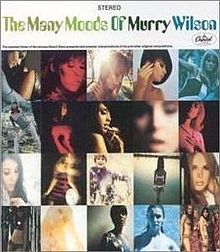
The last time I saw Cardin, was when he invited me (as well as sending me a plane ticket of course) to one of his new homes which is a castle that was once inhabited by the Marquis de Sade. I was there for a week, when he called me in to his office that was once de Sade’s bedroom, to tell me that he had to let me go. I didn’t even ask why, but I was just grateful for being employed and on top of that being associated with Cardin. We shook hands, and I left for the airport the next day. Once in a while I get a card from him. I attempted to get him to send an e-mail, but he can’t or won’t deal with that part of the world. As for Murry Wilson, I did purchase his one and only album “The Many Moods of Murry Wilson, ” which for some reason I found it to be a very depressing listening experience.