I remember Alan Wilson's death, from acute barbiturate intoxication, because I was living in Topanga at the time. He wasn't world-famous, but famous in Topanga. He was a member of the band Canned Heat, and although I never actually met him, I for sure saw him at the local market. The only Canned Heat song I liked was "On The Road Again." I love the minimalism of the recording. The consistent drum beat and the distinctive sound of the cymbal, with the additional tambura, which is an Eastern string instrument. It's the blues, but with an unfamiliar presence due to the instrumentation. I first heard that song when I was in bed, around 3 a.m. I had a transistor radio glued to my ear, and I remember this song, and it seemed so eerie and depressing at the same time.
When I have my moments of despair, the song comes to me from the back to the front of the head. Alan Wilson was a friend of depression as well. They found his body in the hillside behind the lead singer Bob Hite's Topanga home. Wilson loved nature and preferred to be in the outdoors as much as possible. He liked to take his sleeping bag, and finds a beautiful tree and sleep there. It was reported that Al had a hard time connecting with people, perhaps being on the Autism Spectrum. He was a passionate conservationist, and read books on botany and ecology. And of course, an academic on the subject matter of the blues.
Interestingly, a man who was so removed from human interaction would have a love and understanding of something so poignant as the blues. Yet, his blues was something that I feel was close to the bone for him. To quote the whole song:
"Well, I'm so tired of crying
But I'm out on the road again
I'm on the road again
Well, I'm so tired of crying
But I'm out on the road again
I'm on the road again
I ain't got no woman
Just to call my special friend
You know the first time I traveled
Out in the rain and snow
In the rain and snow
You know the first time I traveled
Out in the rain and snow
In the rain and snow
I didn't have no payroll
Not even no place to go
And my dear mother left me
When I was quite young
When I was quite young
And my dear mother left me
When I was quite young
When I was quite young
She said, "Lord, have mercy
On my wicked son."
Take a hint from me, mama
Please don't you cry no more
Don't you cry no more
Take a hint from me, mama
Please don't you cry no more
Don't you cry no more
'Cause it's soon one morning
Down the road I'm going
But I ain't going down
That long old lonesome road
All by myself
But I ain't going down
That long old lonesome road
All by myself
I can't carry you, baby
Gonna carry somebody else"
I find this song moving because it seems to be a tight circle, where one can't get out of its rhythm or structure. The actual drone of the music that is the foundation for the other instruments is relentless. The singer is in hell, and here in a small number of words describes the landscape that there is no escaping from. Throughout my life, I always find 'chance' as a 'free from jail' card, but here "On The Road Again" its permanent groundhog's day, where and when misery matches with the solid beat. Endless.
I imagine Alan Wilson looking out to the stars, in his sleeping bag and thinking, at the very least, a limitless vision that must have been an escape of some sort. Now eternal sleep.
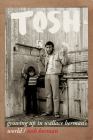
TOSH is a memoir of growing up as the son of an enigmatic, much-admired, hermetic, and ruthlessly bohemian artist during the waning years of the Beat Generation and the heyday of hippie counterculture. A critical figure in the history of postwar American culture, Tosh Berman's father, Wallace Berman, was known as the "father of assemblage art," and was the creator of the legendary mail-art publication Semina. Wallace Berman and his wife, famed beauty and artist's muse Shirley Berman, raised Tosh between Los Angeles and San Francisco, and their home life was a heady atmosphere of art, music, and literature, with local and international luminaries regularly passing through. Tosh's unconventional childhood and peculiar journey to adulthood feature an array of famous characters, from George Herms and Marcel Duchamp to Michael McClure and William S. Burroughs, to Dennis Hopper and Dean Stockwell, to the Rolling Stones, Neil Young, and Toni Basil. TOSH takes an unflinching look at the triumphs and tragedies of his unusual upbringing by an artistic genius with all-too-human frailties, against a backdrop that includes TheT.A.M.I. Show, Sgt. Pepper's Lonely Hearts Club Band, Easy Rider, and more. With a preface by actress/writer Amber Tamblyn (daughter of Wallace's friend, actor Russ Tamblyn), TOSH is a self-portrait taken at the crossroads of popular culture and the avant-garde. The index of names included represents a who's who of mid-century American--and international--culture. (City Lights Books)
A previously lost recording published for the first time, featuring Wallace Berman
discussing his work, art and literature with Shirley Berman, Hal Glicksman,
Jack and Ruth Hirschman.
Recorded by Hal Glicksman at the Berman family home, Topanga Canyon, 1968.
Mastered from the original tape recording, with a text by Tosh Berman.
“When I hear Wallace on this tape, I still can’t recall his voice or sound. Some years ago, Hal Glicksman played this tape to me and my mom when we were planning the retrospective right after Wallace died. What shocked me is that he was playing it in the background at a meeting and I didn’t have the foggiest idea it was my dad on that tape. I spent the first 21 years of my life with Wallace, and when he died, his voice disappeared as well.” – Tosh Berman
Published 2015 Vinyl LP | 55m 55s MUTA 05 / ISBN 978-0-9850044-6-0 / Edition of 400 Co-published with Derringer Books
I remember Alan Wilson’s death, from acute barbiturate intoxication, because I was living in Topanga at the time. He wasn’t world famous, but famous in Topanga. He was a member of the band Canned Heat, and although I never actually met him, I for sure saw him at the local market. The only Canned Heat song I liked was “On The Road Again.” I like the minimalism of the recording. The consistent drum beat and the distinctive sound of the cymbal, with the additional tambura, which is an Eastern string instrument. It’s the blues, but with an unfamiliar presence due to the instrumentation. I first heard that song when I was in bed, around 3 O’clock in the morning. I had a transistor radio glued to my ear, and I remember this song, and it seemed so eerie and depressing at the same time.
When I have my moments of despair, the song comes to me from the back to the front of the head. Alan Wilson was a friend of despair as well. They found his body in the hillside behind the lead singer Bob Hite’s Topanga home. Wilson loved nature and preferred to be in the outdoors as much as possible. He liked to take his sleeping bag, and finds a nice tree and sleep there. It was reported that he had a hard time connecting with people, perhaps being on the Autism Spectrum. He was a passionate conservationist, and read books on botany and ecology. And of course, an academic on the subject matter of the blues.
It’s interesting that a man who was so removed from human interaction would have a love and understanding for something so poignant as the blues. Yet, his blues was something that I feel was close to the bone for him. To quote the whole song:
“Well, I'm so tired of crying
But I'm out on the road again
I'm on the road again
Well, I'm so tired of crying
But I'm out on the road again
I'm on the road again
I ain't got no woman
Just to call my special friend
You know the first time I traveled
Out in the rain and snow
In the rain and snow
You know the first time I traveled
Out in the rain and snow
In the rain and snow
I didn't have no payroll
Not even no place to go
And my dear mother left me
When I was quite young
When I was quite young
And my dear mother left me
When I was quite young
When I was quite young
She said, "Lord, have mercy
On my wicked son."
Take a hint from me, mama
Please don't you cry no more
Don't you cry no more
Take a hint from me, mama
Please don't you cry no more
Don't you cry no more
'Cause it's soon one morning
Down the road I'm going
But I ain't going down
That long old lonesome road
All by myself
But I ain't going down
That long old lonesome road
All by myself
I can't carry you, baby
Gonna carry somebody else”
I find this song moving, because it seems to be a tight circle, where one can’t get out of its rhythm or structure. The actual drone of the music that is the foundation for the other instruments is relentless. The singer is in hell, and here in a small amount of words describes the landscape that there is no escaping from. Throughout my life I always find ‘chance’ as a ‘free from jail’ card, but here “On The Road Again” its permanent groundhog’s day, where and when misery matches with the solid beat. Endless.
I imagine Alan Wilson looking out to the stars, in his sleeping bag and thinking, at the very least, a limitless vision that must have been an escape of some sort. Now eternal sleep.
In m lifetime, I only lived with two dogs: Rover and Pi. Rover was a mutt and Pi was part collie and coyote. Pi moved in with us because her family was moving out of Topanga, and once moved, she found herself back home at our house. We adopted her or just kept Pi, because she was always hanging out with Rover. My relationship with dogs is very laissez-faire, and I rarely ever think about them either as pets or objects in front of me. All I know is Rover and Pi lived with me, and they liked their stomachs scratched and petted.
I remember watching “Lassie” on our black and white TV, and Rover was totally intrigued by the show one night. Especially when Lassie barked, or made a sound. He would sit in front of the set, cock his head towards the left with his ear up. Eventually he would walk around the TV set to determine what was happening in the back of the set. Rover was just thinking logically if Lassie was actually in the TV set, which makes perfect sense to me.
As a boy, I totally identify with Timmy on “Lassie” and Rusty on “Rin Tin-Tin.” So when I was with Rover and Pi, I didn’t really think about the dogs, but instead I projected myself as the boy who is surrounded by his dog, who also appears to have been tuned in to my needs and concerns. Getting love from a dog is without a doubt one of the greatest love relationships on this planet. There is the famous story of Hacikō, the akita dog who would go with his owner, Hidesburō Ueno, a teacher, to Shibuya station in Tokyo, and would come back to see him there when he arrived from his work. One day, the teacher dies at work and of course never returns - but Hacikō without fail, would wait at the meeting spot in the Shibuya station every day at the same time. Hacikō waited for seven years till death came and took him away.
The Japanese media picked up the story of Hacikō, and eventually it became almost an urban myth about the loyal dog waiting for his master or owner. Except this was all true. Hacikō died on March 8, 1938, where his body was found on the streets of Shibuya. The dog had terminal cancer and a filaria infection (worms). They also found four yakitori skewers in his stomach, but that didn’t cause his death. Hachikō’s remains are stuffed and mounted and kept at the National Science Museum in Ueno, Tokyo. His burial monument is in the Aoyama cemetery. But the people’s monument is at the Shibuya station, exactly where Hachikō waited for his master. There is a statue in honor of the dog, and it is probably one of the best-known locations in Tokyo.
I will never forget the night Rover died. He was for sure feeling his age, and I remember the night he insisted ongoing outside. I opened the door for him and that was the last time I saw Rover. But as I was falling asleep on the couch in the living room, I had a waking dream of Rover in front of my face, barking wildly. I woke up and of course he wasn’t there, but I never did see my dog again. Also I never had the urge to get another dog or to live with a dog. Rover and Pi were dogs who lived with me at a specific time, and one can’t repeat its past. I had to move on.
Usually I don't fall into a deep sleep on an airplane, but I did and when I woke up I felt totally misplaced being on a plane. Perhaps because I was dreaming I was in my grandparents house in Topanga canyon, which was a home that brought me a sense of security and happiness. Not Topanga mind you, but just the home in the Fernwood era of the canyon.
I have heard that the great TV comedian Ernie Kovacs died in a car accident in the canyon, but I think it was on Sunset Blvd, near the Beverly Hills Hotel. Nevertheless the image of Kovacs on TV as well as Robert Stack in "The Untouchables" brought a certain amount of joy to my youth. I often imagine that I was dancing with Gwen Verdon at my grandparents' house. I can't imagine why, due that the staircase from top floor to bottom was very narrow. I can't imagine a dancer would find this staircase or house even remotely interesting.
The strange thing about the house in Topanga was that it was small. Basically an one bedroom house with a small living room and a kitchen and dinning area downstairs with a large property surrounding the home. But when I dream about the place there is all of sudden additional space - from the bedroom area. It goes on to another part of the house, with an additional bathroom. This only existed in my dream, but the funny thing is that I rarely ever go into my Grandparents' bedroom. Not exactly off limits to me, but just a place that I never go or play in. Nevertheless this room in my dreams becomes an enlarged space. It seems that the expanded place has no one really living there, or maybe used as a vacation home?
Many years later in that home I would read the complete works of Jean Genet as well as the magnificent biography on Genet by Edmund White. it amazes me that I would think about all of this somewhere over the Pacific ocean in very comfortable plane.
Spotlight on … Jacques Roubaud The Loop (1992)
-
‘Jacques Roubaud is a playful, puzzling, erudite, at times obscure, yet
at other times thoroughly moving “composer” (as he puts it) of poetry and
prose. ...
Happy Birthday Elliott Gould
-
Happy Birthday to one of the all-time greats and one of the coolest of the
cool Elliott Gould. From my 2019 New Beverly interview with Elliott Gould
about ...




_01.jpg)


 Posts
Posts


.jpeg)