Showing posts with label manga. Show all posts

Wednesday, October 30, 2019

"The Man Without Talent" by Yoshiharu Tsuge; Translated and Introduction by Ryan Holmberg (New York Review Comics)

ISBN: 978-1-68137-443-7
I'm always fascinated by people who want to disappear in literature.  Yoshiharu Tsuge, the ultimate cult manga artist/writer, seems to be a fellow who wouldn't mind disappearing into the mist.  His manga masterpiece "The Man Without Talent" is a somber journey of rejecting society by staying in tune with one's intuitive choices - whatever it's good or bad.  The series of stories is all about one character that we are lead to believe is the author, with a small son and wife.  The wife is frustrated with her husband's lack of common sense, and the son picks up the tragedy of it all just being there.  He's the little boy who tells his father, "it's time to come home."  

Tsuge's main character decides to open up a 'stone' store by the river.  These are not unique stones by any means, and they all come from the local river.  Anyone can pick up these stones, but Tsuge chooses his inventory carefully so that he can sell them.  Still, a stone is a stone. The absurdity is like people who sell junk, knowing that they are junk, yet, it has a value of some sort. Usually not in a currency sense.  So, his stone selling business is non-existent, yet he works hard daily by being there and selling his stones, that no one buys.   In a sense, he's commenting on his role in life, which is existence on a very absurd term.  There's no humor (at least for this Westerner) here, but Tsuge's work is very much like the films of Robert Bresson in that the artist captures the everyday existence of someone who lives day-to-day. There's a purity of his attempts to achieve his dream, which is basically to disappear.   

As someone who collects vinyl records and books, I find his rock collection interesting as well.  For him, those rocks are priceless or have a price, but to the world, it means nothing to them.  The same goes for his camera collection (in real life as well as in his work), where he buys old cameras cheaply and fixes them up to sell more expensively.   Yet, this is also a dead-end, because eventually, the marketplace will have no need for used broken cameras. 

Ryan Holmberg's introduction (as well as being the translator) is very informative.   I don't know if Tsuge's life is 'exactly' like the way he portrays his main character, but still, it's a skillful method of being in the world of someone who has a hard time dealing with the culture around them.  A remarkable manga.  

Friday, May 17, 2019

May 18, 2019 (Tokyo)


Vinyl shopping is an obsession of mine, but also I realize that it is also a tool for me to tour Tokyo on foot and train.  Tokyo is unique and not like any other city, but in a fashion, it reminds me of Los Angeles, in that metropolis' have a series of smaller villages that all together composes the city.  Shibuya is very different from Shinjuku, which in turn is different from Meguro, my home in Tokyo.  Each neighborhood has a specific identity.  Today I pretty much spent time in Nakano, which has a shopping arcade and building called "Nakano Broadway."  I think most would consider the actual building ugly, but for me, it has a certain charm that is hard to define.  It has no aesthetic, and it is open to others who have a taste for the bizarre, or the imaginary world of the Otaku. 


While walking in the complex it does have a smell of sweat, or perhaps their plumbing is not in order, but still, the scent brings out a sense of passion for what they may be looking for.  For example, I got totally fixated on a magnet bookmarker.  It had a flower textile design and I thought to myself, I need that bookmarker.  Yet, as every sense of my body told me to buy it, I resist and almost ran out of the stationary store.  All the Otaku shops open at 11 or even noon and close at 8.  Very solid hours, and I feel that the people who work here are comfortable with the schedule.  

One of my favorite shops in Tokyo is in the Nakano Broadway complex, and it's the store Tacoche, which is a combination of a gift shop, zine store, and art/cinema books, with a selection of Japanese underground music on the CD format,  all dealing with the Underground or counter-culture subject matter.  Tightly curated, with lots of handmade manga or zine subject matter.  I can't think of another shop in Tokyo that covers the underground world in such a splendid manner. Their hours are 12 to 8, and they are open every day, but beware that some of the shops are closed on Wednesday, which seems to be the independent shop's Sunday.   http://tacoche.com/


Since I'm a fan of the print media, going through vintage mangas at Mandarake is a wonderful experience.  Not only that, Mandarake is probably the largest manga books and culture store in existence.  They have a huge basement shop in Shibuya, but I prefer the mall approach at Nakano Broadway.  There are several Mandarake shops here, each one focusing on a specific subject matter or it can be used or new.  The thing is, the inventory is insanely huge, but still feels curated as well. It's a store of taste, and my favorite part of the complex is their used publications - such as vintage photo books, but also old Ben Hecht novel translated into Japanese, that looks like it was published in the 1930s.   http://www.mandarake.co.jp/


The toy shops, many, and mostly vintage toys from the 1960s, all dealing with Japanese pop culture of the time.   I have a deep nostalgia of a past that's not mine.  For some reason, I'm drawn to this world.  Perhaps to reclaim my youth, but my imaginary sense of youth.  

Friday, May 13, 2016

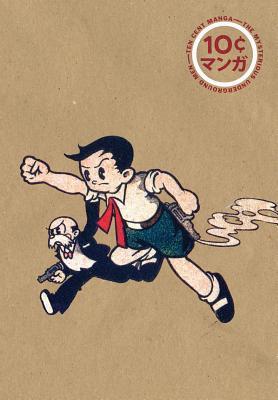
"The Mysterious Underground Men" by Osamu Tezuka, edited by Ryan Holmberg (PictureBox)

ISBN: 978-1-939799-09-8 PictureBox

"The Mysterious Underground Men" by Osamu Tezuka, edited by Ryan Holmberg (PictureBox)

Osamu Tezuka is not only a manga comic god, but more important, a genius with ties to the Western tradition of comics as well.    "The Mysterious Underground Men" is a youth's tale of adventure, science and criminals.  The beauty of this story is that it is almost like a feverish mixture of criminals and sci-fi villains - all in one story.   Tezuka wrote and drew this manga in the late 1940s and what is fascinating to me is his positive attitude towards the wonder of science and what it can bring to mankind.  On the other hand, and only a few years when he wrote this manga, the atomic bomb killed thousands.  Yet, somewhere in his psyche, he looks up to science and the good that is human.  Yet, death lurks within the narrative, and he was perhaps one of the first manga writers for kids (later he wrote for adults) who introduce characters that will tragically die in the narrative. 


This beautifully designed book (like all titles published by PictureBox) is faithful to the tradition of the Japanese manga, but also brings in the retro look of that era into the packaging and design.  On top of that, the editor Ryan Holberg, in his introduction, brings in the influence of the 1930s serial Flash Gordon as well as comics like Blondie and various Walt Disney cartoons/comics as well.  Tezuka took all of this in, and in an essence, made a giant pot of soup, which is basically this manga.  "The Mysterious Underground Men" is a silly plot, yet what adventure is not basically silly. It's the imagination at work, and Tezuka like the professor or engineer in this story, can cook up the ultimate adventure yarn.  Excellent book. 


Friday, October 5, 2012

"Doing Time" by Kazuichi Hanawa


"Doing Time" by Kazuichi Hanawa is truly an unique and amazing document of life in a Japanese prison.   First of all there is hardly any narrative, but just the daily activity of a prisoner in his cell with the others, but beyond that it goes into almost fetish like detail about the food served in prison.  Which according to Hanawa is not bad, not bad at all!


There is also architectural design of the cells as well as a detailed account in what is in each cell.  How many towels a prisoner can keep, or how many books as well as observations on toilet practices and when and how one can take a bath.  Prison clothes is also shown in great detail, and how one folds their bed, shirts, pants and so forth.


In a way I am sort of reminded of a Robert Bresson film where you are seeing factual actions as they start their day to their bed time.  There is nothing harsh about this prison, in fact it looks nice in many ways.  But still one gets the impression of being locked up with others - and dealing with the issue of space, work and eating together.   Also there are flights of fantasy or surrealism, but it fits perfectly with the theme of the graphic novel, or more rightly this memoir.

Hanawa, the author and artist, was arrested for carrying and owning an illegal weapon - a gun.  Without a doubt the NRA would be tearing their hair out of their head's if they read this - but Hanawa doesn't make any bones or any thought of un-justice - life is what it is.  Without a doubt I feel this book is very much a masterpiece.


Sunday, December 11, 2011

"No Longer Human Vol 2" by Usamaru Furuya

Part 2 of three parts of the manga "No Longer Human" based on Osamu Dazai's novel of the same name.  And when we left our hero from volume one he survived a suicide pact with a lovely - and now how does he live and go on?   Well he does of course, but without ruining others and himself as well.   Usamaru Furuya is perfectly matched up with Dazai's obsession of life among the edge of total failure.  So far part 2 is like watching an accident as it happens.  Very enjoyable!

Saturday, December 10, 2011

"The Astro Boy Essays" by Frederik L. Schodt

The perfect book for me to pick up at Shibuya Tower.  Somewhere between my personal desire and what others in Japan have given me, I find myself surrounded by Astro Boy toys and books.  When I first started to go to Japan,  Osamu Tezuka was one of the sources of understanding that culture and it was such a pleasant adventure.   Frederik L. Schodt's book on the culture and history of Astro Boy is a must-read for anyone who have even the slightest interest in manga and its history.  
Tezuka is without a doubt a major figure in pop Japanese culture - perhaps the key figure, and without a doubt a genius in his field.  He is also a mega-figure to write about, and Schodt's book is a good starter in the world of Tezuka, and by mostly focusing on his most famous work in the west - Mighty Atom aka Astro Boy.

part one of "Birth of Astro Boy"

part two of "Birth of Astro Boy"

part three of "Birth of Astro Boy"

The story of a boy robot made by a scientist who was grieving over his deceased son.  But that 'father' eventually disowns the robot due to the fact he doesn't age.  And therefore we have the consistent tension between robot and human.   Tezuka thought long and hard on this and Astro Boy is not a simple subject.  He's a mixture of popular science and all the hope it brings, but also the inner-danger of nuclear power and the arrogance of science.  And it is this tension that makes 'Astro Boy' into a major work.  Also Tezuka's skills as a writer and illustrator is pretty amazing.   For sure he's the Disney of Japan, but I think he's more then that - way more.  Schodt did a remarkable job introducing the world of Tezuka and why he's important.


Friday, November 25, 2011

Usamaru Furuya's Graphic Novel of Osamu Dazai's "No Longer Human"

It has been a Usamaru Furuya month for me, since I read "Lychee Light Club early this month. And I liked it a lot - but this is really my cup of sake. "No Longer Human" is a classic and great Osamu Dazai novel, and Furuya does a good job in updating the story (slightly). 

A story of a wealthy young teenager who had everything but quickly loses it due to feelings of severe alienation. Yes, it could be a Who rock opera concept, but in the hands of Dazai its a poetic downsizing of a character slowly losing his sense of identity. His only hope really is becoming a writer. And the book (and graphic novel) is based on Dazai's personal life. I discovered this writer while living in Japan, and at the time (and still does to be honest) makes perfect sense to me. Whenever I write something I think of Dazai first. And its interesting Furuya has taken on this novel as a graphic piece of narration. His work is super great and sophisticated.  "No Longer Human" is a three part series. I can't wait till volume 2

Friday, November 18, 2011

Usamaru Furuya's "Lychee Light Club"


I accidently ran into manga artist/writer Usamaru Furuya's work via looking at the cover of his version of Osamu Dazai's great novel "No Longer Human." Mind you I haven't read it yet, but Dan at Skylight Books in Las Feliz put this little dynamite in my hands. "Lychee light Club" is a group of damaged kids who have a powerful unhinged chess loving' leader, who at the same age controls this goth gang. They kill, destroy, and build their own version of a Frankenstein, who has one human eye that belongs to a member of the gang.

The violence is very extreme and over-the-top, which .....makes this work better then others. The art here very much reminds me of another manga artist i.e. genius by the name of Suehiro Maruo, who is a major influence on Furuya. The manga is based on an actual theater piece of the same title and helped put together by Maruo - so this is very much a literal tribute to the original stage production as well as to the works of Maruo.

The narration is pretty good, but for me, its the visual aspect of the piece that grabs my attention. Its one long beauty of a penmanship by Furuya. Like everything else there is so much dregs in the field of manga, its nice to be exposed to someone who is really using the medium of comics to not only break into new ground, but also just pushing to the horror and violence that this medium is or can be great at.