Showing posts with label Georges Perec. Show all posts

Friday, October 4, 2019

"A Short Treatise Inviting The Reader To Discover The Subtle Art of Go" by Pierre Lusson, Georges Perec, and Jacques Roubaud (Wakefield Press)

The Asian game GO is sometimes thought of like a brother/sister to Chess. Pierre Lusson, Georges Perec, and Jacques Roubaud think that's hogwash. In this funny beautifully designed book, the gods of the Oulipian world express their take on one of the oldest games on this planet. The book serves as a manual on how to play, but I think to most readers it's a witty take on game-playing as well as how literature plays into that landscape. There are moments of hysterical humor, and the writing of the book (not sure who did what?) is almost a parody, exposes deeper appreciation of game-playing as one does in everyday life. A remarkable little book.

Monday, July 30, 2018

"Wishes" by Georges Perec; Translated by Mara Cologne Whyte-Hall (Wakefield Press)

ISBN: 978-1-939663-33-7

Homophonic wordplay is language that plays with the rooted word or expression.  The meaning is both what one hears of that word, as well as the spelling and presence of that word.  There was no one on this planet like Georges Perec.  This late author is perhaps the most playful prose artist to use language.  Every year, up to his death, Perec would make and print out a little book to give out to friends, that consist of these homophonic wordplays, that in turn become little narratives or at the very least a joke.  Even a bad corny joke!   

"Wishes" is a compilation of these homophonic works, that are funny, profound, or just plain surrealistically silly.  What I have to imagine is a hellish ride into the French language for a translator, is an enjoyable read into another culture's think pattern.  Perec's work overall is always humorous, but there is also another side where he is focused on language and all of its limitations, poetry, expression, and sensuality through its textural meanings that seem endless.  A perfect book for a writer, or one who loves to write - because one is thinking of language as they write, and surely Georges Perec is the master who kicked the door open for us to wander in its maze.  

Tuesday, October 27, 2015

"Autoportrait" by Edouard Levé (Translated from the French to English by Lorin Stein)

ISBN 9781564787071 Dalkey Archive  


Without a thought in my head, I went to Stories Bookstore and Cafe in Echo Park, and decided to purchase a copy of Edouard Levé's "Autoportrait."   I have heard of this book through Dennis Cooper's blog, and reading about "Autoportrait" made me curious to go get the book itself.  After purchasing it, I went directly to the Echo Park Library, or Edendale Libray as it is officially known, to start reading the book.   I didn't leave the library till I finished the entire book. 

Once you start it, the writing of this short work of literature (not sure if it's officially fiction or memoir) is hard to stop reading.  Rarely have I ever read a book where I was compelled to read the whole thing in one sitting.  I'm glad that I did, because I think if one stops reading "Autoportrait," you would lose the rhythm of the language and sentences.   Basically "Autoportrait" is a collection of facts regarding the writer's life and thoughts.   There are sentences like "I get excited by the idea of reading the biography of an author I love, then when I actually do it I lose steam."   Which is perfectly factual in a sense, but I'm not sure if he really means all biographies he feels that way, or just some.  Perhaps the one's that are 'only' about his favorite writers.   The book is actually full of sentences that can be either meaningful and quite textural, or just the facts sir, in the style of Jack Webb's narration in the TV show "Dragnet."

For me as a reader, the textures and pacing of the language he uses is quite hypnotic.   As I mentioned it was hard for me to put down this book, not because I wanted to know what will happen in the end, but just where he is going with this style of writing and format.    The book is very similar to the writings of George Perec and Joe Brainard - two writers he mentions in passing in "Autoportrait."     Joe Brainard's "I Remember" is very subjective, because it is how he remembers a certain time in his life, yet Levé is working in the same format, but the results are different.   Perec likes to play literary games, and I think Levé was a fan of both writers (just what I read out of this book - by his style alone) that in many ways, reads like a tribute to Brainard and Perec.    "Autoportrait" doesn't have a lot of psychology, in fact, it is almost reading the surface of someone.  Yet, one picks up little clues here and there.  Towards the end of the book, he mentions a friend who before going out to play tennis he went back to the house to shoot himself.   Which describes a person who thought out his suicide, but then I started to think why did he make arrangements to play tennis with his wife.  There is a coldness in the text that is disconcerting.   I did know that Levé committed suicide, so perhaps he was thinking about the nature of taking one's life.  On the other hand, Levé seems to have a full-life before his end.  He traveled well, and it seems he loved and had relationships, so the mystery of why one would do something like that, is still a mystery in this book as well.  

When I read "I Remember" I get a full portrait of its author Joe Brainard.   I don't feel that way after reading "Autoportrait."   It is not a work of full exposure of a human being, but maybe just the facts of how one lives in their lives.    Brainard is like Proust, and Levé is a minimalist by design.   It is obvious he's a man who likes structures, or has a belief in the world of the system.   Yet, that specific structure doesn't tell much.  But then again, what is there to tell?  "Autoportrait" is a remarkable piece of literature, but it is also I think a good book about the art or the artlessness of 'good writing.   Those who write, should be for sure, read this book. 


Edouard Levé
 - Tosh Berman

Thursday, March 6, 2014

March 7, 2014


March 7, 2014

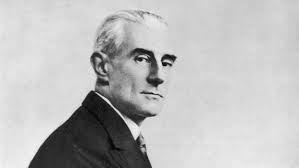
Over the bus sound system in Tokyo, they were playing Maurice Ravel’s “Bolero as I was heading towards a Piet Mondrian retrospective at the Meguro Museum of Modern Art.  As it is raining, I can’t really can’t see clearly out of the bus window due to the heating system in the bus makes the windows foggy.  I use my hand as a window wiper, and with the music, I go back and forth accordingly to its seductive rhythm.  Since it is nighttime, the mixture of neon lighting and the headlights of the coming traffic give a visual that is blurry, with respect that all the edges from objects, including pedestrians into an expressionist painting.  So unlike Mondrian!   I just wonder if he was on this bus at this very moment, what his thoughts would be.


Once I get off my bus stop, I realize that it was a colossal mistake, due that it's freezing and I’m not wearing the proper clothing for this type of weather.  It’s wet, and I shouldn’t be wearing a lightweight v-neck sweater and open sandals.  What was I thinking?  My need to wear what I think is fashionable is always a major problem for me, with great respect to that day’s or night’s weather.  I have a tendency to ignore whatever the temperature is or if it's raining, snowing, or sunshine.  I wear what I always want to wear and damn everything else!  I think i 'm trying to go for a Jean Marais “Orpheus” look, for tonight’s opening at the Meguro Museum.  Once I got in, I realized by the way people who were looking at me, that I appeared to look stupid. One should not go to a Mondrian opening looking soaked and for god sake wearing open sandals.  What was I thinking?


Since I was by myself, I walked around the gallery looking at the paintings with a profound expression on my face.  I don’t normally have an opinion on Mondrian’s work, but before I checked out of the house tonight, I practiced in the mirror various expressions while looking at a painting.  For sure I just wanted to look smart, and if possible, handsome.  But it's really weird that how you look at yourself in a mirror is quite different from how people look at you.


Nevertheless, the exhibition was excellent.  My life is just so chaotic, so actually looking at a Mondrian painting gives me a sense of peace or security.  The same goes for Ravel’s “Bolero” because musically it goes towards a certain distance, and doesn’t let you off till the end of the piece.  What I like about art is one that leads the viewer/listener to a plateau and lets you hang-out before you go back to your messy and unorganized life.

 Afterwards, feeling cold, wet, and not-that-hot looking, I went to an Asakusa music hall, where they had a tribute to French song and dance man Philippe Clay.  I always loved him, because he was so unusual looking, and tall.  He’s renowned for doing songs by Boris Vian and Serge Gainsbourg, but somehow never got the proper attention in the United States.  In other words, he went off the map.  Another artist/writer I like is Georges Perec, because his writing is very formalized in that it is a puzzle of sorts.  Like Mondrian, he was a self-contained visionary who sees the world as one vast workable structure of some sort.  Sadly I am totally the opposite.  I’m reminded of that fact with the feeling of cold rain water smacking against my toes, due to my open sandals, on this very rainy night out in Tokyo.


Wednesday, September 18, 2013

"Locus Solus. Impressions of Raymond Roussel"

ISBN 9788475069821

My ideal perfect book on a without doubt a perfect writer, that being Raymond Roussel.  "Locus Solus:. Impressions of Raymond Roussel" is a catalog of an exhibition that took place in Madrid, and for some reason the literature here is translated into English.  Oh joy!  Not only do we get samples of Roussel's writings, but also commentary by Dali, Breton, Soupault, and a fascinating interview with the great American poet John Ashbery.   He is probably the only American in the 50's who had an interest in Roussel's work.  While he lived in France he contacted people who either knew Roussel or had a deep interest in his work.

Roussel was a man who had a small audience for his work, but like the Velvet Underground, each member started their own important band.  Roussel's followers were the DADA, the Surrealists, The New York School of Poetry, Georges Perec & his group, and basically anything that even stinks of the avant-garde that has a limb attached to the works of Roussel.   Probably the biggest influence on an artist is Marcel Duchamp.  The French, but New Yorker, genius based a lot of his ideas on Roussel's visual sense as well as his thoughts about the presentation of things that happen.   In his mind, Roussel thought himself as an equal to Verne and Hugo, but the truth is his work was not noticed at all in the bestselling group of writers.  He belong to the gutter of the avant-garde, but alas, the gifts he brings is endless and quite complex.  The greatest joy in reading Roussel is similiar to someone taking you for a ride in a very interesting neighborhood, a place you don't understand, but equally remarkable for its daring and perverse beauty.  

This book is a great introduction to the world of Roussel, and everyone from Dali to Mike Kelley allowed themselves to be touched by his genius.  And without a doubt Roussel was a genius.  To see the world with his eyes is a combination of a horror and carnival show mixed with a certain amount of beauty.  And it these images that he produces through his writing that had such a major affect on the contemporary art world - even to this day.  Buy and own this book before it totally disappears into the world of high-priced used books. 


Thursday, August 29, 2013

Georges Perec and the OULIPO "Winter Journeys" Atlas Press

Atlas Press, distributed by D.A.P. ISBN 9781900565646
There is nothing more fun than reading a literary work that is about books. Or the idea of books, and how it can lead to an adventure. The OULIPO group that was originally formed by Raymond Queneau is such a group that reads and writes book that becomes a game or even an quasi-science project. Georges Perec is considered the Shakespeare of the group, and therefore he leads the race with this specific book "Winter Journeys." Which, in return has caused a series of little books by writers in the OULIPO group that either continue or expand or just comments on Perec's original piece.


Perec writes of a writer named Hugo Vernier who wrote a book called "The Winter Journey" which book is before everyone else's great book. in fact his writing is the key book of avant-garde literature. Except no one has really seen it, but they have heard of it. Like a chain-letter, the various writers in Perec's world, continue the adventure of this book and what became of it or if even found.  So what we have here is really a book about literature and how powerful it is as an object, or a collection of ideas. Bibliophile galore!


For those who either tipped their toes in the OULIPO world or are full-time addicts to its games and fun, this is the book to get. Also, strange enough the key graphic aspect of the book is done by the guy who originally illustrated Raymond Roussel's great "Impression of Africa." You see everything links up. Not a paranoid conspiracy but fact!

Thursday, June 13, 2013

"la boutique obscure: 124 Dreams" by Georges Perec (translated by Daniel Levin Becker)


Dream diaries are usually only interesting between the person who is having that dream and their doctor.  Beyond that when someone comes up to you and says "I have a dream and its..."  Well, your first thought is to run away.   But alas what we have here is a dream book by the great Georges Perec, and even though it is his dreams... it's still not that interesting.

The best and greatest dream book is Michel Leiris' "Nights as Day Days as Night."  Actually one of my favorite all-time books and for god's sake it's a dream journal.  But Leiris maybe a more twisted character than Perec, and not as conceptual.   So "la boutique obscure: 124 Dreams" starts in 1968 and ends in 1972,  probably the most fruitful of his writing years.  I imagine that he started this project with a beginning and an ending -perhaps taking over the role of an actual everyday journal.  But i am just guessing here; what we do have is little narratives by Perec, which shows his dream world is very straight forward in a sense.  At least one gets the sense that there is a beginning, middle part and then end.  Like Godard, not always in that order, but there is a sense of some sort of organization within the Perec dream world.    Leiris on the other hand is more sexual (and there is sex in the Perec dream world) and a tad wilder.  Also his imagery is more poetic and seductive of sorts.  Perec is sort of listing his dreams for maybe a future analysis.

But the best part of the book for me is the end index, where he list categories like "Staircases" and the color "Red" for instance - and he mentions how many times he had a dream with the color red in it and so forth.  Which comes to mind on my own writing project, which is not about dreams, but I am writing something that is very systematic, and I realize that some of that came from Perec and his work.  So, yeah its interesting but mostly for the writing process than anything else.

Friday, August 10, 2012

"Many Subtle Channels" by Daniel Levin Becker


Superb book that is both the history and the explanation of the great literary group OULIPO. Daniel Levn Becker, the author, actually became an official member of the OULIPO, and it's with great humor and appreciation of these rather 'eccentric' characters that make up this group that are obsessed with word games and how those games turn into literature.

When I first picked up the book I thought it maybe a very dry look or approach to OULIPO, but alas, it is anything but. "Many Subtle Channels" is a personal look into the works of Georges Perec, Raymond Queneau, Harry Mathews, Jacques Roubaud and others. What sounds like party games is actually a deeply involvement with literature and how it works. But done with great humor and wit. An important book on its subject matter, but also a great read.

"Bookworm" with Michael Silverblatt.  Interviewing members of Oulupo.

Oulupo at work

Georges Perec

Raymond Queneau

Jacques Roubaud

Sunday, February 27, 2011

George Perec's "The Art Of Asking Your Boss For A Raise"

Georges Perec is a writer who likes to play. He is also a writer that for one to enjoy has to be willing to go on the drive with him, and he is for sure the driver. Remarkable on many fronts, this book has super anxiety attached to it. The fear of asking money from your boss or head of your station at work is sweat stained existence for many. And Perec plays on those fears in a very playful way. "Everything needs to be simple" is a thought that runs through out this small book, but simple is often either complex or opens up other issues. Maybe way too many issues! 

Especially when one is planning "how" to approach the boss in asking for a raise. What will happen if he is not there at the time, or he's on the phone or..... The "or" is the part that can drive one mad, and Perec captures the irrationality that is basically in the workforce. But then therefore does that mean it only exists in the workforce?