Tuesday, August 12, 2014

August 12, 2014


August 12, 2014

Throughout my life I always wanted to be elegant, like Alfred Lunt dinning with Radclyffe Hall at the Stork Club, but eventually I end up in a party quoting Sam Fuller  “Film is like a battleground: love, hate, action, death… In one word, EMOTION.” The truth is I used to believe that the cinema was the ultimate art, and I think it was in the 20th century, but now it’s a shadow of what it used to be.  For me, it’s music and of course the written page.  What I find fascinating is watching contemporary films hitting against the concrete wall over and over again.  It is like a moth that is attracted to the flame, either it is too stupid to realize that it will get burned to death, or it is an act of suicide?


The beauty of the cinema was the theater itself, and the tacky sodas and candy sold at the counter.  My parents said to me that there were bats flying near the ceiling at the Chinese Theater on Hollywood Bouvelard.   This little (non) fact made going to the movies into an adventure, and there was a slight chance one’s life will be altered forever.  For instance, I remember seeing “Taxi Driver” for the first time on Hollywood Bouvelard (always the same street), and walking out and seeing a fleet of taxis in front of the theater.  Was it a William Castle type of publicity, or just by chance?  I suspect it was just happenstance, because what I saw in the theater, changed my life, and that is exactly how I saw the “real” world.  Either by the hook or the crook, the world was transformed by another medium, the cinema.


The way we see films really changes the perception of that work.  It’s very difficult for me to watch films on TV, computer or the phone.  Although the medium has changed, cinema pretends that the format doesn’t matter, when in fact, the medium is the message.  I tend to like to go to the cinema in a different country or culture.  When I was in Mexico I saw a Cantinflas’ film “El analfabeto” (The Illiterate), and what I found interesting is hearing that Mexico’s reigning illiteracy (70% in 1930), and "Cantinflas is the illiterate who takes control of the language by whatever means he can".  The ability to alter a situation or culture I think is pretty null, when it concerns the movies.  What I think are my favorite films are all from YouTube, and it is mostly acts of violence, for instance the citizen of Gaza being shot down by a sniper.  That type of footage seems to kill the imagination where it is very difficult for me to believe in the choreography of Michael Kidd, along with Gene Kelley.


What I do know, is that I can trust the cinema of Ron Mael (Sparks), because I see the images through his music, and the same when I read a book by Radclyffe Hall.   Also I find it interesting that Alfred Lunt, as an actor, chose the theater over film.  He realized the difference of the cinematic world, with its close-ups, montage, and other visual trickery, that it can’t replace the fake realism of the grand stage.  I often dream that I am walking through Broadway and seeing the glamour of the lighting of the live theaters, and knowing that I will eventually end up in a broken down movie theater with a sleeping projectionist.  Despite the fact that I wish for the grand and elegant life, I will settle for the cheap cinema.  All my friends go there.


Monday, August 11, 2014

August 11, 2014


August 11, 2014

The only thing I like about The Dave Clark Five is Denis Payton, their tenor and baritone sax player.  It’s easy to find Dave Clark recordings on I-Tunes, but of course it is preferable to find the recordings on the original vinyl.  There is one outstanding track of the Five called “Time, ” which features Payton as a solo player.  I don’t know much about this tune, but it almost sounds like a Stan Getz song - and it has to be one of those pieces that were made in great haste as a b-side to some smasher-o a-side.  Nevertheless it’s not easy to locate the sounds of the Five, due to the control that Dave Clark has over his material or to be more precise, the music of the Dave Clark Five.  One wonders why someone would want to hoard the music to such a great degree, but perhaps it is something that is very precious to him.  Or maybe he feels he can drain more money out of the dying music business.  I always suspect that he pretty much stole his sound from the great Joe Meek recordings from the early 60s.  The sad thing is the case that the work becomes a shadow of an era, instead of what it naturally is - a piece of music.


The control of one’s image by someone else is a very natural thing to be done.  Whatever it is your work, or worst yet, a family member, it’s an uphill battle because you want to do the right thing, but sometimes you are only getting in the way of what is interesting about that person.   Peter Folger, who was part of the Folger (coffee) family spent a great deal of his time protecting his daughter, Abigail from the damning articles or books about the Tate-LaBianca murders, which resulted in very little information about her and her life.  Which is a shame, because it sounds like she was a very wonderful person.  I rather know her as a living person, than as a dead victim, who by all accounts was at the wrong place at the wrong time - or maybe at the right place that was intruded upon people who were clearly wrong being there.  Nevertheless I found it interesting that she had an interest in the arts -especially poetry and the theater.  She was a debutante from San Francisco, who wore a bright yellow Christian Dior gown that she had purchased in Paris some years before the debutante ball.  The interesting thing about her was her devotion to the issue of civil rights as well as the art world.  She took a job at the University of California Art Museum in Berkeley as a publicity director.
In 1967, Abigail moved to New York and found a job as a clerk at the Gotham Book Mart on 47th Street.  When I worked at Book Soup, I met the most amazing people, that I still remain in contact with, and some went off and became huge stars, writers, or … dead.  Nevertheless each one had a profound effect on my life, and I just try to imagine what it would have been like to work with Abigail at the Gotham.  Would we discuss Frank O’Hara, or maybe she liked French poetry.  I imagine her more of being a fan of the New York School of poetry (whatever that is).   The thing is there is very little information about her.  We don’t know what her taste in music, books were and yet we do know that she was devoted to the art form of literature and music.   All we know are the facts, such that she met the author Jerzy Kosinski at the bookstore and he introduced her to Wojciech Frykowski, a fellow Pole, and a bit of an adventurer.  The perfect boyfriend for this New Yorker, who can only communicate fully to each other in French.  Frykowski wanted to move to Southern California, hopefully to work with his good friend Roman Polanski, or at least hoping that would happen.   Abigail decided to move with him to Los Angeles, where she wanted to be a social worker.  Of course, things didn’t work out well.


I want to know more of Abigail as well as Denis Payton, but alas, due to a certain amount of controlling one’s history and the passing of time, it now becomes a world of shadows. As I have stated before, I ‘m OK in that world.  I got the Dave Clark Five’s very rare album that came out only in Canada (of all places) called “Instrumental Album.” It has the Payton sound of sax sounding like metal against metal.  It’s raw. I find it beautiful.  There are certain instrumentalists who totally dominates a sound, and the only other person who can do that is Jah Wobble, with his bass on PIL’s “Metal Box.” In memory of Abigail Folger and Denis Payton, whose  birthday, I’m celebrating today.

Sunday, August 10, 2014

August 10, 2014


August 10, 2014

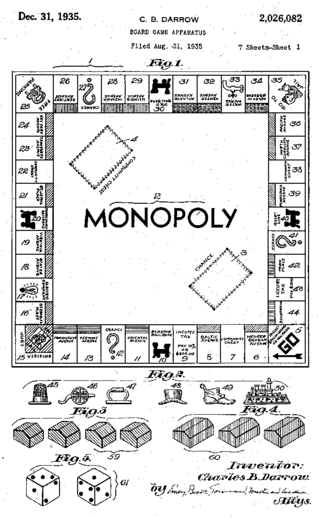
Real estate never has been an interest for me.  Therefore the worst form of nightmare is being dragged into a game of Monopoly, which seriously I never cared if I win or lose.  It is nothing but just to pass the time. The only thing I like about the game is the design of the board, and its play money, plus the “chance” cards. The risk is always taking the chance, and I think real estate is all about planning, and then taking a chance that a specific neighborhood will move towards your direction – financially speaking.  There is something about the great depression in the United States which inspired people to play with ‘imaginary property’ that they don’t actually have.  Charlie Darrow is the inventor of “Monopoly,” but there were other people at the time playing their own version of this game, or at least with the subject matter regarding losing and gaining property.


“The Landlord’s Game, ” patented in 1904 by Elizabeth Magie, is the inspiration for “Monopoly.” The oddity of the game is that it demonstrated the economic ill effects of land monopolist and the use of land value tax as a remedy of them.  So in a sense it is very much an anti-capitalist game, while “Monopoly” is about being greedy and making yourself wealthy through one’s greed.   What I find interesting is how board games reflect on life, and even writers like Guy Debord, became devoted to the board game and actually invented such a game called “Le jeu de la Guerre (A Game of War).   More likely he wanted this game to be just as popular as “Monopoly,” but I think that is impossible due to the animal-like desire for land and how much wealth can come from that property.   The horror show aspect of real estate is the fact that it often destroys creativity and a form of currency.  Art can be defined as cinema, literature, dance, theater, and visual - but I also think real estate is an art form as well, with respect to retail shops and how it affects a neighborhood.


“Monopoly” and “The Landlord’s Game” are both fascinating.  The latter exposes the corruption of the landlord, while “Monopoly” exposes a need to obtain wealth at all costs.  A board game basically imitates real life, because life and politics are nothing but a board game, but played out in real time, with real results.  I’m sure the Israelis are looking at the Palestinian issue as a board game.  They must have a large table or a computer screen, where they can map out the territory and imagine it as a 3D image, where they can enter and then disappear by will.  The same for Iraq and any other country involved in a military narrative.  Then on top of it, they monitor reactions from the media - both from social networks to TV talking heads.   As well as presidential elections or when there is one side fighting against another side.   All of it is deemed to be a board game.  The problem is one gets sucked into a set of rules of not of their own making.  There is this and there is that.  Surely there must be a third option?


Saturday, August 9, 2014

August 9, 2014


August 9, 2014

Lately I have been isolating myself from the world that is out “there.”   At first, I would go to the woods every weekend, and then it would be four days out of the seven, but now as much as possible I try to stay in my cabin, that is not that far away from what would call civilization.  When I go back to my backyard, I can see the city lights, which are beautiful, but one can only notice such beauty away from the city itself.  Over the years I have built a small farm to grow vegetables, and I try to eat from this land as much as possible.  I’m not a meat eater and I truly believe one should eat that is green and came from the mother earth.   A good friend of mine, Wojciech Frykowski, who is an actor from Poland, told me “the highest form of self-restraint is when one can subsist not on other animals, but of plants and crops cultivated from the earth.”  He is totally correct, and by total instinct on my part, I always trust an European on such matters.


Since I don’t have a telephone at the cabin, I can only be reached by mail, sent to my post office box in West Hollywood.  Wojciech wrote to me that there is going to be a small gathering at a home he’s staying in at 10050 Cielo Drive, which is not that far away from my cabin.  I’ve been there many years ago, and it’s an interesting home built by the architect Robert Byrd for the French actress Michèle Morgan.  The house was constructed in 1944, and Morgan gave the residence up, when she moved back to France in 1946.  The legendary actress Lilian Gish moved in with her mother, while she was working on the film “Dual in the Sun.”  Aftewards Rudi Altobelli, a music and film industry person purchased the property and rented it out to Cary Grant and Dyan Cannon (their honeymoon nest in 1965), Henry Fonda, George Chakiris, Mark Lindsay (of Paul Revere & The Raiders), and Terry Melcher (son of Doris Day) and Candice Bergen.   When that couple split up in early 1969, the house was rented to Roman and Sharon.


I never met Roman, but Wojciech told me that Jay, my hairdresser (when I can afford him) will be there, and I always enjoyed his good cheer and company - so for sure I would try to make it over.  Also Wojciech wanted me to meet his new girlfriend Abigail, who I heard about from my other “Polish” friend Jerzy Kosinski.  He met her when she worked at the Gotham Book Mart on 47th street in New York City.   He was the one that actually introduces Abigail to Wojciech, so what a small world.  So I was just a little curious to meet her as well, since she is close to both of my friends.


Another weird coincidence is that I was looking for someone to build me a stereo system for my cabin and a friend of mine Bill who is the caretaker at the Cielo Drive told me about a kid named Steven, who is a electronic geek, and could built me a system for a little money.  I hired him, and he is a fascinating kid.  It appears that he was in trouble time-to-time with the law, due that he stole electronic parts to build radios and equipment of that sort.   I used to see him at his nighttime job, which is the Jonas Miller Stereo on Wilshire Boulevard.  Some people live lives that they themselves don’t find interesting, but Steven is so into electronics and stereo equipment, I just find him to be the Baudelaire of stereos.  He understood the unique work that makes up a sound and therefore a stereo set-up is a very subjective listening device for a customer.  I know nothing else about him, because the only subject matter he’s interested in is electronics, especially when it involves sound.  He’s perfect!


The truth is when it was now time to go to the party tonight at the house, I chose to stay in my cabin.   As I get older the solitude becomes more important to me.  I just refuse to be in “need” of the companionship of others.  For me, self-reliance can be both spiritual as well as economic.   I also don’t drink anything stronger than green tea, so it’s hard for me to go out with friends, because they do drugs, drink and that is not my scene anymore.  I just like to go in my backyard in the middle of the night, and lay on the grass and look up at the stars.  That’s plenty of company for me, and I really like the stars.

Friday, August 8, 2014

August 8, 2014


August 8, 2014

After a night of serious drinking, I woke up not with a hangover, but with incredible insight into my blissful state of drunkenness.  First things first, I reached for my turntable and put on side one of André Jolivet’s “ Chamer Music for Oboe and Cor Anglais.” I’m very fond of “Serenade" (version for oboe and piano) which is the first cut.  It lures me into a state of writing, which is incomprehensible after last night’s adventure with the bottle.   One of my favorite and inspirational drunks is Dr. Bob, who was the co-founder of Alcoholics Anonymous with Bill W.  I think what impressed me is that his expertise was Colorectal surgery, and throughout his life as a doctor he had to overcome his drunkenness as well as being sober for operations.  He tried various methods to stop drinking, but failed. Sometimes he could stay on the wagon, but it was usually too difficult for him.  When he met Bill W. that seemed to change his life.  Oddly enough, he was provided with a few drinks by Bill W. to avoid delirium tremors and the next day he had a glass of beer, to settle his nerves so he could do an operation.   That was his last drink, and he didn't drink from that time till his death at the age of 71.


I always wondered if my alcoholism came from the fact that my father co-wrote only one song, and that one song was written with and performed by Jimmy Witherspoon.  It’s called “Lush Headed Woman.” The lyrics go like this:

“I got a lush headed woman, and she stays juiced all the time/Gonna quit that woman and get me a square cause lush headed woman is no where” (lyrics by Wallace Berman)

Which actually is good advice not only for one’s mate, but for yourself as well, if you’re a lush headed man of course.   The thing with me, drinking is just an art form of sorts.  I’m rarely a sloppy drunk, and only a handful of times have I regretted to drink in public.  For instance I have this one painful memory of talking to a girl that I had a deep crush on like forever, and finally I had a chance to sit with her at a dinner party.  As I was talking to her, and I was smashed, I accidentally hit my glasses off my face which caused it to fall into someone’s soup - will not just be anyone, but her husband at the time.  I tried to hide my embarrassment by acting silly, but it was obvious to everyone that I was out-of-it, and not surprisingly, I wasn’t invited back to these people’s house again.  One of the pitfalls of public drinking!


Nevertheless I don’t go out to drink anymore, due to above situations, and especially in front of women that I admire.  Beautiful woman plus me drinking is bad math.  Now, I pretty much stay at home to focus on the writing of my novel, as well as working on a collection of poetry that will be hopefully will come out by the end of this year.  Other then that, I’m trying to focus on writing about a great Los Angeles clothes designer by the name of Rudi Gernreich.  He’s famous for making clothing that is unisex, and even designed men’s underwear for women.  One of the things that impressed me is his thoughts about the human body and how one sexualizes it.  It seems he came from a culture (Vienna) that was comfortable being in the nude, and that there should be no shame regarding one’s body.  His first job in Los Angeles was washing bodies before an autopsy at the morgue of Ceders of Lebanon Hospital.   I think after a job like that, one can do almost anything.  For me, discipline is everything.  I love to drink to escape the discipline that is life.  But alas, I need to put myself in a prison of my own making to do what I have to do - which is to write.

Thursday, August 7, 2014

August 7, 2014


August 7, 2014

There’s no doubt in my mind that cinema is Nicholas Ray. There is not a day in my life where I haven’t thought of the two words together: Nicholas.  Ray.   Like million others, I was totally devastated by “A Rebel Without A Cause, ” mostly due to the relationship between Jim Stark and John “Plato” Crawford.  As a side-line narrative, I was also deeply affected by Stark’s relationship with his dad as well.  To this day, I refuse to wear an apron while doing the dishes.  I also hunted down Robert M. Lindner's “1944 book “Rebel Without A Cause: The Hypnoanalysis Of A Criminal Psychopath, ” which was the basis for the Ray film.  I just recently purchased the film rights to this book, so I can produce a re-make of the film.  I’m proud to announce that we just signed Justin Bieber to play Jim Stark, Christopher Walken as Jim’s Dad, and Billy Unger will play Plato.  Judy will be played by Selena Gomez, who used to date Bieber, so that will be an interesting sub-text for the film.  We also hired Leos Carax to direct the film.  We felt that a European approach or point-of-view, will be relevant for this film.


It took me six or seven months, but I located Dean’s original outfit for Jim, and we’re going to have Justin wear it for the film.  He’s the exact same size and weight as James Dean, at the time he filmed “Rebel,” so this works out perfectly.   We’re also using Irving Shulman and Stewart Stern’s original shooting script for our version as well.  There was a scene cut out of the original film, and we’re going to re-shoot it - Jim is dead drunk and he screams at a car in the parking lot, “It’s a little jeep jeep!  Little jeep, jeep!” We did a test of this scene with Justin, and it is terrifying with the intensity that he puts in his role.  We are also borrowing the 1949 Mercury Coupe that James Dean drove in the film.  Luckily the car is in great shape, and is part of the collection at the National Automobile Museum in Reno, Nevada.


We chose to use Leonard Rosenman’s original score as well.  We were thinking of doing something modern, but decided not to do that.  At one point, we were considering to utilize Jack Nitzsche’s great album “Chopin ’66” but couldn’t obtain the rights.   But this is a blessing, because Rosenman’s score is perfect, and there is no reason why we can’t re-use it again.  We will also use the Santa Monica High School and the Griffith Observatory as a location for our version of the film.  The only thing is we are going to have to remove the bust of James Dean that is located at the Observatory's west side of the grounds.  Shooting will start this October and we’re planning a release on Christmas day 2015.


Wednesday, August 6, 2014

August 6, 2014


August 6, 2014

As a kid, my parents would take me to Robert Duncan and Jess’ home in San Francisco.  What impressed me the most, was that I was always rewarded with a book or two from each visit.  In fact, I have a lot of first-edition Oz books by L. Frank Baum, all from Jess and Robert’s library.  As a kid, one is drawn into art because it is familiar to their background.  For instance I always loved comic books, and I had a thing for “Dick Tracy” comic strip.  So when Jess did his famous “Tricky Cad” colleges which were made up totally by cuttings of the original “Dick Tracy” strip, it of course called out to me.   I never actually read “Tricky Cad,” but I understood the implications of Jess’s art, because like me, he loved pop culture.  The other painting that struck me as being great is his portrait of The Beatles.  The oils on the painting were so thick, I felt like I was seeing the Fab Four being layered over with thickness, which to me made perfect sense.  Mostly due to the fact that The Beatles held immense importance to me when I was a child.  So of course, a magnificent oil painting portrait is totally suitable to its subject matter.  Robert was a very charming and out-going gentleman, but Jess was quiet and more reserved.  Yet both of them were very sweet towards me, and when you’re a kid, one has that memory for life.  The world is very harsh, and as a child I can easily pick up the bad vibes that surround an individual or couple.   Jess and Robert seemed to be made for each other, that was natural as breathing fresh mountain air.  Or perhaps for them, breathing San Francisco air.


The other time I felt great comfort among grown-ups is when Andy Warhol came to our home in Beverly Glenn to shoot his film “Tarzan and Jane… Regained Sort Of.” Taylor Mead played Tarzan, Naomi Levine played Jane, and I played Tarzan’s son “Boy.” My father played the white hunter, and also Claes Oldenburg was in it as well.  The funny thing is I remember that day clearly, but I have no memory of Andy Warhol whatsoever.  Gerard Malanga was there as well. I remember everyone except Warhol.   Now, I must state here, that Warhol was for sure at the house filming this film, but I just don’t have any memory of him.  It was many years later that I saw the film, and it was an odd experience of seeing myself in such a young age, and of course the footage with my deceased father in it.  In many ways, it seems like a home-movie to me.  As a child, I knew everyone who was in the film: Irving Blum, Dennis Hopper, John Chamberlain, and I felt it was very much of my world as a child.  So its difficult for me to see this film as a work of art, or even great importance to others. If they’re not in it, why would they be interested in this film?


The truth is that like all home movies, they expose more than a family's narcissism.  One can taste the favor of one’s neighborhood, or period of time, when the separate world was moving closer to each other, but yet, eventually moves apart.  But at least for a fleeting period of time, while watching the film, you can gather a world that once exists.  I often have dreams, where the present is mixed up with the past, and its odd because I wake up with a craving for French-Canadian bean soup.  In my dreams, I have my collection of papers, but it isn’t worth a nickel to guys like us.  I really need that G-note.  When I look back at the Warhol film, I can clearly recognize the little boy who played “Boy.”

Tuesday, August 5, 2014

Proofs of Jacques Mesrine's "The Death Instinct" (TamTam Books)


August 5, 2014


August 5, 2014

 It’s funny how things turn out, when you really don’t plan anything, but then everything you want to do becomes crystal clear.  I never wanted to be a publisher till I discovered Boris Vian through my wife Lun*na, and in all  of odd places, in Japan.  At the time, I was writing short fiction pieces, and Lun*na mentioned to me that my work reminds her of Vian’s short stories.  At that moment, I sort of heard about Vian, but more in a jazz music placement than say in literature.  In other words, I didn’t know of him.  Once I came back to Los Angeles, I immediately went to the Downtown Library to see if I can find anything on Vian and his novels.  The book they had there, and it was a part of their permanent collection (meaning I couldn’t check the book out) was “I Spit on Your Grave.” It was a mass-market paperback, published by a company that no longer existed.   I made a photo-copy of the novel and took it home to read.  By the time I finished the book, I knew that I must re-publish this work.   I located the French owners of the novel, and secured the English language rights.  As I signed the contract they asked if I would want the English language edition of the book that they have on file.   I said sure, and it seems that the version that they have was translated by Vian and an American army buddy at the time.  I didn’t really think of it, because I thought the American mass-market edition would be exactly the same.  That, as usual, was a totally wrong presumption on my part.  The American copy was edited of course, and Vian’s manuscript was a tad much rougher in spots.  The purist that I’m, I decided to publish Vian’s manuscript.


Now that I discovered this Vian (Vernon Sullivan) novel, I decided I needed to publish an English edition of his masterpiece “Lécume des jours.   Once I made that decision, then I knew I had to publish all of Vian’s major novels. Both under his name and the books he wrote under Vernon Sullivan.   The way I looked at I just wanted to build a structure that was Boris Vian.   The foundation would be “I Spit on Your Graves, ” which is probably his most scandalous and famous book, and L’écume des jours.   Then I would add the additional Vian titles on top of the solid foundation.  With that in mind, I discovered Serge Gainsbourg while doing research on Vian.   Vian was a big supporter of Gainsbourg and his music, during the 1950s, so I felt I had to add him to the TamTam Books’ family.   Therefore I published Gainsbourg’s only work of fiction, “Evguénie Sokolov” as well as the magnificent biography on Gainsbourg by Gilles Verlant.


The other important figure for me is Guy Debord.  The writer Robert Greene (“48 Laws of Power”) turned me on to Debord’s “Considerations on the Assassination of Gérard Lebovici, ” which is an incredible book and a tad unusual one from Debord. In that book, he defends himself and his good friend Lebovici, who was a financial backer of Guy’s writings and films, as well as a publisher.  Robert did a superb translation of the book, with a fantastic introduction, and one of the things that came to my attention is the narrative of Lebovici publishing the French gangster Jacques Mesrine’s memoir “The Death Instinct. ”


So now that I have completed the circle in a sense with Boris Vian and his world (of sorts), I decided to focus on my own writing and explore within my own world.  But alas, TamTam Books is really all about me.  In one sense, all twelve titles that I have published is very much a memoir, in that I lived with all of these books (including Lun*na’s upcoming “A Ring Around The Collar” and Sparks’ “In The Words of Sparks… Selected Lyrics), that when I look at them, I see myself in every book that I published.  In other words, this is my life:

- I Spit on Your Graves by Boris Vian (Vernon Sullivan)
- Foam of the Daze by Boris Vian
- Autumn in Peking by Boris Vian
- The Dead All Have The Same Skin by Boris Vian (Vernon Sullivan)
- To Hell With The Ugly by Boris Vian (Vernon Sullivan)
- Red Grass by Boris Vian
- Evguénie Sokolov by Serge Gainsbourg
- Considerations on the Assassination of Gérard Lebovici by Guy Debord
- Gainsbourg the Biography by Gilles Verlant
- In The Words of Sparks… Selected Lyrics by Ron Mael and Russell Mael (Sparks) with Introduction by Morrissey
-A Ring Around The Collar by Lun*na Menoh
- The Death Instinct by Jacques Mesrine


Monday, August 4, 2014

August 4, 2014


August 4, 2014

The only thing I could write in my diary last week was this:

Monday: Me.
Tuesday:  Me
Wednesday: Me.
Thursday: Me
Friday: Me
Saturday: Me
Sunday: Me


I find myself fascinating, but to convey that in words can be difficult. However, now another Monday has appeared and there seems to be a glimmer of hope that my life can get back on the track, and therefore I will see the world in a much better light.   Nevertheless I’m working on a novel “Zastrozzi” and it includes my thoughts on irresponsible self-indulgence and violent revenge.   A dear friend of mine reads the original draft, and he wrote to me that “Zastrozzi” is one of the most savage and improbable demons that ever issued from a diseased brain.” The narrative (so far) is about an outlaw named Zastrozzi, for whom his two servants kidnap Verezzi, because Verezzi’s father had deserted his mother, Olivia, who died young and in poverty.   So going after his half-brother, he commits revenge on not only his father, who he killed, but also the off-spring of one of his other romances.   Zastrozzi manipulated Verezzi into committing suicide, which based on his Christian religion against taking one’s own life, guarantees the eternal damnation of Verezzi’s soul.


The trouble I’m having right now if trying to find a satisfying end to the book.  Also I have to be honest here, that Zastrozzi the fictional character is based on… me.   Not that I actually killed anyone or drove a man to suicide, but for sure the self-indulgence part, and I do have occasional violent revenge fantasies, but really, I do have it under my control.  Being a writer I can make my own world, and focus on the blank page and fill it with my thoughts and word-play.  While I was writing this novel, I listened to Timi Yuro’s “Interlude, ” which is a song that speaks to me on a highly romantic level.  “Loving you is a world that is strange” is the line that goes around my head over and over again.  I need to hear this song at least seven times before I even pick up my pen.


What may seem odd is that I’m more influenced by books on film theory than books on writing.  Béla Balázs’ “The Spirit of Film” (1930) is something I reflect on when writing.  The images in my mind are a set of montages that I try to fit together.  What seems like to be an interlude now, can be the beginning of love.  But with that love is a certain amount of poison, that if one is not careful, it can bite, and I often feel that the bite will go on eternally.  “All art constantly aspires towards the condition of  the cinema (i.e. the arts seek to unify subject-matter and form, and the cinema is the only art in which subject and form are seemingly one).”   Till then, time is like a dream, and I will try to hold on to that dream.


Sunday, August 3, 2014

August 3, 2014


August 3, 2014

As a child my role model was Dennis the Menace.  Mostly due to his rebellious nature and the cowlick on the top of his blonde head.  I wasn’t blonde, but I did have the cowlick, as well as assorted stripped t-shirts and blue jeans.   The other famous item that Dennis owned was a sling-shot, and that too was part of my uniform when I was around six years old.  I remember that it was extremely important to keep the sling-shot in the back pocket. I never actually used it, but it was an essential fashion accessory for me at the time.  As an only child, I often went out and played with only my imagination as my guide.  Without a doubt, the first character that I took on, was Dennis.  It was the first time that I didn’t depend on my true identity, but adopted myself to another identity.  The truth is I was a very well behaved child, but with the identity of Dennis, I can act out my aggressions against the world, with just my clothing and sling-shot placed in the rear pocket.

As I got older, I became aware of the TV series “Dennis The Menace” starring Jay North.   The casting was perfect, and he was totally believable as Dennis, but still, I was more attracted to the comic strip than anything else.  The 3D image of Dennis was hard for me to take, and I could only really accept the Dennis that was drawn on a page on a dirty newspaper.   Also I started obtaining mass-market paperback editions of the Dennis cartoons.  So over a short period of time I came into possession of a “Dennis” collection.   When we lived as a family in San Francisco, we used to go to the North Beach district to eat and go to City Lights Bookstore.  At one of the coffee shops nearby Chinatown, I approached a pair of police officers having coffee at their table.  My parents were in the next table, but they let me go to them.  The police officer patted my head, and asked what I wanted to be when I grow up.  Noticing that both of them had guns, I told them I wished to be an assassin.  At that point, I think my parents pretended that they didn’t know or own me.  Nevertheless I was taken into a role of my imagination where the character Dennis was a killer, but he killed with his sling-shot.  Now bear in mind I was totally aware that this was role playing, but still, perhaps not the wisest thing in the world to approach two tired cops on a coffee break.


Although not a fan of the TV series, I did follow Jay North as he went on to another series called “Maya.” The TV show was about a boy who wandered around India with a Hindu boy played by Sajid Khan and their elephant and her baby calf, a sacred white elephant.  The narrative of the white elephant in Hinduism is the fact that it belongs to the god Indra.  King Bimbisara had one white elephant and he gave it to his son Vihallakumara which caused a certain amount of jealousy for his other son Ajatasatru.  Eventually it gave rise to two of the most horrible wars in history known as “Mahasilakantaka & Ratha-musala.  As far as I know this has nothing to do with the show “Maya.” But on the other hand North and his co-star Khan became teen idols, and as I was a regular purchaser of magazines like “Tiger Beat” and “16” I pretty much followed the party line and became fans of both actors as well as their show.  But at this time, I had to give up the sling-shot, but still kept the haircut as well as the stripped shirt.


“Maya” was my initial introduction to India.  I never visited India, and I slightly knew of India probably through various Kipling tales as well as Sambo’s diner, which the restaurant’s mascot was taken from a South Indian literary figure.  So it is safe to say I knew nothing of India.  My actual introduction to an Indian from India was going to the Santa Monica civic to hear Jiddu Krishnamurti speak.  There was no fee or charge to go to the civic, which struck me odd, because I have gone there numerous times for rock n’ roll shows, which of course one had to pay to get in.  But here, it was free, and I’m not sure why I went with my dad to see Krishnamurti.  For me, it was probably to kill time, but what was interesting to me was his personality.  A woman from the audience came up to the stage and sat in front of Krishnamurti’s foot.  Krishnamurti was very straight forward to her that he didn’t like her to be seated in front of him in such a fashion.  Many years later I read about him, and regardless of the fact that I never read any of his books, I was impressed that as a youngster he was the chosen one by the Theosophical Society to lead or become “World Teacher.” Eventually Krishnamurti denounced that specific role, due that he claimed allegiance to no nationality, caste, religion, or philosophy.  He also disbanded the organization that chose him as a leader of sorts.


For me there was something wise about Dennis the Menace, and I think he may have a soul-brother in Krishnamurti.  The ability to act out as a child when I was actually a little boy brought me closer to who I am.  Krishnamurti I believe was told to act out a certain role that would please those around him, but he said “nah” and stayed focused on his inner talents.  He didn’t want to delude his message or questioning of the world in front of him.  There is a purity in both characters.  Yet, overall, it is but a journey from one destination to another.  As the English poet Rupert Brooke once wrote: “,Well this side of Paradise!… There’s little comfort in the wise.”

Saturday, August 2, 2014

August 2, 2014


August 2, 2014

My father received two books from his father, who died, when my dad was 12.   The books he left for my dad was a collection of short stories by Oscar Wilde and T. E. Lawrence’s “Seven Pillars of Wisdom.” The latter I think expressed my dad’s sense of adventure and grandness.  Some saw him as a quiet man, but I always saw him as being larger than life.  When he died he didn’t leave me a lot of possessions, but I think I inherited his romanticism of art and the grand gesture that make him special in my eyes.  Perhaps “Lawrence of Arabia” is part of a romantic tradition that men of a certain age could rise to admire.  It’s interesting to me that the actor Peter O’Toole who played Lawrence, is the same generation as my father’s - so perhaps due to the ugliness of World War 2 and the racism of that era, they were drawn to another time where men could enjoy the masculine relationship among themselves, as well as galloping in the desert.


My father is well known for making a journal/zine/mail art publication called “Semina.” Every copy was hand-made by my father, and he only gave it out to people who he found interesting or liked/loved.  It was a personal gesture to another person, and Wallace I think believed that it was important or at the very least, some interest to the given from the giver.  Lawrence also made unique editions of “Seven Pillars of Wisdom” where he made only eight copies.  He couldn’t afford to have the book typed out, so he got the text typeset and printed on a proofing press at the Oxford Times printing works.  With those eight copies, he obtained ownership of all eight copies, and chose who was permitted to read them.  Even that, this was not perfect copies of the text, due to transcription errors (as a publisher and editor this is hell) and in places lines and even whole paragraphs are missing.  He put forward some of his corrections by hand in at least five of those eight bound copies.


To be honest, I have only faint memories of the film “Lawrence of Arabia, ” due to my age at the time.  But what I do clearly remember is the beginning of the film with the motorcycle footage.  I really identified with that, because at the time, and as a child, I would ride with my father on his motorcycle throughout the hills of Bel Air.  This was before the helmet law, so both of us could feel the cold air hitting our nasal passage and eyes.  My dad liked to scream while riding the bike through the hills, and he would encourage me to do the same. It seemed like the real-life Lawrence had a thing for motorcycles.  He owned 8 Brough Superior motorcycles. They were considered to be the Rolls Royce of cycles and even though ceased production of the motorcycles right after World War ll, they were still making parts up to 1969.   My father drove a Triumph, and like the Brough Superior, their bikes were quite beautiful.


Poetry was one of the foundations of my dad’s aesthetic, and it is interesting that he used “Semina” as a exploration of that art, as well as Lawrence’s love for poetry.   The dedication in Lawrence’s “Seven Pillars of Wisdom” is of great interest because it is not clear if he’s writing about the Arabs or an individual: Here’s the poem:

I loved you, so I drew these tides of
Men into my hands
And wrote my will across the
Sky and stars
To earn you freedom, the seven
Pillared worthy house,
That your eyes might be
Shining for me
When I came

Death seemed my servant on the
Road, 'til we were near
And saw you waiting:
When you smiled and in sorrowful
Envy he outran me
And took you apart:
Into his quietness

Love, the way-weary, groped to your body,
Our brief wage
Ours for the moment
Before Earth's soft hand explored your shape
And the blind
Worms grew fat upon
Your substance

Men prayed me that I set our work,
The inviolate house,
As a memory of you
But for fit monument I shattered it,
Unfinished: and now
The little things creep out to patch
Themselves hovels
In the marred shadow
Of your gift
 -T. E. Lawrence


I often think how an individual can relate to another individual, and what they may or may not share.  But for whatever reason, when I see the image of Lawrence of Arabia, I don’t think of Peter O’Toole, but my father on his motorcycle.

Friday, August 1, 2014

August 1, 2014


August 1, 2014

My earliest memory is being in a crib, and facing my bedroom window.  In the darkness, the light outside the window was still on, but muted, or perhaps yellow, so it wasn’t bright.  Just enough to see outside the window if one needs to check something.  What I did see was a hand coming from the bottom of the window pane and grasping the side, as it slowly moves upward.  A face appeared as well, and it was bloody and distorted.  As a baby I screamed and either my father or mother heard me and they came in to comfort me.  There was a party at the time, taking place in the living room, and it seems the bloodstained face outside my bedroom window had a name.  Ramblin' Jack Elliot.

Jack was and remains a well-known folk singer, who somehow ended up at my parents’ party that night.  I think what happened was because he was drunk,  he fell down outside my bedroom window, and tried to either obtain his balance, or pick himself up by holding onto the window pane.  Nevertheless this is the first time image that I can remember.  To this day, I pretty much avoid sleeping facing a window.  Also it was the first time that I was introduced to fear.  Also being isolated from the noise I heard in the next room, made the experience even more terrifying to me.   But what child is not afraid of the dark and even more important what is outside their window.   I remember my mother telling me a story about her and my uncle, who is a couple of years older, and he was taking care of my mom at their family home, while the parents were out.  At the time, they were in the bedroom upstairs, and my uncle kept telling my mom that there is someone outside the window wanting to get in.  He was only trying to scare her, because that is what big brothers do to little sisters.  The window in question had a gigantic curtain, and my uncle kept teasing her that he will open the window to let in whoever is outside.  While my mom was petrified, and at the exact moment my uncle quickly clears the curtain.  As the curtain opened, it exposed a man attempting to break into their bedroom.  My uncle fainted, the man outside was surprised and he fell off the second floor window ledge, and my mom just stood there looking at my uncle on the floor and at the now-vacant window.

It wasn’t till many years later that I saw the film “Cape Fear” with Robert Mitchum playing Max Cady, that I re-lived the fear I had when I saw Ramblin’ Jack Elliot outside my window.   The presence of Cady just showing up as the family that he’s stalking, is having their low moments. It is just like if the spirit is down, then the evil spirit will come in.  I’m one of those people who can affect a room with my bad mood.  It seems to come out of my pours of my skin, and if I don’t hide it, then it becomes a concern from the people around me.  I just have to keep this in mind, especially if I’m in a work environment, where one has to keep people’s spirits up.  But the strain of having a phony smile on my face, or to laugh off idiotic gestures, is a deep concern of mine.   There is positive and negative energy, and one can totally dwell into either of those two definite landscapes.  I try to avoid the negative feelings, because it tends to overwhelm me, and therefore leads me to make bad decisions, when in actuality, I need to make something good out of the bad.


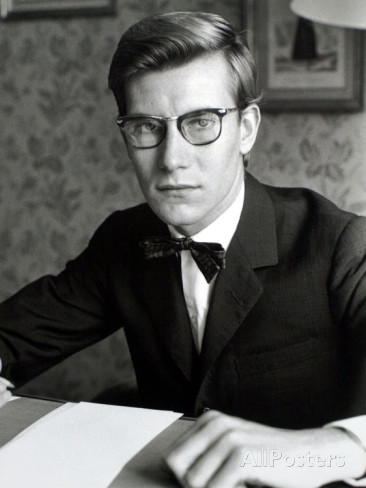
I often think the world of people like Yves Saint Laurent, because I knew he had a traumatic experience when he was in the military, and suffered under the cruelty of his fellow soldiers.  While he was in the military hospital, he heard the news that he was fired by Christian Dior due to the poor reception of a collection showing.    What happened was Saint Laurent was to be conscripted to serve in the French military during the Algerian war, but Marcel Boussac, the owner of the House of Dior put pressure on the government not to do so.  But once Saint Laurent had savaged reviews of his collection in the French press, Boussac asked that the designer to be conscripted.  So he did go, suffered from a breakdown, and ended up getting electroshock therapy and psychoactive drugs.   This caused a consistent problem for Saint Laurent throughout his life.  Nevertheless he did become successful, and in his own terms as well.   Sometimes the negative can inspire one to over come whatever ills them.  Often they just suffer in silence and do the best that they can be.  I have a tendency to go with fate, but with a whistle through my lips: Cliff Richard’s “Living Doll. ”