As a 27/28 years-old, these albums were essential to my taste at the time.
As a 27/28 years-old, these albums were essential to my taste at the time.

January 7, 2021
My first feelings of sexuality, beyond Brigitte Bardot on the big screen, is Morticia Addams. Not an actual living person, but a cartoon figure, made and drawn by Charles Addams. He was married three times, and it has been reported that he based this character on his first wife. That's not the truth. He married three women who looked like his character Morticia. I'm a fan of any artist/writer who bases their work on their sexual obsessions. To me, there is a connection between "Tom of Finland" and Morticia. It's desire drawn to perfection without any interference from the real world. The Addams Family is a series of single-panel cartoons that Addams did from 1938 to his death in 1988. It wasn't until the television show came to be that these cartoons became officially called "The Addams Family."

Besides being hysterically funny, I was drawn into their world as the ultimate outsiders of society. But they are also aristocratic, which is another strong magnet for my love of a family tainted with horror but still holding on to some form of a tarnished system but existing. Morticia, with her tight black dress, fitting her perfect figure, and a love that is clearly forbidden in polite society. She was one of my first cultural heroes as a child and teenager. I adored the Television show as well, but the cartoon anthologies that I purchased over the years became the blueprint of my sexuality.

Over the years, the blending of the 1960s TV show and the cartoons become one to me. I can't comment on the full-length movies that came out later because I never saw them. Carolyn Jones will always be Morticia to me. Her remarkable eyes as she dissects her fictional husband Gomez as a weapon, but one made of desire and power. Charles Addams is clearly an artist with tremendous dark wit, but also in the service of Eros.


The presence of Movie Cowboy great Tom Mix in my neighborhood of Edendale, now known as Silver Lake, is of great importance to me. From my living room, I can oversee the strip mall that is 365 Whole Foods, and that property used to be Tom Mix’s film studio. I’m a firm believer that there are spirits from that era and beyond that lives on that property. Tom Mix died in a car accident, and he was 60-years old. These days that is still considered young, but a man who spent a great majority of his life on a horse named “Tony the Wonder Horse” and did his own stunts. An excellent shot with a pistol, Mix was the real deal.
Like America itself, Mix had the talent to make a new identity for himself. He enlisted in the Army during the Spanish-American War. Tom went AWOL when he married his first wife, Grace Allin. That marriage was annulled after a year, and a few years later, he married Olive Stokes in 1909. Mix rode in President Theodore Roosevelt’s parade with horsemen, who some were former Rough Riders. Years later, with the help of Hollywood publicists, Mix suggests that Mix himself was a Rough Rider.
Tom Mix joined up with the Miller Brothers 101 Ranch, which was a large ranching business. The ranch had its touring Wild West show, and Mix was part of the spectacle. His horse riding skills, using the rope, and pistol-shooting came handy as he turned into an entertainer. It was around this time that my German Grandmother as a teenager, joined the Mix Wild West Show and toured America and Cuba. Mix started to make films in Edendale (Silver Lake) and made over 100 films for the production house Selig Polyscope Company. And here is where the presence of his being comes into my life.
I have an 8mm print of “The Cowboy Millionaire” (1909). I play it on his birthday at least three times while looking out the window simultaneously, imagining the scenes from the film are happening down below. The gunfight specifically between Mix and the bad guys made an impression on my imagination. With the images of the movie burning in my brain, I go out and put on a large white cowboy hat and a toy pistol and a gun belt around my waist. I reenact the scene in my head (and heart) from the film as I look over the property that was once owned by Tom Mix.


As a child of the 1950s, the medium of the television hit me pretty hard. I was exposed to that world, mostly through my grandparents, who allowed me an endless amount of television time. My young life was scheduled due to the programming of children's shows and, of course, "The Adventures of Superman." My primary concern was to get in front of the TV set at a specific time, so I won't miss the episode of Superman. I believe my first reading experience is going over the TV Guide, which, all in truth, was my bible. I also learned how to use a calendar and mark the days off for hardcore viewing of my favorite shows.
Brigitte Bardot, due to my father taking me to see "And God Created Women" was my first movie star experience. Without a doubt, George Reeves, who played Superman, was the first male star in my odd orbit. The only contemporary actor I can think of now, compared to Reeves, would be Kyle MacLachian. Still, the image of Reeves as Superman is etched in my DNA as a figure of great importance. I never fully understood his death by suicide. There is controversy to this day if he was shot by another or shot himself in the head. That, I don't find troubling in itself, but more of the fact that how can Reeves die from a bullet when he's Superman?
I did read the Superman comic book, but I always imagined the imagery of Superman being Reeves on the comic page. Therefore Superman will always be George Reeves. The truth is it seems Reeves was frustrated being identified with the role of Superman. It was a struggle for him from some sources, being in his 40s, wearing the outfit of the superhero, and being branded as that character. Still, there were also reports of him taking the role very seriously. He kept his private life very private while making the series and even quit smoking in fear that he would be photographed smoking.
The other interesting aspect of Reeves's Superman is the character of Clark Kent. I was intrigued that Superman's best friends, Jimmy Olsen and Los Lane, could never recognize Kent being Superman. In the comic book, Kent was often seen as a coward or dumb to hide his secret identity as the Man of Steel. In the TV show, Kent was very masculine, smart, and brave. Also, the issue that Kent always wore the Superman outfit under his beautifully tailored suit. My interest in dandyism partially came from the idea of Superman wearing a beautiful suit and then removing it to expose the Superman outfit. Which I gather means he never took off the uniform that came from his planet Krypton. Legend has it that the fabric was part of his bedding when he was sent to Earth to be saved from the destruction of his home planet.
Reeves's Clark Kent is very much the American hero, and clearly, Superman is American. The false (or is it real?) identity of Kent is a farm boy in the Mid-West. That upbringing made Superman, at least emotionally, an American. The irony is Superman/Kent are total outsiders. Perhaps they are the ultimate immigrants coming to America, or to some, a dangerous presence in the American conscience. We often look at the stars at night as a sign of hope against the misery that is on the landscape that is Earth. Heaven, in theory, is above, and the Man of Steel came out of the sky. Perhaps there is a touch of Ziggy Stardust as well, another primary cultural importance to me as a teenager.
As I got older, I became more attracted to the idea of Clark Kent. His whole life is both real but also based on a lie. In the true sense, immigrants who come to America can make a new life out of their discarded past. Hollywood is such a landscape where one can change its image to suit their passion or need for occupation/work. What I took from my Superman experience is my skill in making schedules for watching the shows. That transferred to future activities such as work and the idea that one needs another identity, perhaps a secret one, to do work.

-Tosh Berman.

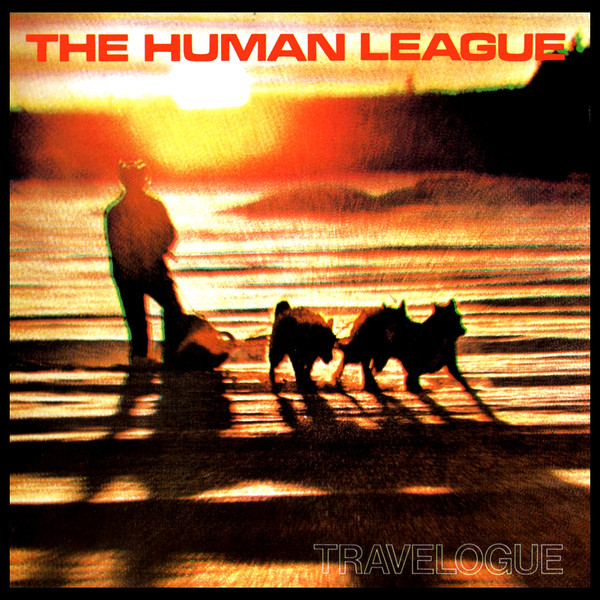


I turned 26-years old, working in a record store (Licorice Pizza), and only a handful of albums were essential to me in 1980. In no special order: Magazine's "Correct Use of Soap," Wall of Voodoo's first EP, The Cramps "Songs the Lord Taught Us," Human League's "Travelogue," Colin Newman's "A-Z," and The Feelies "Crazy Rhythms." Three of the albums were totally new sounds for me at the time: the Cramps, Wall of Voodoo, and Feelies. "Crazy Rhythms" I was really crazy about. At the time, their guitar orientated music sounded serious, and in a sense, sound like Television's younger brother. I also was impressed by how they allowed 'silence' between the tracks on the album. A moment to pause before the next aural adventure. -Tosh Berman

One day I jumped into a body of water and hit my head against a rock. It took a while to recover, and I had plenty of time to think of what went wrong with my life. I was middle-aged, no wife, and not very successful with my writing or drawings. I debated within myself if I should give up one medium for the other. The odd thing is when I did attempt not to draw again, the writing urge left me as well. So, I decided to keep pushing both 'arts' at the same time and just hope for the best. Of course, 'the best' takes its sweet-time and left me with great feelings of doubt and depression.
My father was a solicitor, and my mother came from a long line of master plumbers. I was raised to be practical and taught skills and science as someone who would join my family's customary world. As a teenager, I enjoyed filling my school books with drawings of nude women wanting themselves with another male. Therefore they were my first self-portraits among the ladies of my imagination. Once my vision and desires opened up, there is no way I'm going back to the landscape of my parents.
I married an artist, Ida Nettleship, a woman of great talent and beauty. We shared a sense of adventure and lived in the town of Martigues in Provence, between Aries and Marseilles. The home was on the tip of the canal; we could wake-up in the morning and fish from our bedroom. Since we had very little to no currency, the fishing came to be life-saving for the children and us. At this time, I became obsessed with the fish we caught, and I started to do drawings of the species. In one of my opportune moments in my DNA, I wanted to study pisciculture, the controlled breeding, and the rearing of fish. My wife and the older child stamped their feet loudly on the ground. They told me in impolite terminology that they didn't want to be surrounded by 'smelly' fish. Giving up dreams or ambitions is almost allergic to my body, but still, I understood their argument.
I got bored at Martiques and felt locked-in with the family unit. I didn't want to leave them, but I thought we needed a new life. Therefore I became accustomed with the Romanni people in the area of France and Italy. I learned to speak various versions of their language and learned their manners and culture. At this time, I met Dorothy, who I hired to be my model. We fell in love, and with some difficultly, we arranged that she be part of the family unit. I had two sons and two daughters with Dorothy, so in a sense, I felt like I was the leader of the gang, with my wife, mistress, and the children. We became a Gypsy caravan and traveled throughout Europe. In our stay in London, Dorothy was attracted to an artist friend of mine, Henry Lamb, and I encouraged her to have an affair with him.
I became a noted portrait painter of the rich and famous, which suited my taste perfectly. My best job at the time is my portrait of the actress Tallulah Bankhead. If I could afford another clan member, I would gladly have her part of my world. There are those who judge our actions, but in actuality, they have no understanding of how life flows through the currents that are so close to the call of nature.
-Tosh Berman.



I can't think of a more critical person alive than Greta Thunberg. Ordinary she ain't, and special comes in spade when it concerns Greta. She turns 18-years old today, and when people say that there is magic in youth, I, of course, think of Thunberg. Her articulation is focused and to the point. She never uses language to beautify an image. Still, almost poetically, she can convey the world's horror in a minimal and direct manner.
Quotes from Greta Thunberg:
"The climate crisis has already been solved. We already have all the facts and solutions. All we have to do is to wake up and change."
"Adults keep saying we owe it to the young people, to give them hope, but I don't want your hope. I don't want you to be hopeful. I want you to panic. I want you to feel the fear I feel every day. I want you to act as if the house is on fire, because it is."
"Why should I be studying for a future that soon may be no more, when no one is doing anything to save the future? And what is the point of learning facts within the school system when the most important facts given by the finest science of that same school system clearly mean nothing to our politicians and our society?"
"I offend talk to people who say, 'No, we have to be hopeful and to inspire each other, and we can't tell (people) too many negative things'…But, no - we have to tell it like it is. Because if there are no positive things to tell, then what should we do, should we spread false hope? We can't do that, we have to tell the truth."
"Today, we use 100 million barrels of oil every day. There are no politics to change that. There are no rules to keep that oil in the ground. So we can't save the world by playing by the rules. Because the rules have to be changed. Everything needs to change."
There is something so Bertolt Brecht or Fassbinder in how she approaches the power structure with an understanding of how it operates and why it's poison to culture and civilization. Thunberg made it through modern media because she knows how to use language to convey the bigger truth.
This amazing young woman turns 18-years old Today. I can't think of another person who deserves a national holiday on her birthday. This is idiotic because that is not what Greta Thunberg is about. It's about action. Happy birthday Ms. Thunberg.


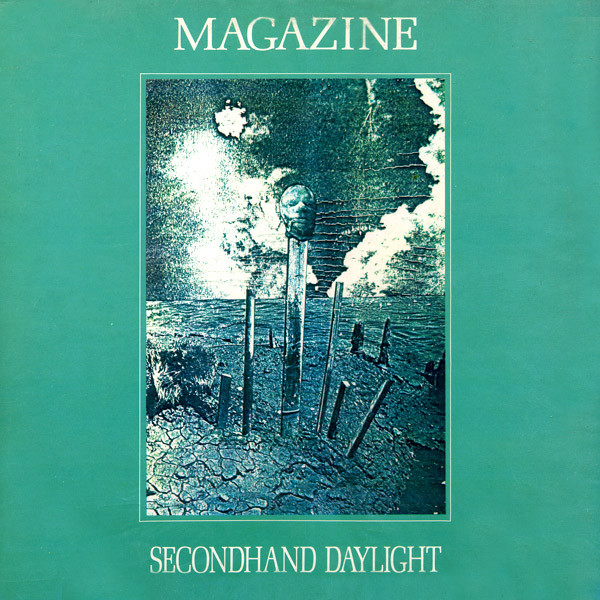
23 or 24-years old in 1978, and totally in love with the music culture of that time. Also was in my first real relationship, and she left me for a member of The Tubes. So, forgive me if I don't have the live Tubes album here. Nevertheless, the four albums that made an impact on me are Public Image's first album, Wire's "Chairs Missing," Buzzcocks's "Another Music in a Different Kitchen," and Magazine's "Real Life." Those four pretty much expressed my inner-demons and anxiety. Runner-ups are Lou Reed's "Street Hassle," which I think is a great Lou album. I love the low-fi yet hi-fi sound of this disc. DEVO's first great album, but I was deeply disappointed with Eno's production at the time. I saw DEVO numerous times, and they were like watching James Brown and His Flames in 1963. Intensity observed and practiced. Elvis Costello's "This Year's Model" was a fave as well. But his music didn't last for me. Talking Heads "More Songs..." their second album and produced by Eno, is pretty good. But like Elvis, I have no need to go back to this album. I also love Bryan Ferry's "The Bride Stripped Bare." That is his Los Angeles album, and it's very Chateau Marmont to me. But for the first four albums, I will never give up my love for those albums. -Tosh Berman

“From a bumbling citizen through the poetry of the machine to the perfect electric man.” As the leader of The Kinoks, I’m obsessed with how the world is seen or perceived by my fellow citizens. My buddy, Sergei, came from the theater, but I’m a believer in filming life as it happens. I see the camera lens as my second eye. “I’m an eye. A Mechanical eye. I, the machine, show you a world the way only I can see it.” The world we perceive is always put in a neat narrative. I have been told countless times that there is a beginning, a middle, and an end.” I understand that, but I can’t see why not start off with an end, and then a beginning, and end with the middle. The film drama is the opium of the people… down with bourgeois fairy-tale scenarios…long live life as it is!”

I spent a lifetime photographing girls because, to me, I fit right into that world. I have problems with such activities as remembering instructions or difficulty organizing one’s time and dealing with deadlines. Which, oddly enough, affects my work as a cameraman/photographer. I was aware of my dyspraxia as a child. I pretty much spent my life covering that aspect of my life by being loud and never shying away from a situation. Women love me because they pick up on my struggle. There is nothing sexier than one who has difficulty doing even the simplest things in life. A former girlfriend of mine described me as “the king lion on the Savannah: incredibly attractive, with a dangerous vibe. He was the electricity, the brightest, most powerful, most talented, most energetic force behind the camera.”

Once an outsider, always an outsider. I realize I would never be invited to join the club, so why even pretend that I’m even interested in joining that gang. My little unit, The Kinoks, sees the world as we make it, not how others define the landscape. I’m very suspicious of those who use aesthetics to make their work more pleasurable. “A work of art when placed in a gallery loses its charge, and becomes a portable object or surface disengaged from the outside world.” The purpose of the image-maker is to engage oneself with the outside forces.
I can never follow a simple cooking recipe, but I know how to use the ingredients and bring out a new vision or presence for the world. - Tosh Berman.


1977 was my most miserable year, yet, the music was fantastic. There was a division between older rock music and the current music of that year. I was totally into ground-level Zero, in that 1977 became Year-One for my music. -Tosh Berman

Theme music: “Behind Our Efforts, Let There Be Found Our Efforts” by LG17


 Posts
All Comments