Showing posts with label The Art Of Noise. Show all posts

Monday, January 11, 2021

The Important Records from 1983 for Tosh


1983, such a strange year. I was working at Licorice Pizza in West Los Angeles with a terrific cast of characters, but it seems to look over the releases that year, I was not into any album. Only singles. There was one mini-album or 12" ep, and that was The Art of Noise's "Into the Battle with The Art of Noise." How can anyone not love "Moments in Love?" Probably one of the first magnificent production of a minimalist piece of music. The other singles that made an impression on me are Fun Boy Three's "Our Lips Are Sealed," The Smiths' "This Charming Man," Kraftwerk's "Tour de France," and last but for sure not least, Peter Schilling's "Major Tom (Coming Home). I presume that song is an answer song to Bowie's "Space Oddity." I remember my friends hating that record, but I had a special love for it, for some perverse reason that I can't remember now. -Tosh Berman

Wednesday, April 30, 2014

April 30, 2014


April 30, 2014

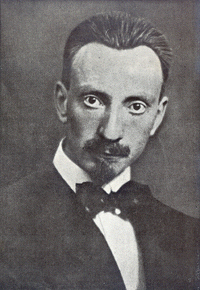
Luigi Russolo’s “art of noise” is probably the most profound pieces of music I have ever heard.  To me, it is the genuine soundtrack to a horrible century. The beauty that is destructive, yet all of us are attracted to the disaster as a moth is drawn to a flame.  Become too close to the heat and the wings will burn off.  I often felt that love for the great 20th century art, cinema, can lead one to leap into the void. It is not a question of cinema itself, but also all the by-products that goes with it.


It has been pointed out that Adolf Hitler and Eva Braun were devoted to the cinema, and especially to its actress Marika Rokk.  Hitler was at the same time a fan of Mickey Mouse.  What he saw in the mouse is something that I am not clear about.  Nevertheless, Goebbels gave Hitler 12 Mickey Mouse cartoons as a Christmas present in 1935.  Eva and Hitler had their own private screening room, but to me that becomes part of the problem.   Going to a movie theater is fantastic on many levels, one, being that you’re in an audience.  Being with an audience is so different from watching a film by yourself or with another person.


The first time I went to a movie theater was to see a Brigitte Bardot film in Larkspur, but the one screening I remember the most is when my dad took me to see a James Bond film called “Goldfinger.” The most exciting part of the movie was being at the Grauman’s Chinese Theater on Hollywood Bouvelard.  Oddly enough, I have seen all the Bond films at least twice, except for “Goldfinger.” I can’t imagine watching that film in any other location except for the Chinese theater.  To see that film now, at another location, would be like removing one of my arms - “Goldfinger” will be always attached to the feelings and sensations of going to the Chinese theater.


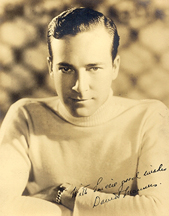
I have a faint memory of seeing Tod Browning’s “Dracula, starring Bela Lugosi and David Manners, at the Chinese Theater and hearing that there were actual bats inside the theater.  I was led to believing that bats often fly across the projected screen, but I have never seen it happen. However, to this day, it is one of the first things I think about, while in the theater, and waiting for the film to start.

I am also touched to know and have seen the hand and foot prints of Mary Pickford and Douglas Fairbanks, outside the theater.  One can imagine the angels that pranced around the property, where in Hitler and Eva’s theater, with the lights out, demons feeding off on the darkness.

Thursday, February 20, 2014

February 20, 2014


February 20, 2014

People think I am a great reader, but I am actually one of those people who pick up a book and then leave it by the bathtub (I do a lot of reading while taking a bath), especially if its a collection of essays or short stories.  Those books take me the longest to finish, due that each piece in the book is sort of complete narrative or thought.  Right now I am reading Maurice Blanchot’s “Desperate Clarity” which is a collection of literary reviews he did during the Nazi occupation of France.  The most fascinating aspect of the book (so far) is what is not being said, and that silence is so powerful and depressing at the same time.  It got me thinking what is not being said, because we are so used to writing that deals directly with an issue, but now and even then, writing is sometimes about everything except that issue.


Another reason why I just have to stop reading this book is because I dropped it in the bathtub.  When I go get a bath, I use Japanese bath power which gives the water a nice green visual as well as a smell that conveys the forest of one’s imagination.   So as I let that book dry, and myself as well, I go back to bed in the morning to read “The Futurist Manifesto” by F. T. Marinetti, written in 1909 and published in French in the newspaper Le Figaro.  My first thought was ‘how crazy that a newspaper would publish something so uncommon as this manifesto. ' Personally, I’m a huge fan of art related manifestos.  One of my favorite all-time books (and yes, I haven’t finished that one as well) is “Manifesto: A Century of Isms,” edited by Mary Ann Caws, where one can find “The Futurist Manifesto” in its complete romantic glory.


Marinetti strikes me as a man who is in love with the ideal of man-made world where machinery becomes sort of a God, or maybe not an actual ‘figure’ but the imagination of man (and I am using that gender specifically, because the Italian Futurists were not that hot on Feminism) is alone on a spiritual plane.  Some of their basic political ideals are dodgy at best, but one can admire their paintings, poetry, photographs, and I think especially music or sound making.  The whole ‘Art of Noise’ aesthetic is something that is still with us, and whenever there is sound, I think that concept is the foundation of our desire to make some music AKA noise.  John Cage, was too influenced by The Futurists’ approach to sounds, but he is more of a natural process or liking silence as a form of sound as well.  The beautiful photography by Ansel Adams is totally the opposite of Marinetti’s stance against nature, yet it takes a machine, the camera, to photograph what is the ‘ideal’ of nature at its most stunning.


For me personally, the sound of Poison Ivy’s guitar (The Cramps) is the most beautiful sound on the planet.  It has roots in “The Art of Noise” but a much warmer sense of chaos and there is a beauty in her performance that is touching as well as sexual and obsessive.  The obsession to capture either silence, pure noise, or even structured noise (music) is very appealing to me, in fact I also admire the Japanese composer Toru Takemitsu for being on the tightrope between chaos and beautiful order.  Marinetti, I think is essentially looking for order within the spirit of the machine age and politics.  A zen liked peace in a horror landscape.  With that in thought I go back to the bathtub, with a fresh supply of Japanese bath scent of the forest, and continue reading Blanchot’s “Desperate Clarity. ”