Showing posts with label John Cage. Show all posts

Saturday, March 21, 2020

March 20, 2020 (In The Year of the Trump Virus)

March 20, 2020 (In the year of the Trump Virus)

I just delivered my mom some bread that we had in the fridge as well as a bottle of wine. I left it on her front porch, walked away to the street, and then called her to come out to pick up the package. She came out, I waved, and then got into the car and left. I was going to do a significant shopping for her (as well as for us), but I presume that the food markets will be intensely busy, and decided to go later in the day, or within a few days. Both my mom, Uncle, and his mate, and yours truly have food in our houses for at least the end of this week. My thinking is to avoid panic buying or avoid other panic-buyers. 
My mood is not on the bottom floor, but somewhere in the middle of the building, perhaps on the sixth-floor. It's either here or there. I was laid off work yesterday, and all I have read is how many people lost their jobs in the past 24-hours. I'm not angry whatsoever, just disappointed because I enjoy this part (really part)-time job greatly. It's a bookstore, and like the other bookstores in the Los Angeles area such as Skylight Books and Book Soup (my old residence) is fully closed until further news. Libraries, my second home, is closed as well. Well, everything is closed that's emotionally important to me. Essential is more body-based, such as eating for survival, and emotional are all the fun shops. 
I spend my time writing and reading the current issue of MOJO Magazine (good article on Jimi Hendrix's last days) as well as a big biography on the legendary surfer Mikki Dora. When I take my baths, I read Cornelius Cardew's "Stockhausen Serves Imperialism." Cardew was an English composer who studied under Stockhausen as well as exploring the works of John Cage. Somewhere down the line, Cardew became a hardened Leftist and denounced Stockhausen and Cage. It's a fascinating read. I have always had a soft spot for individuals who are extremists. Which, in this time and age, makes many nervous. 
I'm a prisoner in our home, and it's not unusual for me to spend days at a time working and living in this space. So, I don't have any problem staying at home, especially when a library and records surround me. Depression does sneak up to me, especially the body blows of the Trump Virus taking effect on my surroundings. It's difficult not to see my mom and Uncle at this time. Still, I do help and think of them all of the time. - Tosh Berman

Thursday, September 5, 2019

Tosh's Journal - September 5 (John Cage & Yves Klein)


TOSH'S JOURNAL

September 5

It is hard work to do nothing. I'm always filling my day with things to do, to avoid the nothing. Once I wake up in the morning, there are a few minutes of dread where nothing is happening. I'm trying to set my mind on what the day will be like. I check my calendar, and like a lot of people, I'm obsessed with making lists. If I have less than five things to do that day, I feel depressed. Then slowly the feeling of guilt that you should be producing something, even if it's not essential. I open up my computer and look at the blank screen. Nothing is happening. I then look out my front window, facing Waverly Drive, and I see no one. Usually, people are walking their dogs at this time in the morning, but alas, I see only a fat furry cat walking down the sidewalk by him or her self. A dog when is either on a leash or free from it always walks without a purpose or direction. A cat walks going to a specific direction in mind and is rarely side-tracked by anything unless someone approaches it. There is one moment which becomes tense when I see the cat walk behind a parked car, and I wonder if I will see it again exiting that car. The moment I see the cat still, I feel a sense of relief. He or she then enters into an opening of the bush and disappears.

For me, there is no feeling of the cat being cute or beautiful. I like to see it walking down the sidewalk with a sense of purpose or plan. This inspires me to get back to my writing. There is a piece of music that causes me a great deal of anxiety, and it's John Cage's "4'33." It has a strict format where the piano player sits behind his keyboard and doesn't play anything for the duration of four minutes and thirty-three seconds. People think this is a work of silence, but it is the opposite of silence. When you are in a concert hall or theater "hearing" this piece, you are immediately aware of the sounds around you - perhaps a nervous cough, a clearing of the throat, a fart, or the fear of making a farting noise, air conditioner, heating vent, shuffling of feet, and so forth.

When I write, I need consistent sound around me — either music or outside ambient sounds. For instance, traffic noise, as well as a child, is screaming down the block from me. Each sound is like someone hitting me with a live electric wire, which gets my brain to jump. I work in a lonely place, which is pretty much my head. This is no longer a bad thing at all. To actually feel the space between yours truly and the world is an area that I can measure and fill up images with, but I also can subtract imagery as well. The thing is you have to control the noise around you, and something like "4'33" is chaos. Because you can't control the noise level of silence in one's life. So setting everything aside, you sit there for "4'33" in the quietness that is impossible, and also the anxiety or blissfulness knowing that things will happen again at 4 minutes and thirty-four seconds. It has a beginning and an end.

It's very work-orientated. We usually have 8 hours a day to work. Within those 8 hours, we have two fifteen minutes breaks, and often an half-n-hour lunch. Or it could be an hour lunch. Nevertheless, this sets a schedule for the entire day that one can't question or get out of unless you call in sick. Or like me, unemployed. When you don't have a job, you're facing a series of moments that cannot be filled. So one is left with the anxiety of confronting 'nothing.' Drinking is an effortless way of dealing with the sense of time wasting away. Because at least you are taking something that sort of comments on time passing, and you reflect on the failure or happiness of those moments.

-Tosh Berman


I'm trying to do away with my vices, so I focus on being on the entrance to nothing. I want to face that void, and be contented with the blankness that will come upon me. That hasn't happened yet. I remember seeing a performance by Yves Klein called "Monotone-Silence Symphony" in New York, and what the piece consists of is an orchestra of 70 musicians and singers performing a D major chord for 20 minutes, followed by 20 minutes of silence. The members of the orchestra are instructed not to move and sit on their seats. It's a tougher piece than "4'33" because we know that the silence will last exactly 20 minutes. So one is getting around 16 minutes of more silence. But we do get the contrast between sound and silence in this work. I have met someone who went to one of the performances and felt that the work failed because the silence part was not done correctly.


Daniel Moquay, who is in charge of the Yves Klein archive and the estate was quoted regarding the performance of the piece that took place in a Parisian church: "The door of the church was open, and a pigeon came in and sat where everyone could see him," he said. "During the 20-minute silence, he did not move at all. It was kind of incredible. And then when the silence was over, he left."

Monday, May 7, 2018

"Experimental Music: Cage and Beyond" by Michael Nyman (Cambridge University Press)

ISBN: 0-521-65383-5
Even though it is only an illusion, but it seems that when John Cage walked into our room, the world has re-started in some fashion.  Cage is the stone that was thrown into the pond, and future experimental music came from those little ripples from that rock.   Michael Nyman, a great composer, by the way, wrote this book in 1974 at the height of Brian Eno's Obscure Records label, where he focused on the British wing of the musical avant-garde.   Before Nyman's work with filmmaker Peter Greenaway, he was acutely aware of the tradition of contemporary classical music and all its strange and beautiful routes it took through the later years of the 1940s to the publication date of this book.   In such a fashion the book appears to be a classic textbook on its subject matter, and Nyman is very much the instructor in taking the reader from point A to point B, and so forth.  Not one only gets the foundation of Cage, but also the works of Fluxus era composers up to the British talent such as Gavin Bryars, Christopher Hobbs, and the Scratch Orchestra, as well as the world of Terry Riley, LaMonte Young, Philip Glass, and Steve Reich.  Illustrated with music scores and rare photos, this is a remarkable and essential piece of work regarding the world of the avant-garde sounds and its artists.

Saturday, January 20, 2018

Philip Glass Composer on Tea With Tosh (Part One)


This episode of "Tea With Tosh"  is part one of a two-part interview with the great American Composer Philip Glass.  We discuss the nature and difference between the Opera/Theater and film soundtrack composing. At the time of this interview (1987), Glass finished his soundtrack work for the Paul Schrader film "Mishima," based on the works and life of Japanese writer Yukio Mishima.  Glass was very easy to interview.  He had a professional attitude about doing interviews.  He told me that every Wednesday (at that time) he set aside the time to talk to the press/media.  He's an engaging person, and also talked about his opera "Einstein on the Beach" and other operatic works such as "Satyagraha, "Akhnaten," the film "Koyaanisqatsi," and his 'pop' album "Songs from Liquid Days." One of the great 20th century composers. - Tosh Berman, Tea With Tosh

Sunday, January 14, 2018

Saturday, January 13, 2018

Source Music of the Avant Garde 1966 1973 on Tosh Talks


"Source Music, of the Avant-Garde, 1966-1973" was an amazing journal that focuses on the contemporary Experimental music of the mid-20th century.  Morton Fieldman, John Cage, Robert Ashley, Giuseppe Chiari, John Mizelle and others focus on the nature of modern classical music as well as publishing actual music scores, which there are plenty in this volume, edited by Larry Austin and Douglas Kahn.  Published by Univerity of California Press.  Tosh Talks, with your host, Tosh Berman.

Tuesday, December 19, 2017

Gruppo di Improvvisazione Nuova Consonanza on Tosh Talks


Due to the scale of this project and just the 'oh wow' of it all, this is for sure on my top ten list of the greats from the 21st century so far.   Gruppo di Improvvisazione Nuova Consonanza (GINC for short) is a group of mostly Italian composers who got together to do improvise music.  Originally organized by Italian composer Franco Evangelisti, they have done numerous recordings and concerts throughout the 1960s.  How I discover them is all due to my music hero Ennio Morricone who is a long-term member of GINC.


This five-disk vinyl box set captures them doing live performances that are stunning.  The music is all done on acoustic instruments, but either altered such the prepared piano (ala John Cage) or the electronic mikes on various instruments such as trumpet, sax, strings, organ, and all sort of percussion.  At times the music is pure noise, but there is a sense of construction and thought behind the playing.  In an essence, the musicians/composers are using their composing hat as they make music together.  In actuality, it is also about the relationship between these composers, and how they see music, and therefore the world.


The box set comes with a DVD video of their performance and a beautiful book with essays in English by Evangelisti and others explaining the GINC aesthetic and philosophy.   For the new listener of GINC, they for sure will be reminded of John Cage's early works.  GINC has a different 'feel' for their instruments, and it doesn't rely on musical accidents or outside noise.  The sounds that GINC makes are very confined to space and time.


The mind reels knowing Morricone's association with these sound bandits.  Most of the Italians here did music soundtracks or wrote music for libraries that store scores for future films and Television.  Most associate Morricone with the Spaghetti western, but if that is your knowledge of Morricone, you really don't know him at all.  I feel that GINC was or is a very important aesthetic for Morricone and throughout his career, he has touched on the avant-garde side of music composition for his various movie soundtracks.   His openness to explore the music landscape is breath-taking.  Gruppo di Improvvisazione Nuova Consonanza is an essential listening experience for anyone who even has the slightest interest in modern music.  These five discs plus DVD and book is a worthy investment that will keep on giving for a very long time.


Here's the full list of members of GINC. Each one contributes greatly to the music.  They are: Alessandro Sbordoni, Antonello Neri, Domenico Guaccero, Egisto Macchi (an incredible composer), Ennio Morricone, Franco Evangelisti, Frederic Rzewski, Giancarlo Schiaffini, Giovanni Piazza, Ivan Vandor, John Heineman (the only American in the group?), Mario Bertoncini, and Walter Branchi.


http://toshberman.blogspot.com/2017/12/gruppo-di-improvvisazione-nuova_18.html


TamTam Blog: http://tamtambooks-tosh.blogspot.com

Tosh Berman's Vinyl and CD Collection: http://toshberman.blogspot.com

Facebook: https://www.facebook.com/Tosh-Berman-...

Goodreads: https://www.goodreads.com/Tosh

Instagram: https://www.instagram.com/imtoshberman/

Google+: https://plus.google.com/u/0/105926726.

Monday, November 28, 2016

"Source: Music of the Avant-Garde, 1966 - 1973" Edited by Larry Austin and Douglas Kahn (University of California Press)


In this very rotten year of 2016, I found a gem of a book, called "Source: Music of the Avant Garde, 1966-1973."   'Source' was a journal that was written and edited by avant-garde composers, for other avant-garde composers, and for those who are/were interested in type of music.  My guess is that the readership was small, but probably more like it - all geniuses.   Larry Austin and Douglas Kahn (composer themselves) made the perfect publication.   "Source" debated about the music of its time, as well as published visual and musical scores - as well as interview the main figures of that musical movement.


What we have here is John Cage, Karlheinz Stockhausen, Toshi Ichiyanagi, Morton Feldman, Robert Ashley, the recently late and great Pauline Olivers, Christian Wolff, Dick Higgins, Steve Reich and so forth.   The talent doesn't stop!  Each issue had a focus on one or two composers and a specific work by them, as well as dialogue / interviews with specific composers.  Also manifestos of all sorts, and even a dip into politics.  My understanding is that finding a copy of "Source" is nearly impossible, and I can see why. Why would anyone want to give up their copy?


This book is an important and incredible source for music that was produced in the years from 1966 thru 1973.  A casual reader would for sure want to check out a composer's work, just by reading what that work is/was.  Also a lot of the new music at that time was very theatrical and performance friendly.  Towards the end of the book one gets a great sample of works by the Fluxus artists/performers.  Highly entertaining, this book is essential for either those who study the arts that were produced during that time period, but also the importance and greatness of new music of that time.


Friday, September 23, 2016

Saturday, July 30, 2016

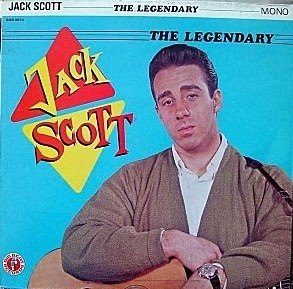
Two Albums I Purchased Yesterday (at Mono Records)


I used to own this album in 1977 (the year it was released) but had to sell it to Moby Disc for money for some reason I totally forgot.  Nevertheless, it has been in the back of my mind for 35 years of so. As I was taking one of my strolls down Glendale Blvd, I found a copy at Mono Records.  A great record store.  The best thing about a record store is when you go in to look for a specific album, and you find something else instead.  And usually something much better than the other record you're looking for.  The above John Cage album fits that category.  Prepared Piano pieces on a double album, and on the great Tomato Records label.   Beautifully mediative as well as intense.  How does two work together is sort of like enjoying a Tom & Jerry cartoon. You need the violence, as well as the pairing of the duo. 


On the same record store visit, I found this fantastic album by Jack Scott.  Recorded in 1958, as well as in Detroit (I didn't know he lived or made music there).   This is a fantastic rockabilly album of great strength .  Jack wrote most of all (except one) of the songs on this album.  "The Way I Walk" of course is the masterpiece here - and the extra happiness is that the recordings are in mono, which gives it that extra concentrated punch over the speakers.  Released in France, this album must have been on a steam liner, and then crawled to Glendale Blvd.  I'm happy to have it in my home.  Also the combination of Cage and Scott is rather good.  Again, going back to Tom & Jerry, the perfect yin and yang.  Separate, but yet, together. 

- Tosh Berman

Friday, September 5, 2014

September 5, 2014


September 5, 2014

It is hard work to do nothing.  I’m always filling my day with things to do, to avoid the nothing.   Once I wake up in the morning, there are the few minutes of dread where nothing is happening.  I’m trying to set my mind on what the day will be like.  I check my calendar, and like a lot of people, I’m obsessed with making lists. If I have less than five things to do that day, I feel depressed.  Then slowly the feeling of guilt that you should be producing something, even if it’s not important.  I open up my computer and look at the blank screen.  Nothing is happening.  I then look out my front window, facing Waverly Drive, and I see no one. Usually there are people walking their dogs at this time in the morning, but alas, I see only a fat furry cat walking down the sidewalk by he or her self.  A dog when is either on a leash or free from it, always walks without a purpose or direction.  A cat walks going to a specific direction in mind, and is rarely side-tracked by anything, unless someone approaches it.  There is one moment which becomes tense, when I see the cat walk behind a parked car, and I wonder if I will see it again exiting that car.  The moment I see the cat again, I feel a sense of relief.  He or she then enters into an opening of the bush, and disappears.


For me, there is no feeling of the cat being cute, or beautiful.  I simply like to see it walking down the sidewalk with a sense of purpose or plan.  This actually inspires me to get back to my writing.  There is a piece of music that causes me a great deal of anxiety and it’s John Cage’s “4’33.” It has a strict format where the piano player sits behind his keyboard and doesn’t play anything for the duration of four minutes and thirty-three seconds.   People think this is a work of silence, but in fact it is totally the opposite of silence.  When you are in a concert hall or theater “hearing” this piece, you are immediately aware of the sounds around you - perhaps a nervous cough, a clearing of the throat, a fart, or the fear of making a farting noise, air conditioner, heating vent, shuffling of feet, and so forth.


When I write I need consistent sound around me.  Either music or outside ambient sounds, for instance traffic noise, as well as a child screaming down the block from me.  Each sound is like someone hitting me with an live electric wire, which gets my brain to jump. I work in a lonely place, which is pretty much my head.  This is no longer a bad thing at all.  To actually feel the space between yours truly and the world is an area that I can measure and fill up images with, but I also can subtract imagery as well.  The thing is you just have to control the noise around you, and something like “4’33” is actually chaos. Because you can’t really control the noise level or silence in one’s life.  So setting everything aside, you sit there for “4’33” in quietness that is impossible, and also the anxiety or blissfulness knowing that things will happen again at 4 minutes and thirty-four seconds.  It has a beginning and an end.

It’s very work-orientated.  We usually have 8 hours a day to work.  Within those 8 hours, we have two fifteen minutes breaks, and usually an half-n-hour lunch.  Or it could be an hour lunch.  Nevertheless this sets a schedule for the entire day that one can’t really question or get out of, unless you call in sick.  Or like me, unemployed.  When you don’t have a job, you’re facing a series of moments that cannot be filled.  So one is left with the anxiety of confronting ‘nothing.' Drinking is a very simple way of dealing with the sense of time wasting away.  Because at least you are taking something that sort of comments on time passing, and you reflect on the failure or happiness of those moments.


I’m trying to do away with my vices, so I just focus on being on the entrance to nothing.  I want to face that void, and be contented with the blankness that will come upon me.  That, hasn’t happened yet. I remember seeing a performance by Yves Klein called “Monotone-Silence Symphony” in New York, and what the piece consists of is an orchestra of 70 musicians and singers performing a D major chord for 20 minutes, followed by 20 minutes of silence.  The members of the orchestra are instructed not to move and just sit on their seats.  It’s a tougher piece than “4’33” because we know that the silence will last exactly 20 minutes. So one is getting around 16 minutes of more silence.  But we do get the contrast between sound and silence in this work.  I have met someone who went to one of the performances and felt that the work failed, because the silence part was not done properly.

Daniel Moquay, who is in charge of the Yves Klein archive and estate was quoted regarding a performance of the piece that took place in a Parisian church:  ““The door of the church was open, and a pigeon came in and sat where everyone could see him,” he said. “During the 20-minute silence, he did not move at all. It was kind of incredible. And then when the silence was over, he left. ”

Monday, May 12, 2014

May 12, 2014


May 12, 2014

To be perfectly honest with you, I’m bored with drinking.  I had it up to my chin with the drinking culture.  I went to a couple of meetings, that is held at various churches, community halls, and even at bars, before opening time, and I am even bored with these people as well. I’m bored with the subject matter of drinking or not drinking, or even thinking about drinking.  What I need to do is go to a meeting to fight my inner boredom.


It’s funny how people can remember the date and even the weather when they had their last drink.  As for myself, who barely even look at a watch or a calendar, all I remember was having a bottle of red, while reading Edward Lear, and listening to Burt Bacharach’s “Make It Easy On Yourself” album.  The funny thing, is when I had my third glass of wine, I started to realize that I never really liked Burt’s music.  I was brought up by his melodies, due to the AM radio of my youth, but never really took his work at heart.  So me sitting there, drinking the mid-price bottle of wine, it struck me that I need to give up listening to John Cage’s New York City pal, Burt, and focus more on The Small Faces, who by its very nature, spoke to me as a man more than Burt.  Nevertheless, as a work of literature, I always enjoyed reading “The Big Book. ”


 The writing is so-so, but what it says is quite fascinating about the human condition.  Some people are turned off about the theory of The Higher Power, but I on the other hand don’t necessary see it as a black and white issue.  I think the need is to be part of a family.  What, who, or where is not that important, but the need to be part of something that is bigger than you is a very humanistic need, and whatever it is a religion, the AA, a cult, or even a fan club for an artist - it is the need to belong and be part of something.  Most if not all humans need to be part of some version of a family.  I, on the other hand, find those types of relationships boring.


Due to my internal boredom, I have always been attracted to Leslie Charteris’ “The Saint” also known as Simon Templar.  Both the TV series starring Roger Moore as well as the countless novels that I usually picked up used in various parts of the world.  Mostly in garage sales and swap-meets for some odd reason.  Nevertheless, I was attracted to Templar’s need for adventure.  On one end, he is or was regarded as a Robin Hood figure, or in a very distant way, fighting for the good guys in the world.  But what I sense in him is that he was bored, just like me, and was dissatisfied with the idea of being part of any grouping or family.  Just hearing the main TV theme of the series gets my heart pumping.  Also, strangely enough, watching “The Saint” I never feel compelled to have a drink, where in most cases while watching TV, I love to drink.  Oddly I have no memory of the plots, either in the novels or show, but I just recall the character, and I thought if somehow I can be such a person as Simon Templar, the world will be sane and right by my standards.  So in the nutshell, the two most influential men in my life are probably Leslie Charteris and Edward Lear.  Lear, because he had the talent to make up nonsense words, and if nothing else in this world, if I need to be part of a larger grouping or family, then I rather it be something that deals with the word ‘nonsense.


I am also strongly attracted to the works of Joseph Beuys, but mostly due that he was a pilot in World War ll, and was shot down on the Crimson Front.  He asserted that he was kept alive by the Tatar tribesmen who had his body wrapped in animal fat and felt, which eventually nursed him back to health.  Animal fat and felt are the two main items in his artwork that were consistent till his death in 1986.  Some say that he made up this story, but if he believed it, then I’m ok with it.  I can’t bother with denying or being upset with someone’s vision of how they cope with this world.  As Frank Sinatra once said “whatever gets you through the night is OK with me. ”

Thursday, February 20, 2014

February 20, 2014


February 20, 2014

People think I am a great reader, but I am actually one of those people who pick up a book and then leave it by the bathtub (I do a lot of reading while taking a bath), especially if its a collection of essays or short stories.  Those books take me the longest to finish, due that each piece in the book is sort of complete narrative or thought.  Right now I am reading Maurice Blanchot’s “Desperate Clarity” which is a collection of literary reviews he did during the Nazi occupation of France.  The most fascinating aspect of the book (so far) is what is not being said, and that silence is so powerful and depressing at the same time.  It got me thinking what is not being said, because we are so used to writing that deals directly with an issue, but now and even then, writing is sometimes about everything except that issue.


Another reason why I just have to stop reading this book is because I dropped it in the bathtub.  When I go get a bath, I use Japanese bath power which gives the water a nice green visual as well as a smell that conveys the forest of one’s imagination.   So as I let that book dry, and myself as well, I go back to bed in the morning to read “The Futurist Manifesto” by F. T. Marinetti, written in 1909 and published in French in the newspaper Le Figaro.  My first thought was ‘how crazy that a newspaper would publish something so uncommon as this manifesto. ' Personally, I’m a huge fan of art related manifestos.  One of my favorite all-time books (and yes, I haven’t finished that one as well) is “Manifesto: A Century of Isms,” edited by Mary Ann Caws, where one can find “The Futurist Manifesto” in its complete romantic glory.


Marinetti strikes me as a man who is in love with the ideal of man-made world where machinery becomes sort of a God, or maybe not an actual ‘figure’ but the imagination of man (and I am using that gender specifically, because the Italian Futurists were not that hot on Feminism) is alone on a spiritual plane.  Some of their basic political ideals are dodgy at best, but one can admire their paintings, poetry, photographs, and I think especially music or sound making.  The whole ‘Art of Noise’ aesthetic is something that is still with us, and whenever there is sound, I think that concept is the foundation of our desire to make some music AKA noise.  John Cage, was too influenced by The Futurists’ approach to sounds, but he is more of a natural process or liking silence as a form of sound as well.  The beautiful photography by Ansel Adams is totally the opposite of Marinetti’s stance against nature, yet it takes a machine, the camera, to photograph what is the ‘ideal’ of nature at its most stunning.


For me personally, the sound of Poison Ivy’s guitar (The Cramps) is the most beautiful sound on the planet.  It has roots in “The Art of Noise” but a much warmer sense of chaos and there is a beauty in her performance that is touching as well as sexual and obsessive.  The obsession to capture either silence, pure noise, or even structured noise (music) is very appealing to me, in fact I also admire the Japanese composer Toru Takemitsu for being on the tightrope between chaos and beautiful order.  Marinetti, I think is essentially looking for order within the spirit of the machine age and politics.  A zen liked peace in a horror landscape.  With that in thought I go back to the bathtub, with a fresh supply of Japanese bath scent of the forest, and continue reading Blanchot’s “Desperate Clarity. ”


Wednesday, August 6, 2008

Lou Teicher R.I.P.


John Cage meets what one may think is the mainstream. Think again my friend....


Ferrante & Teicher performing "Africian Echoe"


Ferrante & Teicher performing "The 7th Dawn"


Ferrante & Teicher performing "Oye Negra"


Ferrante & Teicher performing "Malaguena"


Ferrante & Teicher performing "Va Va Voom"